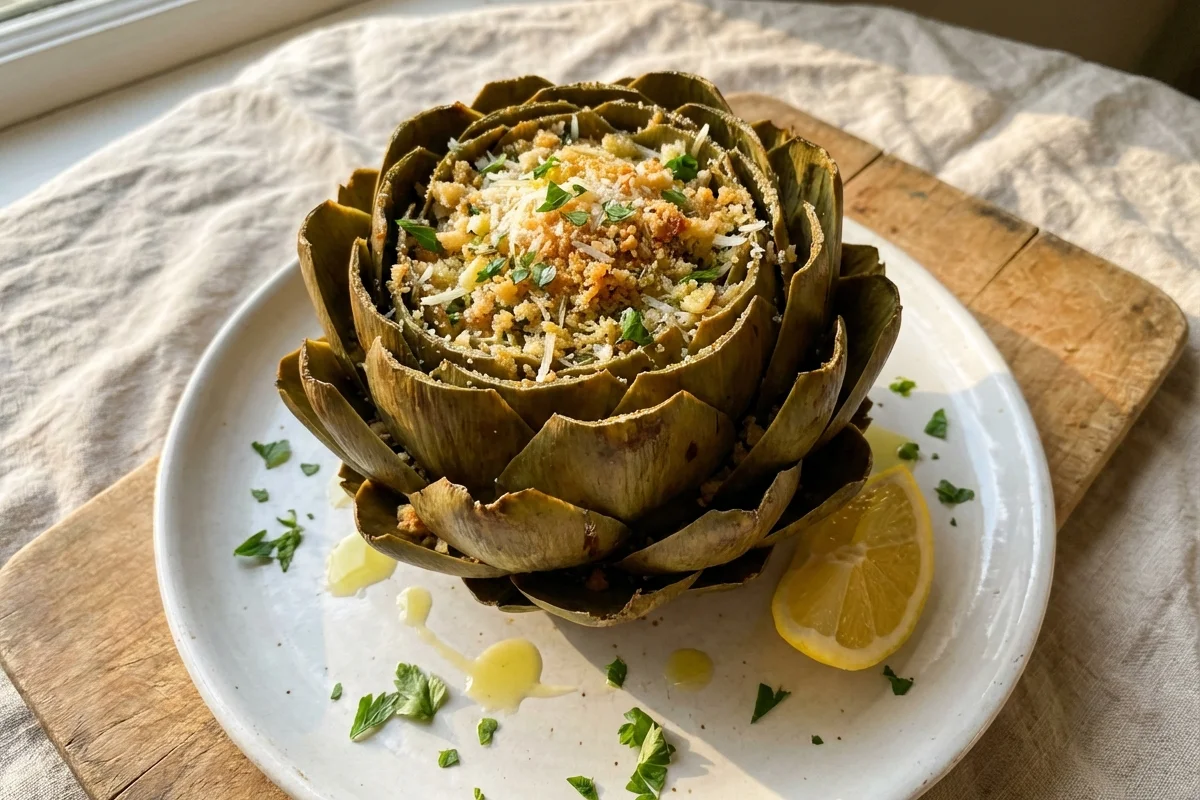
Stuffed Artichokes
Tender, steamed artichokes filled with a savory breadcrumb stuffing loaded with garlic, parmesan, and fresh herbs. Each leaf pulls away to reveal a delicious bite, leading to the ultimate reward—the tender heart at the center. A stunning appetizer or side dish that brings Italian-American comfort to the table.
For 4 servings
- prep
Trim and prepare the artichokes.
1.Slice off the top 1 inch of each artichoke with a serrated knife.2.Trim the stem flush with the base so the artichoke sits upright.3.Snip off the thorny tips of each outer leaf with kitchen shears.4.Rub cut surfaces with a lemon half to prevent browning.TIPRubbing lemon on cut surfaces keeps the artichokes green instead of brown. - steam · ~35 min
Steam the artichokes until tender.
1.Set up a large pot with a steamer basket and 2 cups water.2.Place the artichokes upright in the basket and cover.3.Steam over medium-high heat until a leaf pulls out easily, about 30-35 minutes.4.Remove artichokes and let cool enough to handle.TIPDon't skip steaming — it hydrates the leaves so the stuffed artichokes won't dry out while baking. - prep
Gently open the artichoke leaves.
1.Place each artichoke on a cutting board, top down.2.Spread the center leaves apart to reveal the purple-tipped choke.3.Use a small spoon to scoop out and discard the fuzzy choke entirely.4.Squeeze a little fresh lemon juice into each cavity.TIPRemove every bit of choke — what's left will be prickly and unpleasant to eat. - mix
Make the breadcrumb stuffing.
Combine breadcrumbs, parmesan, minced garlic, parsley, olive oil, salt, black pepper, and red chili flakes if using. Mix well until the breadcrumbs are evenly moistened.
- assemble
Stuff the artichokes thoroughly.
1.Starting from the outer layer, pack a little stuffing between every leaf.2.Mound the remaining stuffing into the center cavity.3.Drizzle a touch more olive oil over the top of each stuffed artichoke.TIPDon't pack too tight — leaves need room to crisp while still holding the filling. - bake · ~20 min
Bake the stuffed artichokes until golden.
Place the stuffed artichokes upright in a baking dish. Add a splash of water to the bottom of the dish to prevent drying. Bake at 375°F until the breadcrumbs are golden and crisp, about 20 minutes.
TIPCover loosely with foil halfway through if the breadcrumbs are browning too fast. - garnish
Finish with a squeeze of lemon and serve hot.
Squeeze the remaining lemon over the hot artichokes. Serve immediately.
TIPPut out a side plate for guests to discard the tough outer leaf shells.
What to keep in mind.
6 tips from the recipe — small details that make a real difference to the final dish.
- 1When trimming artichokes, rub all cut surfaces with lemon immediately to prevent oxidation and browning.
- 2Use kitchen shears to snip off the sharp tips of the outer leaves before steaming — it makes handling safer and eating easier.
- 3Check doneness by pulling on an outer leaf; if it comes away with little resistance, the artichoke is ready for stuffing.
- 4Make sure to scoop out all the fuzzy choke from the center — any leftover will be fibrous and unpleasant to eat.
- 5You can prepare the artichokes through the steaming and cleaning steps a day ahead; store them in the fridge with lemon water.
- 6If the breadcrumb stuffing browns too quickly in the oven, tent the dish loosely with foil for the last 10 minutes.
Adapt it for your goals.
Low-oil
Replace half the olive oil in the stuffing with vegetable broth and reduce the drizzle on top to just a teaspoon per artichoke to cut calories while keeping the breadcrumbs moist.
high proteinHigh-protein
Add 1/2 cup of finely chopped cooked Italian sausage or crumbled pancetta to the breadcrumb mixture for a heartier, protein-packed version that pairs well with the artichoke's earthy flavor.
veganVegan
Swap Parmesan with 1/4 cup of nutritional yeast and 2 tablespoons of pine nuts for a dairy-free version that still delivers a savory, umami-rich stuffing.
gluten freeGluten-free
Use gluten-free breadcrumbs or finely crushed rice crackers in place of regular breadcrumbs to make this dish safe for gluten-sensitive diners without sacrificing texture.
extra herbyExtra-herby
Mix in 2 tablespoons each of fresh chopped basil and mint along with the parsley for a brighter, more aromatic stuffing that complements the artichoke's subtle sweetness.
Why this is on our healthy list.
Rich in Dietary Fiber
Each artichoke is a top source of fiber, which supports healthy digestion and helps maintain steady blood sugar levels.
Packed with Antioxidants
Artichokes contain cynarin and silymarin, plant compounds that support liver health and help combat oxidative stress.
Good Source of Folate
Artichokes provide a significant amount of folate, a B vitamin essential for cell growth and metabolism.
Low in Calories, High in Nutrients
At around 60 calories per medium artichoke, this dish is a nutrient-dense choice that's naturally low in fat and sodium.
Frequently asked questions
No, this recipe relies on fresh whole artichokes for their structure and ability to hold stuffing. Canned artichokes are too soft and will fall apart during stuffing and baking.