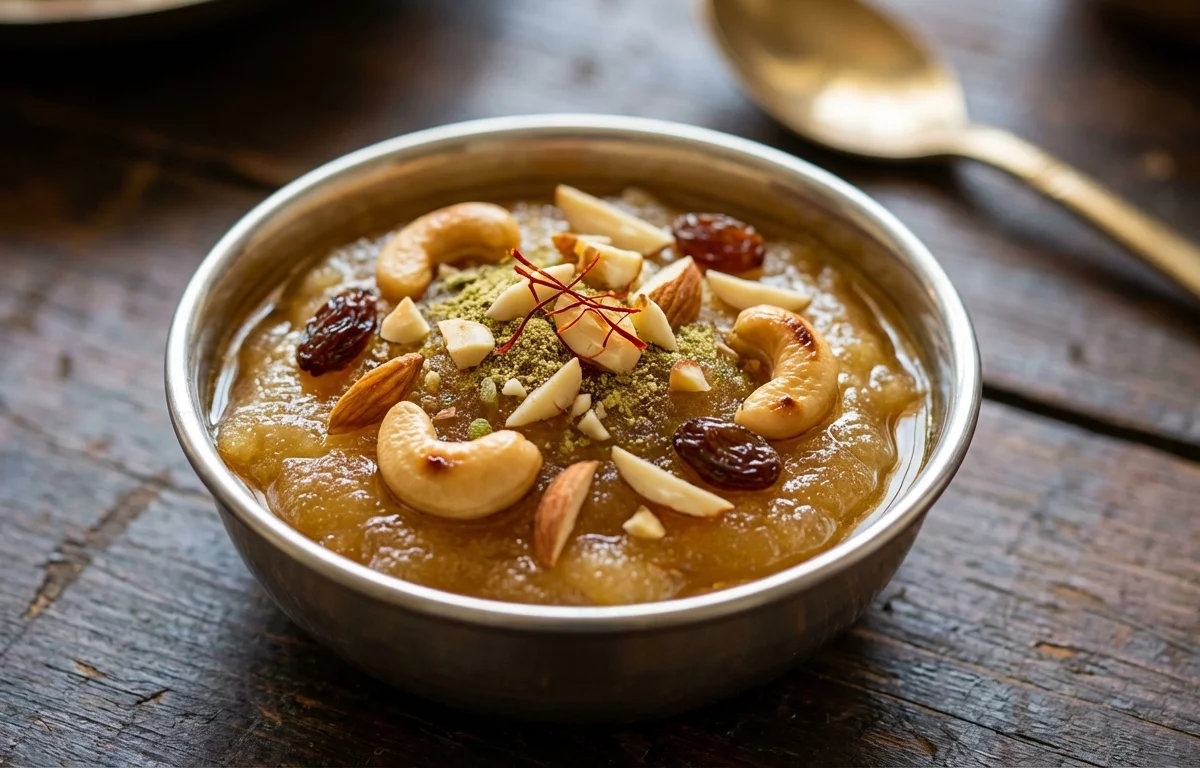
Suji Halwa
Warm, comforting semolina halwa with the rich taste of ghee and gentle cardamom. This North Indian favorite comes together quickly and has a soft, spoonable texture with a lovely roasted aroma.
For 4 servings
- boil · ~5 min
Heat the water with sugar and cardamom.
Add water, sugar, and crushed green cardamom to a saucepan. Bring to a gentle boil, then keep it hot on low heat.
- saute · ~3 min
Roast the cashews and raisins in ghee.
1.Heat ghee in a kadai over low to medium heat.2.Add cashews and cook until lightly golden (1-2 min).3.Add raisins and cook until they puff up (20-30 sec).4.Scoop them out and set aside. - saute · ~7 min
Roast the semolina until fragrant.
Add semolina to the same kadai and roast on low heat, stirring constantly, until it smells nutty and turns lightly golden.
TIPKeep the heat low and stir continuously so the semolina browns evenly and does not catch at the bottom. - mix · ~2 min
Add the hot syrup to the roasted semolina.
Carefully pour the hot sugar water into the kadai in a steady stream while stirring. The mixture will bubble and thicken quickly.
TIPUse hot syrup, not cold water, for a smoother halwa with fewer lumps. - simmer · ~3 min
Cook until the halwa turns soft and leaves the sides.
Stir well and cook for 2-3 minutes until the semolina absorbs the liquid and the halwa looks glossy and spoonable.
- garnish
Stir in the roasted cashews and raisins.
- serve
Serve the suji halwa warm.
What to keep in mind.
6 tips from the recipe — small details that make a real difference to the final dish.
- 1Roast the semolina on low heat until nutty, not brown; over-roasting can make the halwa taste bitter.
- 2Keep the sugar-cardamom water hot when adding it, so the semolina swells evenly with fewer lumps.
- 3Pour the hot syrup in a thin stream while stirring continuously, as the mixture seizes and splutters fast.
- 4Take the cashews out as soon as they turn light golden; they continue to darken from residual heat.
- 5Cook just until the halwa leaves the sides and looks glossy, or it can turn stiff as it cools.
- 6If the halwa thickens too much after resting, loosen it with a splash of hot water and stir over low heat.
Adapt it for your goals.
Less-sweet
Reduce the sugar slightly for a more grain-forward halwa where the roasted semolina and cardamom stand out.
saffronSaffron
Soak a few strands of saffron in the hot water before boiling for a festive aroma and golden color.
banana sheeraBanana-sheera
Mash in ripe banana near the end for a softer, fruitier Maharashtrian-style touch.
milk richMilk-rich
Replace part of the water with milk for a creamier, richer halwa with a more dessert-like finish.
Why this is on our healthy list.
Quick Energy Dessert
Semolina and sugar make this a fast, comforting source of energy, especially when served warm.
Digestive Spice Aroma
Green cardamom adds characteristic fragrance and is traditionally used to make sweet dishes feel lighter.
Nuts and Dried Fruit Goodness
Cashews and raisins add some healthy fats, texture, and natural sweetness alongside the semolina.
Frequently asked questions
Lumps usually happen when the liquid is added too quickly or the semolina was not stirred continuously. Add the hot syrup in a steady stream while stirring well.