
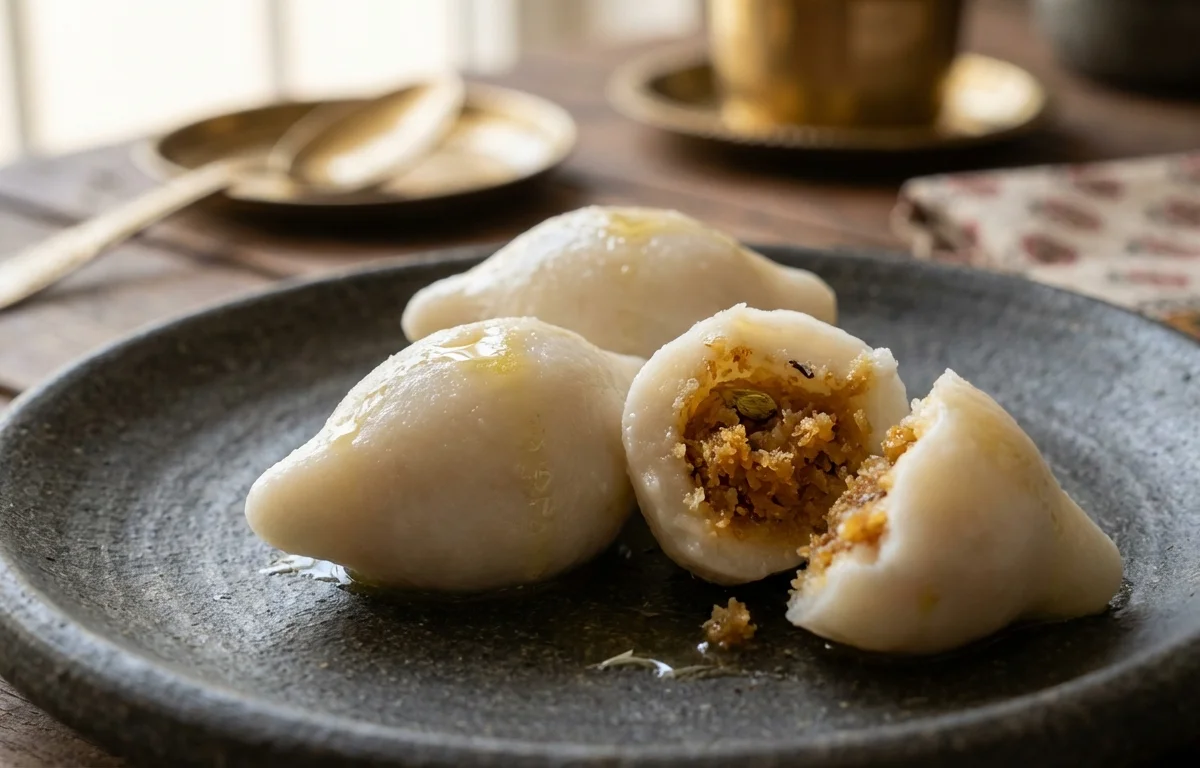
Sweet Kozhukattai
These soft steamed rice dumplings are filled with a warm coconut and jaggery mixture that turns lightly sticky and fragrant. A festive South Indian favorite, they are delicate, comforting, and wonderful with a cup of chai.
For 8 servings
- saute · ~6 min
Make the sweet filling.
1.Heat 2 tbsp water in a small pan and add the jaggery.2.Cook on low heat until the jaggery melts fully.3.Add the grated coconut and cardamom powder.4.Cook, stirring often, until the mixture thickens and comes together in 3 to 4 minutes.TIPKeep the filling moist but not wet, or it will leak while shaping. - rest · ~10 min
Cool the filling.
Transfer the filling to a plate and let it cool until warm enough to handle. Divide it into 8 small portions for easier shaping.
- boil · ~5 min
Cook the dough base.
1.Bring 1 cup water, 1 tsp ghee, and 1 pinch salt to a gentle boil in a pan.2.Lower the heat and add the rice flour gradually.3.Mix quickly until no dry flour remains and the mixture forms a soft mass.4.Turn off the heat and cover for 2 minutes.TIPAdd the flour slowly and mix right away to avoid lumps. - mix · ~3 min
Knead the dough smooth.
When the dough is warm but comfortable to touch, knead it for 2 to 3 minutes into a smooth, crack-free dough. Smear your palms lightly with ghee if needed.
TIPIf the dough feels dry, wet your fingers lightly and knead again. - assemble · ~12 min
Shape the kozhukattai.
1.Divide the dough into 8 equal portions.2.Take one portion and roll it smooth.3.Flatten it into a small cup with your fingers, keeping the center slightly thicker.4.Place one portion of filling inside, bring the edges together, and pinch to seal.TIPCover the dough portions with a damp cloth while shaping so they do not dry out. - steam · ~10 min
Steam the kozhukattai.
Arrange the shaped dumplings in a greased steamer plate, leaving a little space between them. Steam on medium heat for 8 to 10 minutes, until the outer cover turns glossy.
- rest · ~5 min
Let them cool briefly.
Rest the steamed kozhukattai for 5 minutes before lifting them out. This helps the outer layer firm up gently without sticking.
- serve
Serve warm.
Serve the sweet kozhukattai warm or at room temperature. They are best enjoyed the same day.
What to keep in mind.
7 tips from the recipe — small details that make a real difference to the final dish.
- 1Strain the melted jaggery if it has grit or sand before adding the coconut.
- 2Cook the coconut-jaggery filling only until it clumps; overcooking makes it hard after cooling.
- 3Knead the rice dough while still warm, not cold, so it stays smooth and crack-free.
- 4Keep a small bowl of water nearby and dampen fingertips lightly if the dough starts splitting while shaping.
- 5Make the shell edges thinner than the center so the kozhukattai seal neatly without bursting.
- 6Do not overcrowd the steamer plate; a little space helps them cook evenly without sticking together.
- 7Let the steamed dumplings rest before removing, or the soft rice cover may tear.
Adapt it for your goals.
Vegan
Replace the ghee with coconut oil or sesame oil for greasing and dough; the dumplings stay soft and fully dairy-free.
modakam styleModakam-style
Shape the dough with pleated edges instead of a simple sealed top for a more traditional festive presentation.
sesame jaggerySesame-jaggery
Add a spoonful of roasted sesame seeds to the coconut filling for a nuttier taste and a slight crunch.
nuttyNutty
Mix in a little chopped cashew with the filling if you want richer texture and a more celebratory feel.
Why this is on our healthy list.
Steamed, Not Fried
These dumplings are cooked by steaming, which keeps them light while preserving the soft texture of the rice cover.
Naturally Plant-Based Filling
The coconut and jaggery center is made from simple plant ingredients and offers satisfying sweetness with real flavor.
Gentle, Simple Ingredients
Rice flour, coconut, jaggery, and cardamom make this a straightforward festive sweet with minimal ingredients.
Frequently asked questions
The dough has likely cooled too much or is a little dry. Knead it again with lightly wet fingers while it is still warm, and keep unused portions covered with a damp cloth.


