
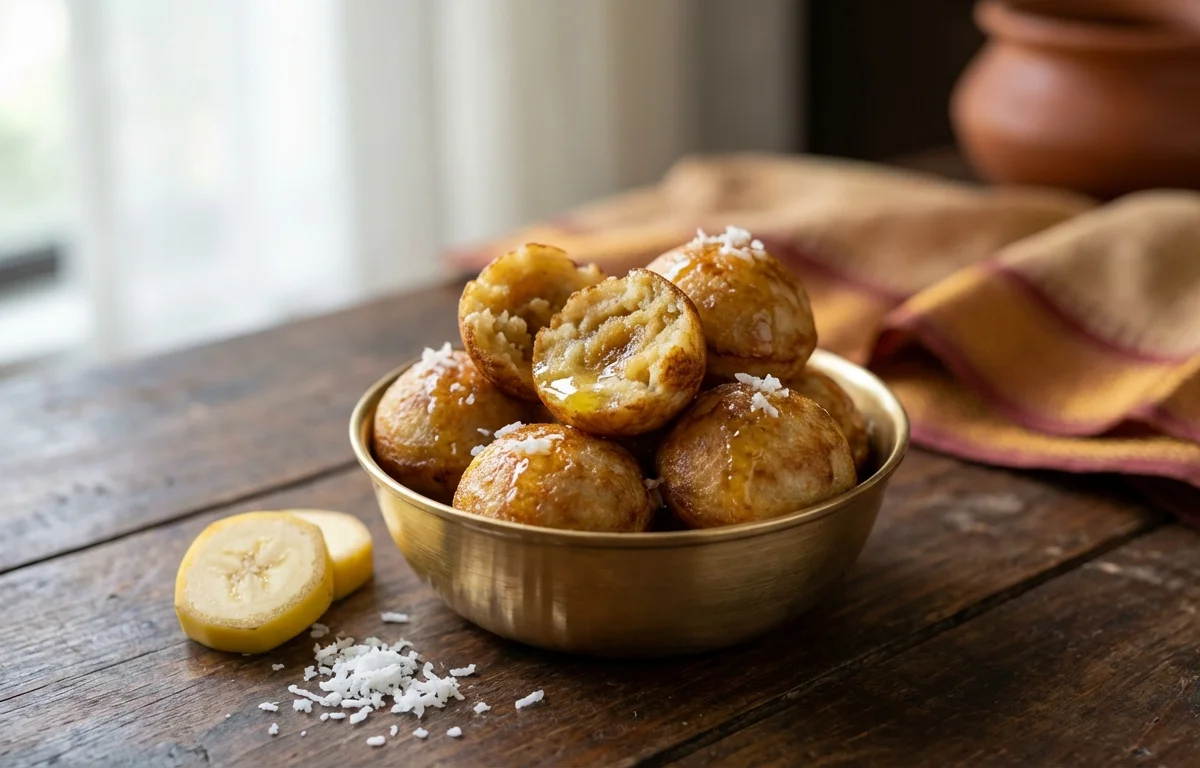
Sweet Paniyaram
Golden, bite-sized South Indian dumplings with a soft center and lightly crisp edges. Made with fermented idli-dosa batter, jaggery, and coconut, these sweet paniyarams are lovely for breakfast, snack time, or festive evenings.
For 16 servings
- boil · ~4 min
Melt the jaggery.
Heat jaggery with water in a small pan just until fully dissolved. Strain if needed to remove any grit, then let it cool slightly.
- mix · ~3 min
Mix the sweet batter.
1.Add the cooled jaggery syrup to the idli dosa batter.2.Add grated coconut and cardamom powder.3.Mix well to make a smooth, pourable batter that is slightly thicker than dosa batter. - fry · ~12 min
Cook the paniyarams.
1.Heat a paniyaram pan over medium heat and add a little ghee into each cavity.2.Fill each cavity about three-quarters full with batter.3.Cook until the bottoms turn golden and the tops begin to set, about 2 to 3 minutes.4.Turn gently with a skewer or spoon and cook the other side until golden and cooked through.TIPKeep the heat at medium so the inside cooks before the outside gets too dark. - serve · ~1 min
Serve warm.
Remove the sweet paniyarams from the pan and cook the remaining batter the same way. Serve warm for the best texture and flavor.
What to keep in mind.
7 tips from the recipe — small details that make a real difference to the final dish.
- 1Cool the jaggery syrup before mixing it into the fermented batter so it does not thin out or disturb the batter texture.
- 2Strain the melted jaggery if it has sand or bits; this keeps the paniyarams smooth and prevents gritty bites.
- 3Aim for a batter slightly thicker than dosa batter so the paniyarams puff well and hold a soft, rounded center.
- 4Fill each paniyaram mould only three-quarters full, since the batter will rise slightly as it cooks.
- 5Cook on medium heat only; high heat browns the jaggery quickly while leaving the middle undercooked.
- 6Turn them only after the tops lose their raw shine and the edges look set, so they release cleanly from the pan.
- 7These taste best hot, but you can reheat leftovers in the paniyaram pan with a few drops of ghee to revive the crisp edges.
Adapt it for your goals.
Banana
Mash in a little ripe banana for softer, more aromatic paniyarams with natural sweetness and a fuller snack-like texture.
low gheeLow-ghee
Use just a few drops of ghee per cavity instead of a generous coating if you want a lighter version with slightly less crispness.
festival styleFestival-style
Add a few chopped cashews fried in ghee for a richer, celebratory version with extra crunch.
spicedSpiced
Increase cardamom slightly or add a tiny pinch of dry ginger powder for a warmer, more traditional sweet flavor.
Why this is on our healthy list.
Fermented Batter Benefits
The idli-dosa batter is fermented, which can make the batter feel lighter and brings complexity to both texture and taste.
Coconut Adds Good Fats
Fresh grated coconut contributes satisfying texture and natural fats that make these sweet paniyarams more filling.
Less Deep Frying
Because they are cooked in a paniyaram pan rather than deep-fried, they use less cooking fat while still getting crisp edges.
Frequently asked questions
Jaggery browns fast, so the heat was likely too high. Cook on medium heat so the center cooks through before the outside gets too dark.


