Taftan Bread
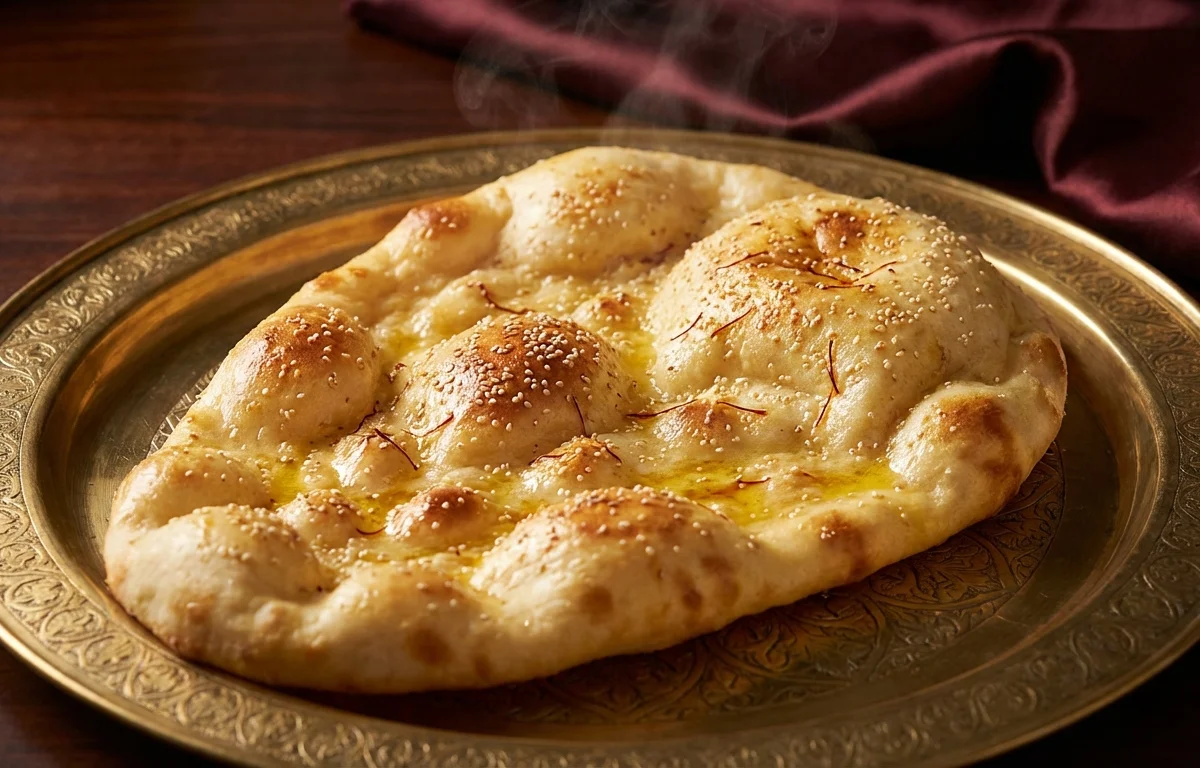
This soft, lightly enriched flatbread has a delicate saffron aroma and a tender crumb from milk, yogurt, and a little ghee. It bakes up golden and slightly chewy, making it a lovely partner for rich curries and kebabs.
For 4 servings
- prep · ~10 min
Bloom the yeast and soak the saffron.
1.Take 1 tablespoon warm milk from the measured milk and soak the saffron strands.2.Mix the remaining lukewarm milk with sugar and active dry yeast in a bowl.3.Set it aside until slightly foamy, about 5 to 10 minutes.TIPIf the yeast does not foam, start again with fresh yeast before making the dough. - knead · ~12 min
Knead the dough.
1.Add all-purpose flour and salt to a large bowl and mix well.2.Pour in the yeast mixture, yogurt, saffron milk, and 1 tablespoon melted ghee.3.Mix to form a soft dough, then knead for 8 to 10 minutes until smooth and slightly tacky.TIPTaftan should be softer than roti dough, so avoid adding too much extra flour while kneading. - rest · ~60 min
Let the dough rise.
Shape the dough into a ball and lightly grease it with a little ghee. Cover and let it rise in a warm spot until puffy and nearly doubled.
- prep · ~15 min
Divide and shape the breads.
1.Preheat the oven to 220 C and line or lightly grease a baking tray.2.Punch down the dough gently and divide it into 4 equal portions.3.Roll each portion into an oval or round bread about 1/4 inch thick.4.Transfer the shaped breads to the tray and leave a little space between them. - assemble · ~5 min
Brush and top the breads.
1.Brush the top of each bread with beaten egg.2.Drizzle or brush the remaining 1 tablespoon melted ghee over the breads.3.Sprinkle poppy seeds evenly on top.4.Press the seeds lightly so they stick. - bake · ~12 min
Bake until golden.
Bake the taftan breads until lightly puffed and golden in spots, 10 to 12 minutes. Rotate the tray once if needed for even color.
TIPDo not overbake or the bread will lose its soft, tender texture. - serve
Serve warm.
Brush with any last drops of melted ghee if you like, then serve the taftan warm with rich curries, korma, or kebabs.
What to keep in mind.
7 tips from the recipe — small details that make a real difference to the final dish.
- 1Let the saffron steep until the milk turns deep yellow; that gives the bread a fuller aroma and color.
- 2Keep the dough slightly tacky while kneading; a dry dough will bake up more like naan than soft taftan.
- 3If your kitchen is cool, let the dough rise in a switched-off oven with the light on for a steadier proof.
- 4Roll the breads evenly to about 1/4 inch so they puff uniformly and stay tender through the center.
- 5Brush the egg wash gently so you do not deflate the shaped dough before baking.
- 6Bake just until golden in spots, not deeply browned, or the enriched crumb can turn dry.
- 7For serving later, wrap the warm breads in a clean towel to keep the crust soft and supple.
Adapt it for your goals.
Sesame-topped
Swap the poppy seeds for sesame seeds for a nuttier finish and a more pronounced toasted aroma.
garlic gheeGarlic-ghee
Mix a little finely grated garlic into the melted ghee for brushing if you want a bolder, kebab-friendly bread.
no eggNo-egg
Brush with milk and ghee instead of egg for a softer matte finish that still helps the topping adhere.
mini taftanMini-taftan
Divide into smaller portions for individual breads that are easier to serve alongside korma or grilled meats.
Why this is on our healthy list.
Fermented Dough Benefits
Yeast-risen bread and the yogurt in the dough can make the crumb lighter and easier to digest than a denser flatbread.
Calcium From Dairy
Milk and yogurt contribute calcium and protein while also giving the taftan its soft, enriched texture.
Saffron and Seed Aroma
Saffron and poppy seeds add fragrance and flavor depth, so the bread tastes rich without needing heavy spicing.
Frequently asked questions
Usually the yeast did not activate well, the dough was made too stiff with extra flour, or the bread was overbaked. The dough should feel soft and slightly tacky before proofing.