
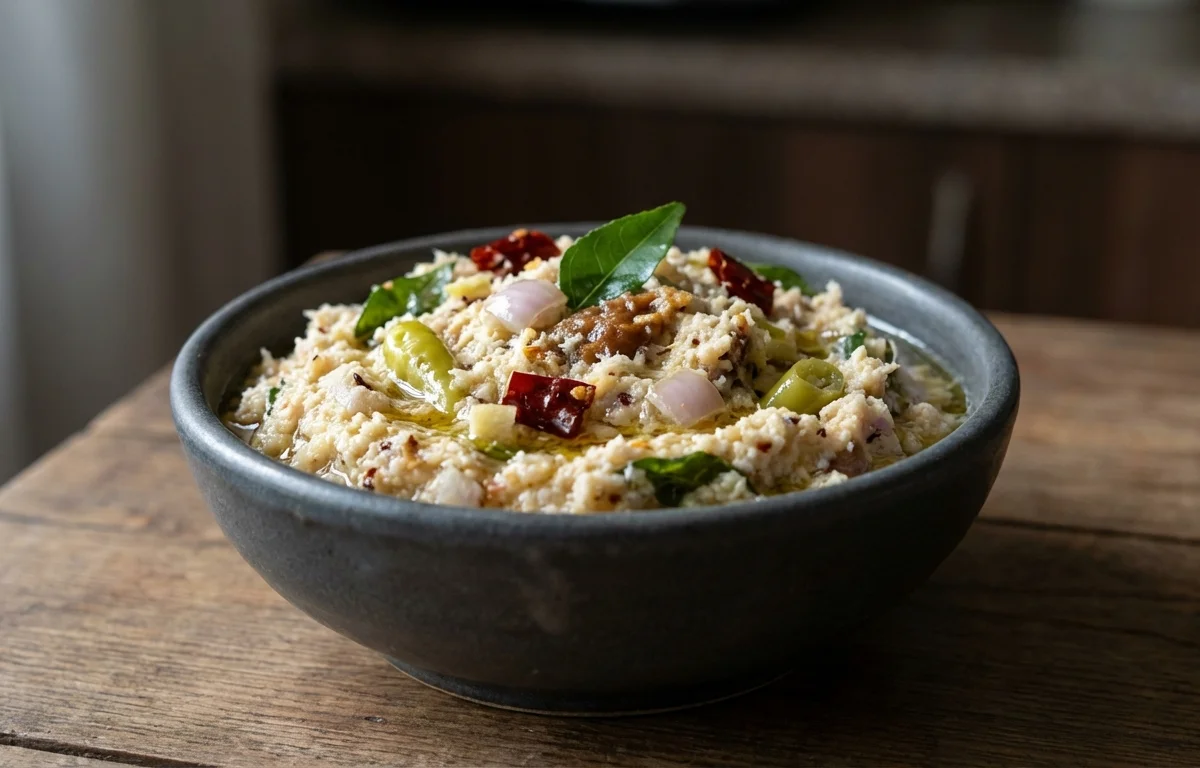
Thenga Chammanthi
A rustic Kerala-style coconut chutney with fresh coconut, shallots, green chili, and tamarind. It is ground thick rather than runny, so every spoonful tastes bold, nutty, tangy, and perfect with dosa, idli, or rice.
For 8 servings
- prep · ~3 min
Prepare the ingredients.
1.Peel the shallots.2.Roughly chop the green chili if using a small grinder jar.3.Break the tamarind into small bits if it is firm. - mix · ~3 min
Grind the chammanthi.
1.Add coconut, shallots, green chili, tamarind, and salt to a grinder jar.2.Add water a little at a time.3.Pulse to a thick, slightly coarse chutney rather than a smooth paste.4.Transfer the chammanthi to a small bowl.TIPKeep the chutney thick. Too much water makes it lose its rustic texture. - temper · ~1 min
Make the tempering.
1.Heat coconut oil in a small pan over medium heat.2.Add mustard seeds and let them splutter.3.Add dried red chili and curry leaves and cook for a few seconds until fragrant.TIPStand back when the curry leaves hit the oil because they can splutter. - assemble · ~1 min
Pour the tempering over the chammanthi.
Pour the hot tempering over the ground coconut mixture and mix lightly so the top stays glossy and fragrant.
- serve
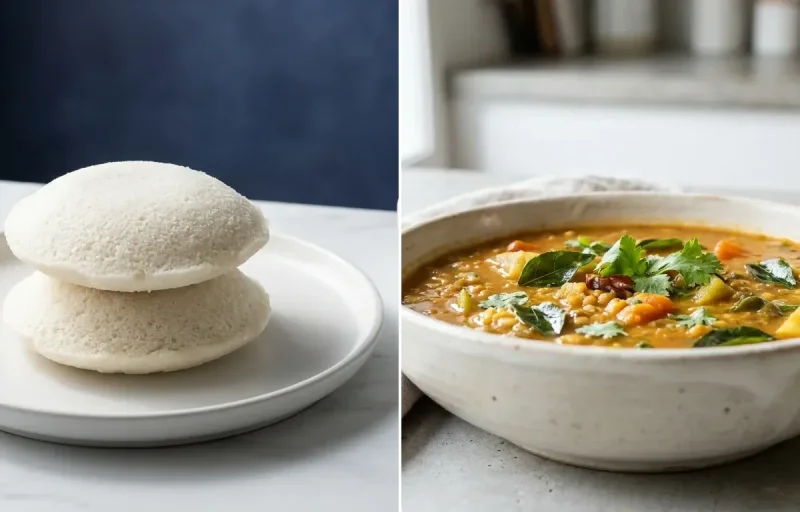
Serve with dosa, idli, kanji, or warm rice.
What to keep in mind.
6 tips from the recipe — small details that make a real difference to the final dish.
- 1Use very little water while grinding; Thenga Chammanthi should stay thick and slightly coarse, not pourable.
- 2If your tamarind is very sour, start with less and adjust after grinding so it does not overpower the coconut.
- 3Pulse the grinder in short bursts to keep some texture and avoid warming the coconut too much.
- 4Temper the mustard seeds fully until they splutter; under-bloomed seeds taste raw and bitter.
- 5Mix the hot tempering in lightly rather than fully blending it through, so the chutney keeps a glossy, fragrant top layer.
- 6This chutney tastes best fresh, but you can refrigerate it for a few hours and stir in a few drops of coconut oil before serving.
Adapt it for your goals.
No-tempering
Skip the tempering for an even more rustic everyday version; it is quicker and keeps the raw coconut-shallot flavor more pronounced.
spicierSpicier
Add an extra green chili or a larger dried red chili in the tempering if you want a sharper, hotter chammanthi for dosa or kanji.
garlicGarlic
Grind in a small clove of garlic for a bolder, earthier chutney that pairs especially well with warm rice.
shallot forwardShallot-forward
Increase the shallots slightly for a sweeter, more pungent Kerala-style chutney with extra body and savoriness.
Why this is on our healthy list.
Healthy Fats from Coconut
Fresh coconut and a little coconut oil provide satisfying fats that make the chutney filling and rich-tasting.
Aromatic Plant Ingredients
Shallots, curry leaves, chilies, and tamarind add plant-based compounds and strong flavor without needing heavy additives.
Small-Ingredient, Big-Flavor Side
Because it is intensely flavored, a little goes a long way alongside idli, dosa, rice, or kanji.
Frequently asked questions
Too much water during grinding is the usual cause. Add it only a little at a time and stop when the chutney is thick and slightly coarse.

.webp)
.webp)