
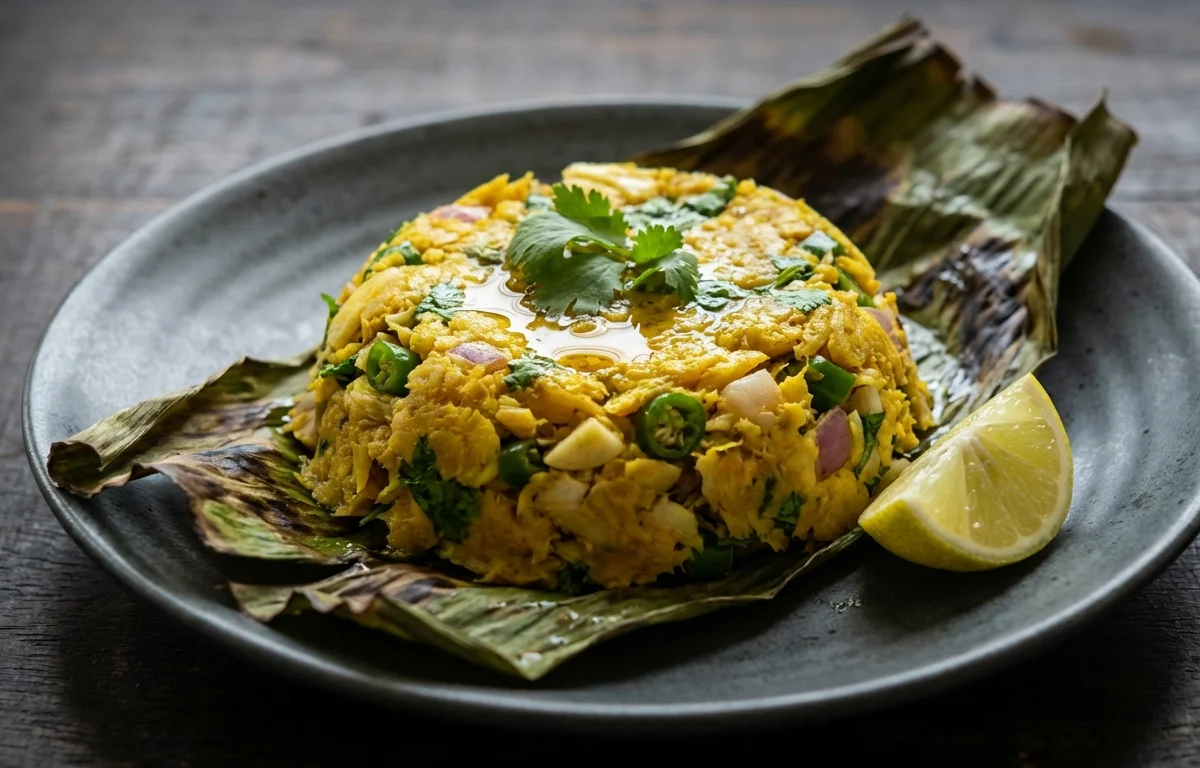
Tora Paatot Diya Masor Pitika
A rustic Assamese delicacy where steamed river fish is mashed with tender jute leaves, green chilies, and a drizzle of pungent mustard oil. The tora paat adds an earthy, slightly slimy texture that clings beautifully to the fish, creating a simple yet soulful dish best enjoyed with warm rice.
For 4 servings
- prep · ~5 min
Prep the fish and leaves.
1.Clean the fish pieces thoroughly and pat dry. Rub lightly with a pinch of salt.2.Wash the jute leaves well to remove any grit, then roughly chop them. - steam · ~15 min
Steam the fish and tora paat together.
1.Place the fish pieces in a steamer-safe dish or plate.2.Spread the chopped jute leaves over and around the fish.3.Steam for 12-15 minutes until the fish is cooked through and the leaves are wilted and tender.TIPThe tora paat will release a natural sliminess when steamed — this is authentic and desirable for the pitika texture. - prep · ~4 min
Pick and debone the fish.
Once steamed, let the fish cool enough to handle. Carefully pick through the flesh with your fingers to remove all bones. Transfer the boneless fish and the steamed jute leaves to a large mixing bowl. Discard bones.
TIPWork slowly — river fish has many fine bones. Warm hands or a fork will help you feel them. - mix · ~3 min
Mash everything into a coarse pitika.
1.Add the chopped onion, crushed garlic, and slit green chilies to the bowl.2.Pour in the raw mustard oil and sprinkle the remaining salt.3.Using your fingers or a fork, mash everything together until the fish is broken into flakes and the flavors are well combined. It should be slightly coarse, not a paste.TIPUsing your fingers to mash warms the mustard oil just slightly and blends flavors better than a spoon ever can. - serve
Rest briefly and serve with warm rice.
Let the pitika sit for 5 minutes so the raw onion and mustard oil mellow into the fish. Serve at room temperature alongside hot steamed rice.
TIPA squeeze of lemon or a dash of raw mustard oil on top just before eating lifts the entire dish.
What to keep in mind.
6 tips from the recipe — small details that make a real difference to the final dish.
- 1Choose small river fish with lots of bones — the bones add flavor during steaming and are removed before mashing.
- 2Do not overcook the jute leaves; steam just until wilted and tender to retain their characteristic texture.
- 3Use raw mustard oil directly in the mash — its pungency is essential and mellows slightly during the resting period.
- 4Mash with your fingers for best results; the warmth helps blend the mustard oil and aromatics into the fish.
- 5Let the pitika rest 5 minutes before serving so the raw onion and chilies soften into the mixture.
- 6Serve with hot, plain steamed rice — the simplicity of the rice balances the bold, earthy flavors.
Adapt it for your goals.
Low-oil
Skip the raw mustard oil and mash the steamed fish and leaves with a splash of lemon juice and a pinch of turmeric — ideal for those watching their oil intake without losing the dish's essential tang.
herbaceousHerbaceous
Add a handful of finely chopped fresh coriander leaves and a few torn curry leaves during mashing for a fragrant, green twist that complements the earthy jute leaves.
spicy garlicSpicy garlic
Double the crushed garlic and add a teaspoon of roasted sesame seeds for a punchier, nuttier version that garlic lovers will crave.
no fishNo-fish
Replace fish with steamed and mashed potatoes or cooked chickpeas for a vegetarian pitika that still picks up the jute leaves' texture and mustard oil kick.
Why this is on our healthy list.
Rich in Omega-3s
River fish like rohu or catla provide natural omega-3 fatty acids, which support heart and brain health.
High in Dietary Fiber
Jute leaves (tora paat) are a good source of soluble fiber, aiding digestion and promoting a feeling of fullness.
Low in Saturated Fat
With only mustard oil as added fat, this dish is naturally low in saturated fats, making it a heart-friendly choice.
Contains Immune-Supportive Compounds
Garlic and green chilies provide allicin and capsaicin, compounds known for their antimicrobial and metabolism-boosting properties.
Frequently asked questions
Yes, but small river fish with bones like rohu or catla are traditional. The bones add flavor during steaming and are removed before mashing.



-curry.webp)
.webp)