Varan
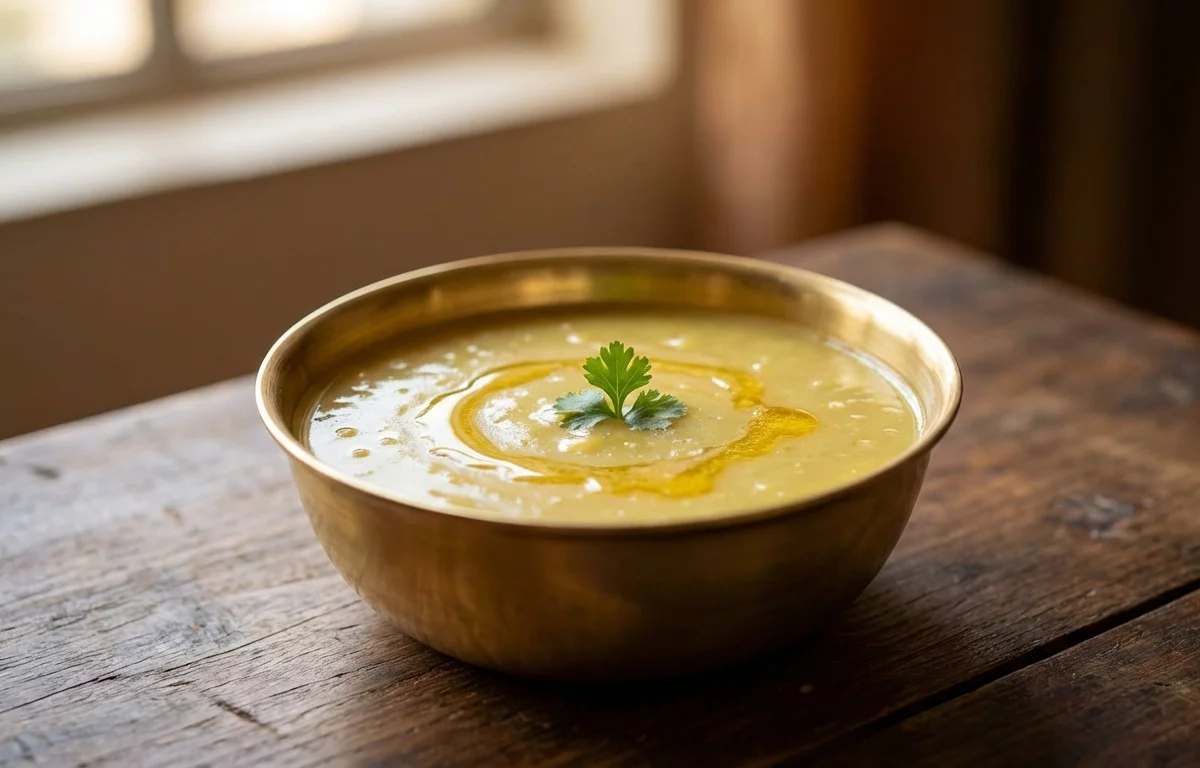
A simple Maharashtrian toor dal made soft and mellow with turmeric and ghee. This everyday comfort dish is lightly seasoned, easy to digest, and best served with hot rice and a squeeze of lemon.
For 4 servings
- prep
Wash and soak the dal.
Rinse the toor dal well until the water runs mostly clear. Soak it in fresh water for 20 minutes, then drain.
- pressure cook · ~15 min
Pressure cook the dal until soft.
1.Add soaked toor dal to a pressure cooker with water, turmeric powder, and salt.2.Stir once and close the cooker.3.Cook on medium heat for 3 to 4 whistles, until the dal turns very soft.TIPCook the dal a little softer than usual for classic varan. It should mash very easily. - mix · ~2 min
Mash and loosen the dal.
Let the pressure drop naturally, then open the cooker and mash the dal with a whisk or ladle. Add a little extra water if needed to make a smooth, pourable consistency.
- temper · ~1 min
Make the ghee tempering.
1.Heat ghee in a small pan over low to medium heat.2.Add cumin seeds and let them sizzle for a few seconds.3.Add asafoetida and switch off the heat right away.TIPKeep the heat low so the asafoetida does not burn and turn bitter. - simmer · ~4 min
Combine and simmer the varan.
Pour the tempering into the cooked dal and mix well. Simmer for 3 to 4 minutes so the flavors blend.
- garnish
Garnish with coriander leaves.
- serve
Serve hot with rice and ghee.
What to keep in mind.
8 tips from the recipe — small details that make a real difference to the final dish.
- 1Soaking the toor dal for even 20 minutes helps it cook faster and mash into the classic smooth varan texture.
- 2Cook the dal slightly softer than regular dal; it should collapse easily when pressed with the back of a ladle.
- 3Let the cooker pressure drop naturally so the dal finishes softening without splitting dry on top.
- 4Mash thoroughly before adding the tempering so the finished varan stays silky rather than grainy.
- 5Add extra hot water, not cold, if you need to loosen the dal after cooking.
- 6Bloom the cumin in ghee just until aromatic, then add asafoetida off or at very low heat to avoid bitterness.
- 7Varan thickens as it stands, so thin it slightly before serving if you want it to pour easily over rice.
- 8Leftover varan keeps well refrigerated and can be reheated with a splash of water to restore its smooth consistency.
Adapt it for your goals.
Vegan
Replace ghee with a neutral oil or coconut oil for a dairy-free version that still carries the cumin and hing well.
no onion no garlicNo-onion-no-garlic
This recipe is already naturally free of onion and garlic, making it suitable for sattvik-style everyday meals.
thin varanThin-varan
Add a little more hot water after mashing for a lighter, more pourable texture that mixes easily into rice.
moog dalMoog-dal
Swap toor dal with split yellow moong for an even lighter, gentler version that cooks faster and feels easier to digest.
Why this is on our healthy list.
Plant Protein From Toor Dal
Toor dal contributes plant-based protein and makes this simple rice-and-dal meal more filling and sustaining.
Gentle Everyday Comfort Food
With minimal spices, soft-cooked dal, and a light tempering, this dish is often chosen as a soothing, easy meal.
Turmeric and Cumin Support
Small amounts of turmeric, cumin, and asafoetida add more than flavor and are traditionally used in simple home-style dal preparations.
Frequently asked questions
Yes, but it may take longer to soften fully. Since varan is best when very soft and mashable, soaking helps achieve the proper texture more reliably.



.webp)