Let's be honest, the brussels sprout has a PR problem. For decades, it was the vegetable kids were forced to eat — a bitter, boiled, mushy green blob. But the brussels sprout you see on every trendy restaurant menu today is a different beast entirely: crispy, nutty, savory, and an absolute nutritional giant. The secret isn't some new variety; it's just that we finally figured out how to cook them. And once you know the basics, you unlock a low-carb, high-fiber vegetable that's one of the best sources of Vitamin C you can eat.
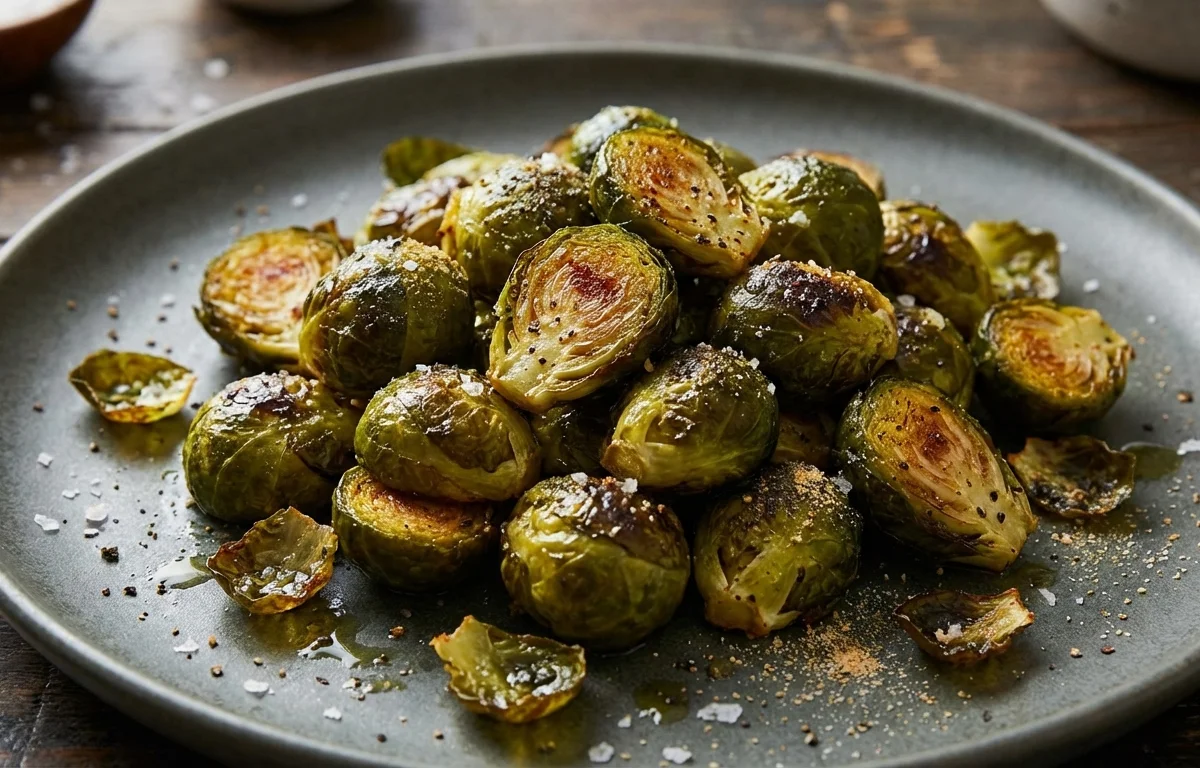
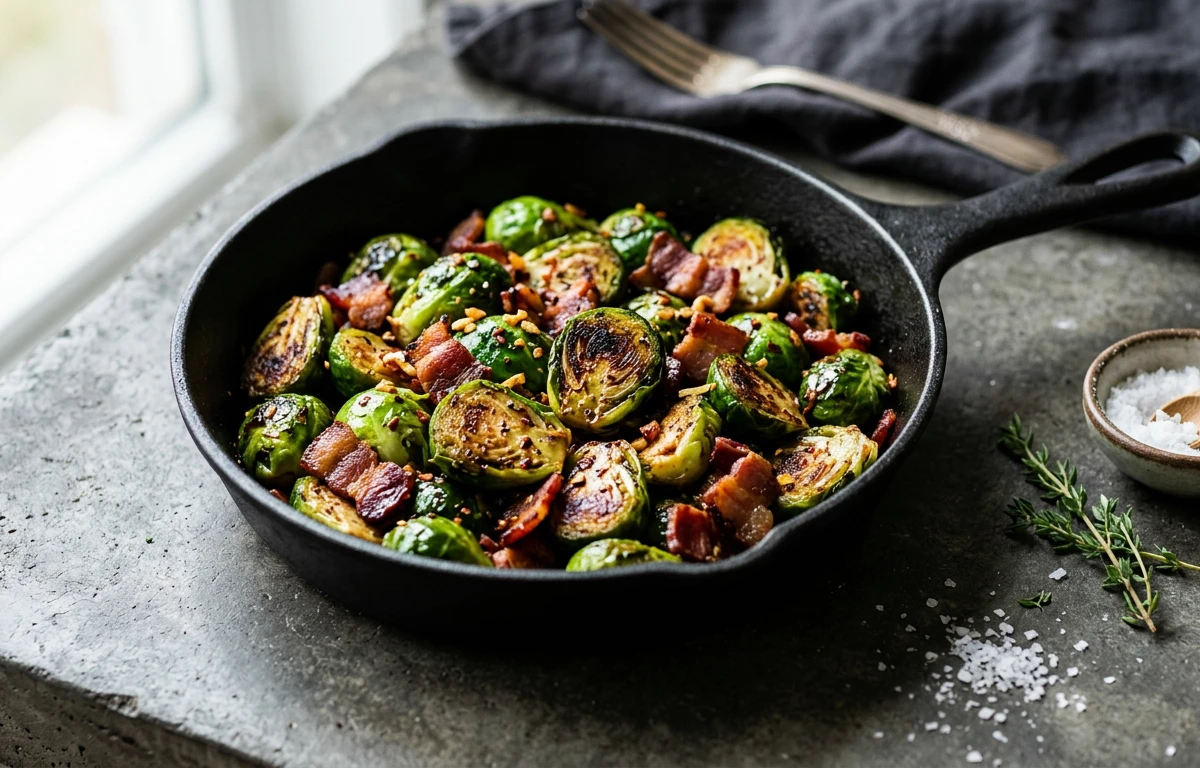
↑ The key to delicious brussels sprouts? High heat and a good sear, not boiling.
The comeback vegetable
Brussels sprouts are part of the cruciferous family, alongside broccoli, cabbage, and kale. They're essentially tiny cabbages that grow on a stalk. Their reputation for bitterness comes from compounds called glucosinolates, which are actually incredibly good for us. The problem was never the sprout itself, but our cooking methods.
Boiling them turns them watery, gray, and releases sulfuric smells. Roasting or pan-searing at high heat, however, is a total game-changer. The outer leaves get crispy, the inside becomes tender, and the heat caramelizes their natural sugars, balancing out that bitterness. They turn from a chore into a craving.
IN ONE LINE
Roasted, not boiled. That's the whole secret. They're a low-carb, high-fiber vegetable packed with nearly a full day's Vitamin C in a single serving.
Brussels sprouts nutrition facts
For such a small vegetable, they pack a surprising nutritional punch. Here's the breakdown for a 100-gram serving, which is about one cup of halved sprouts.
The numbers that jump out are the fiber and Vitamin C. At 3.8 grams, you're getting a solid dose of fiber that helps with fullness and digestion. But the 85 milligrams of Vitamin C is the real showstopper — that's more than you'll find in an orange, and nearly your entire recommended daily intake in just one serving.
Brussels sprouts' glycemic index
There's no official, universally agreed-upon number for brussels sprouts, because for non-starchy vegetables like this, the effect on blood sugar is so minimal it's barely worth measuring. They are very low in carbohydrates and high in fiber, a combination that means they are digested slowly and cause virtually no spike in blood sugar.
For anyone managing diabetes, on a low-carb diet, or simply trying to eat for steady energy, brussels sprouts are one of the best vegetables you can choose. They sit at the absolute lowest end of the glycemic scale.
GLYCEMIC INDEX · BRUSSELS SPROUTS vs COMMON FOODS
Brussels sprouts sit at the bottom of the GI scale
Brussels Sprouts
non-starchy veg (est.)
LOW
Apple
whole fruit
LOW
Mango
whole fruit
LOW
Watermelon
whole fruit
HIGH
White bread
refined
HIGH
SCALE 0–90
04590
How to cook them right
If you think you don't like brussels sprouts, you've probably just had them cooked poorly. Follow these rules for perfectly crisp, sweet, and nutty sprouts every time.
01
Roast, don't boil.
This is the cardinal rule. High, dry heat is your friend. Toss them in a little oil and salt, and roast at 400°F (200°C) until browned and crispy.
02
Cut them in half.
Exposing the flat interior allows for better browning and caramelization. For very large sprouts, you can even quarter them.
03
Give them space.
Don't crowd the pan. If the sprouts are packed too tightly, they'll steam instead of roast. Use a large baking sheet and spread them in a single layer.
04
Balance the flavor.
Their slight bitterness is delicious when balanced. A drizzle of balsamic glaze, a squeeze of lemon juice, or some salty bacon or parmesan at the end makes all the difference.
05
Don't be afraid of the dark bits.
Those deep brown, almost-burnt outer leaves are the best part. They're crispy, nutty, and packed with flavor. That's the goal!
What brussels sprouts are good for
01
Immunity and skin health
A single 100g serving provides 94% of your daily Vitamin C, a powerful antioxidant that supports your immune system and collagen production for healthy skin.
94%
Vit C DV
02
Excellent for digestion
With nearly 4 grams of fiber per serving, brussels sprouts help keep you regular and feed the beneficial bacteria in your gut, supporting overall digestive health.
3.8 g
fiber
03
Blood sugar management
The combination of low net carbs, high fiber, and a very low glycemic index makes them a superb choice for maintaining stable blood sugar levels.
GI <15
very low
04
Supporting weight loss
They are incredibly low in calories but high in fiber and water, making them very filling. This helps you feel satisfied on fewer calories.
43
calories
What to pair brussels sprouts with
Brussels sprouts have a strong, slightly bitter flavor that plays well with salty, acidic, and sweet partners. These pairings are classics for a reason.
Eat freely — or be mindful?
Three simple recipes
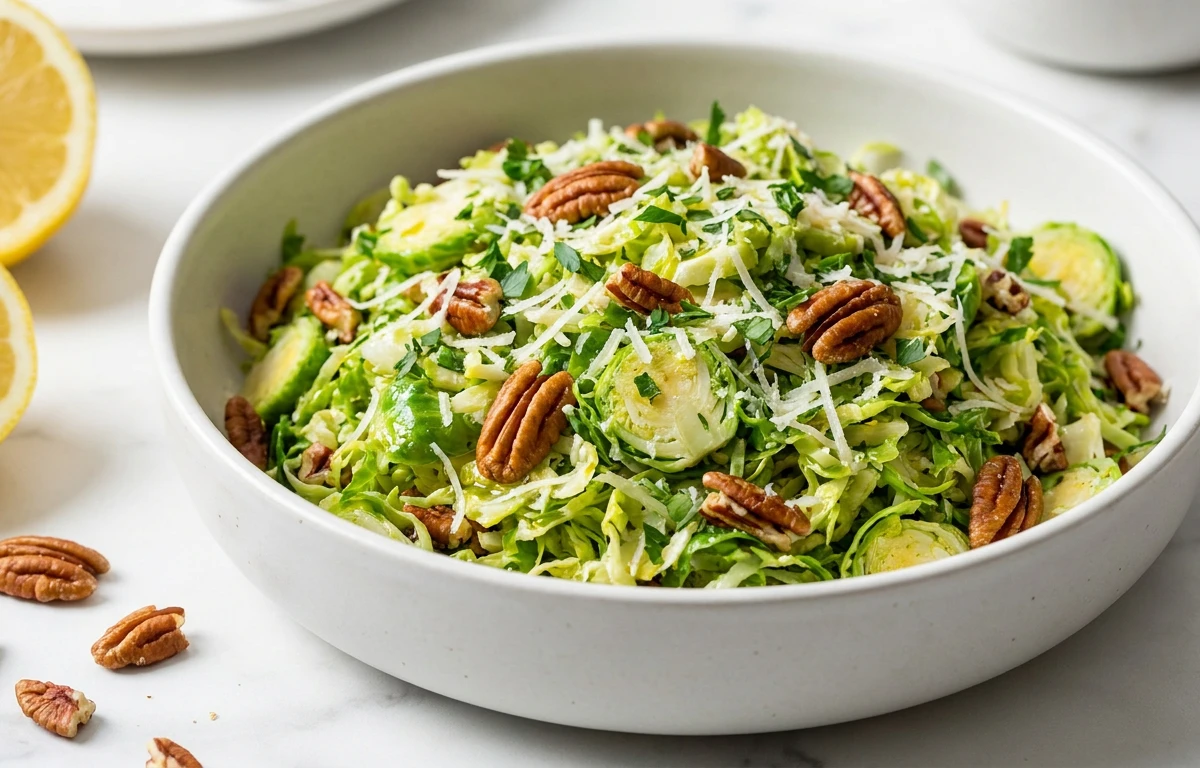
Ready to give them a try? These three simple methods show off brussels sprouts at their best, from a classic roasted side to a refreshing raw salad.
Want more healthy vegetables worked into your week — without the planning?
Our meal planner can build a balanced week of meals, featuring high-fiber vegetables like brussels sprouts, with all the portions and macros calculated for you.
Build my weekly plan →SOURCES & REFERENCES · 3
One more thing
Eating well is rarely about willpower. It’s about having a short list of dinners you actually want to eat. Pick two from this list. Make them next week. The rest will follow.
If you want these on autopilot, our weekly meal planner can drop the picks above into your calendar with one click and build a single grocery list from the merged ingredients.
FREQUENTLY ASKED QUESTIONS
Frequently asked questions
Are brussels sprouts good for weight loss?
Yes, they're fantastic for weight loss. They are very low in calories (43 per 100g) but high in fiber and water, which helps you feel full and satisfied, making it easier to manage your overall calorie intake.
Are brussels sprouts keto-friendly?
Absolutely. A 100g serving has about 8.9g of total carbs and 3.8g of fiber, leaving just 5.1g of net carbs. This makes them an excellent vegetable choice that fits easily into a ketogenic diet.
Why do brussels sprouts make some people gassy?
Brussels sprouts contain both fiber and raffinose, a type of carbohydrate that humans can't easily digest. When these reach your large intestine, the bacteria there ferment them, which can produce gas. Cooking them thoroughly and starting with smaller portions can help.
Is it okay to eat brussels sprouts raw?
Yes, it's perfectly safe and quite delicious to eat them raw, especially when they're thinly sliced or shredded in a salad. Raw sprouts have a milder, less bitter flavor and a great crunch. Just be aware they may be slightly harder to digest for some people than cooked sprouts.
METHODOLOGY
How this article was created
Built using verified nutrition databases, culinary research, and traditional cooking knowledge — every claim is cross-referenced against the sources listed in the article.
· USDA data· Culinary research· Quality reviewed
Read our methodology →TRANSPARENCY
About this content
Articles are curated using trusted food databases (USDA FoodData Central, IFCT), culinary literature, and dietary guidelines, then structured by our editorial team for clarity, accuracy, and usefulness.
· Verified data sources· Culinary research· Quality reviewed
Read our editorial policy →EXPLORE OUR MEALS
Meals that fit this article

AMERICAN · 1677 CAL
Almonds with Sliced Apple + supplement + iron

MEDITERRANEAN · 809 CAL
Greek Yogurt with Berries Almonds and Granola + supplement + iron

GENERAL_HEALTHY · 705 CAL
Banana with Peanut Butter Pregnancy + supplement + iron

MODERN · 982 CAL
Hummus with Crudits and Pita with Fresh Orange Snack + supplement + iron
TAGGED
KEEP READING