Mint: Nutrition, Glycemic Index & Health Benefits Explained: verified nutrition facts, glycemic context, serving guidance, and practical cooking ideas.
↑ Fresh mint adds huge flavour for almost no calories.
The forgotten herb
Mint is one of those ingredients we see so often, we stop really seeing it at all. It’s the sprig on your dessert, the leaf in your water, the afterthought in a fruit salad. But it's time for a reappraisal. Think of mint not as a decoration, but as a legitimate leafy green, just like spinach or kale, only with a much bigger personality.
A generous handful of mint tossed into a salad or smoothie doesn't just add a burst of cool, clean flavour. It adds real, measurable nutrition — especially fibre and vitamin C — without the things we're often trying to limit, like sugar, salt, or fat.
IN ONE LINE
Think of mint as a flavourful leafy green. It's packed with fibre and vitamin C, and adds incredible flavour for virtually zero calories or sugar.
Mint nutrition facts
You're unlikely to eat 100 grams of mint in one sitting (that's a very big bunch!), but looking at the numbers for this amount shows just how nutrient-dense it is. A generous handful of about 20 grams would provide about a fifth of these values.
The two numbers that jump out are for fibre and vitamin C. Eight grams of fibre is a huge amount for a leafy green, putting it on par with beans or lentils by weight. And over a third of your daily vitamin C in a big bunch is nothing to sneeze at. It also provides small amounts of iron, potassium, and vitamin A.
Mint's glycemic index
You won't find a published glycemic index (GI) for mint, and for good reason: it's irrelevant. Glycemic index measures how much a food's carbohydrates raise your blood sugar. Mint has so little digestible carbohydrate (most of it is fibre) and is eaten in such small quantities that its effect on blood sugar is practically zero. It's a 'free food' in that regard, meaning you can use it to add flavour without worrying about a blood sugar response at all.
GLYCEMIC INDEX · MINT vs COMMON FOODS
Mint has a negligible effect on blood sugar
Mint
leafy herb
LOW
Cherries
whole fruit
LOW
Apple
whole fruit
LOW
Watermelon
whole fruit
HIGH
Cornflakes
refined
HIGH
SCALE 0–90
04590
How to use more mint
The goal is to start thinking of mint as an ingredient, not a garnish. It's incredibly versatile.
01
Treat it like a salad leaf.
Tear up a big handful of mint leaves and toss them through any salad. It's especially good with cucumber, tomato, and feta.
02
Blend it into smoothies.
A few sprigs of mint add a fresh, clean kick to a green smoothie, cutting through the taste of spinach or kale.
03
Make a proper mint tea.
Forget the dusty bags. Steep a large handful of fresh mint sprigs in hot water for 5-10 minutes. It's a world apart.
04
Chop it into dips and dressings.
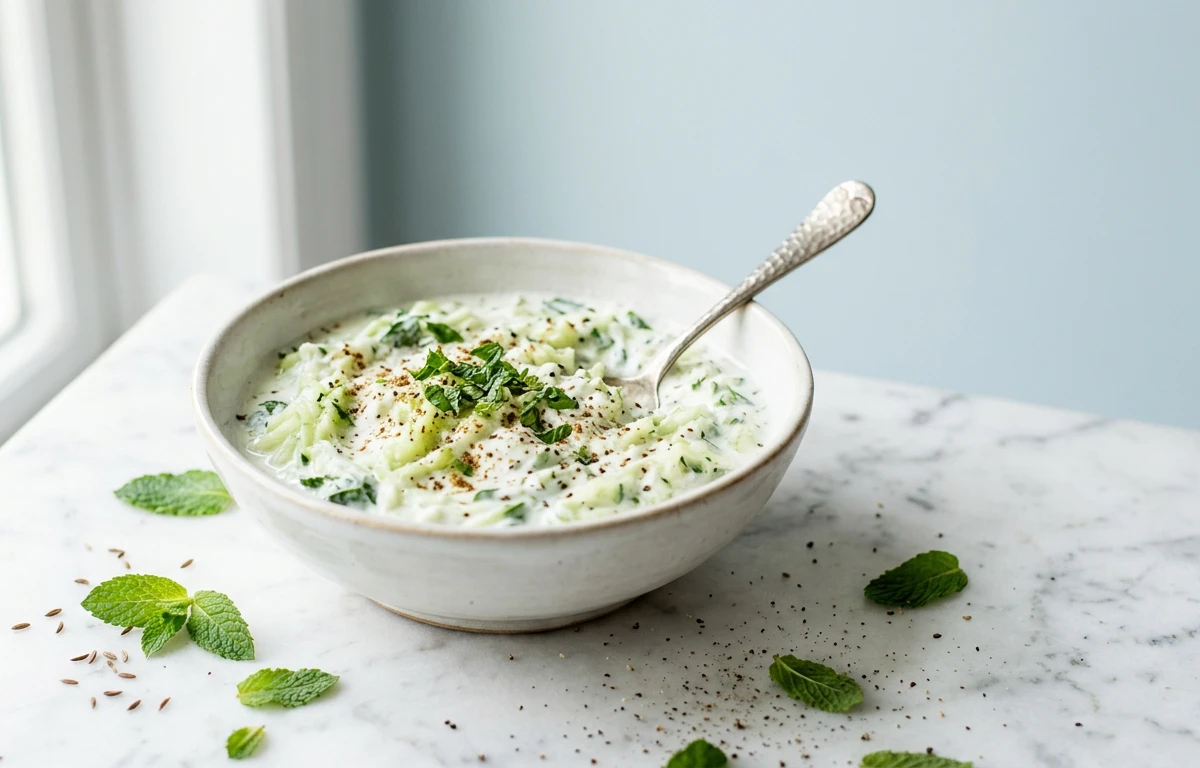
Finely chopped mint is the key to a good yogurt raita, a fresh vinaigrette, or a simple dip with cottage cheese.
05
Infuse your water.
Add a few sprigs of mint and some slices of cucumber or lime to a jug of water. It's a simple way to make hydration more interesting.
What mint is good for
01
Aiding digestion
Mint, particularly peppermint, has been used for centuries to soothe indigestion, gas, and bloating. The menthol it contains can help relax stomach muscles.
Menthol
active compound
02
Flavour without calories
For anyone managing their weight, mint is a powerful tool. It delivers a huge burst of flavour with almost no calories, fat, or sugar.
~2
cal / sprig
03
A surprising vitamin C source
We think of citrus for vitamin C, but herbs can be great sources. A generous portion of mint contributes meaningfully to your daily intake for immune support.
35%
DV per 100g
04
Fibre for gut health
With 8 grams of fibre per 100 grams, mint is surprisingly fibrous. While you won't eat that much, adding handfuls to meals boosts your fibre intake for better gut health.
8 g
fibre / 100g
What to pair mint with
Mint has a strong, clean flavour that cuts through richness and complements both sweet and savoury dishes.
Eat freely — or be mindful?
Three fresh ideas
Move beyond the garnish with these simple recipes that put mint front and center.
Want fresh flavours worked into a balanced week — without the planning?
Our meal planner uses fresh herbs like mint to create delicious, healthy meals, with portions and macros already calculated and a single grocery list at the end.
Build my weekly plan →SOURCES & REFERENCES · 3
One more thing
Eating well is rarely about willpower. It’s about having a short list of dinners you actually want to eat. Pick two from this list. Make them next week. The rest will follow.
If you want these on autopilot, our weekly meal planner can drop the picks above into your calendar with one click and build a single grocery list from the merged ingredients.
FREQUENTLY ASKED QUESTIONS
Frequently asked questions
Can you eat raw mint leaves?
Absolutely. Eating them raw in salads, smoothies, or as a garnish is one of the best ways to get their full flavour and nutritional benefits, including the fibre which is lost in teas.
Is mint good for an upset stomach?
It often is. Mint, especially peppermint, has a long history of being used to soothe indigestion, gas, and bloating. However, for people with GERD (acid reflux), it can sometimes make symptoms worse, so it's a case of knowing your own body.
What's the difference between spearmint and peppermint?
Peppermint contains a high concentration of menthol, giving it a very strong, cool, and almost spicy flavour. Spearmint is milder and sweeter. For cooking, spearmint is often preferred, while peppermint is more common in teas and candies.
Does mint tea have the same benefits as fresh mint?
Partially. Mint tea is excellent for hydration and provides the volatile oils like menthol that can aid digestion. However, you lose all the dietary fibre when you only steep the leaves. For the full benefits, you need to eat the leaf itself.

ABOUT THE AUTHOR
Shreya Chatterjee
NUTRITION WRITER
Shreya is a nutrition writer and the voice behind The Nutrition Pen, where she turns evidence-based nutrition into simple, repeatable eating habits. Her writing focuses on practical food guidance — what to actually put on the plate — for readers who want to eat well without the noise.
Meet the editorial team →METHODOLOGY
How this article was created
Built using verified nutrition databases, culinary research, and traditional cooking knowledge — every claim is cross-referenced against the sources listed in the article.
· USDA data· Culinary research· Quality reviewed
Read our methodology →TRANSPARENCY
About this content
Articles are curated using trusted food databases (USDA FoodData Central, IFCT), culinary literature, and dietary guidelines, then structured by our editorial team for clarity, accuracy, and usefulness.
· Verified data sources· Culinary research· Quality reviewed
Read our editorial policy →RELATED RECIPES
Cook from this article
EXPLORE OUR MEALS
Meals that fit this article

AMERICAN · 1677 CAL
Almonds with Sliced Apple + supplement + iron

MEDITERRANEAN · 809 CAL
Greek Yogurt with Berries Almonds and Granola + supplement + iron

GENERAL_HEALTHY · 705 CAL
Banana with Peanut Butter Pregnancy + supplement + iron

MODERN · 982 CAL
Hummus with Crudits and Pita with Fresh Orange Snack + supplement + iron
TAGGED
KEEP READING