
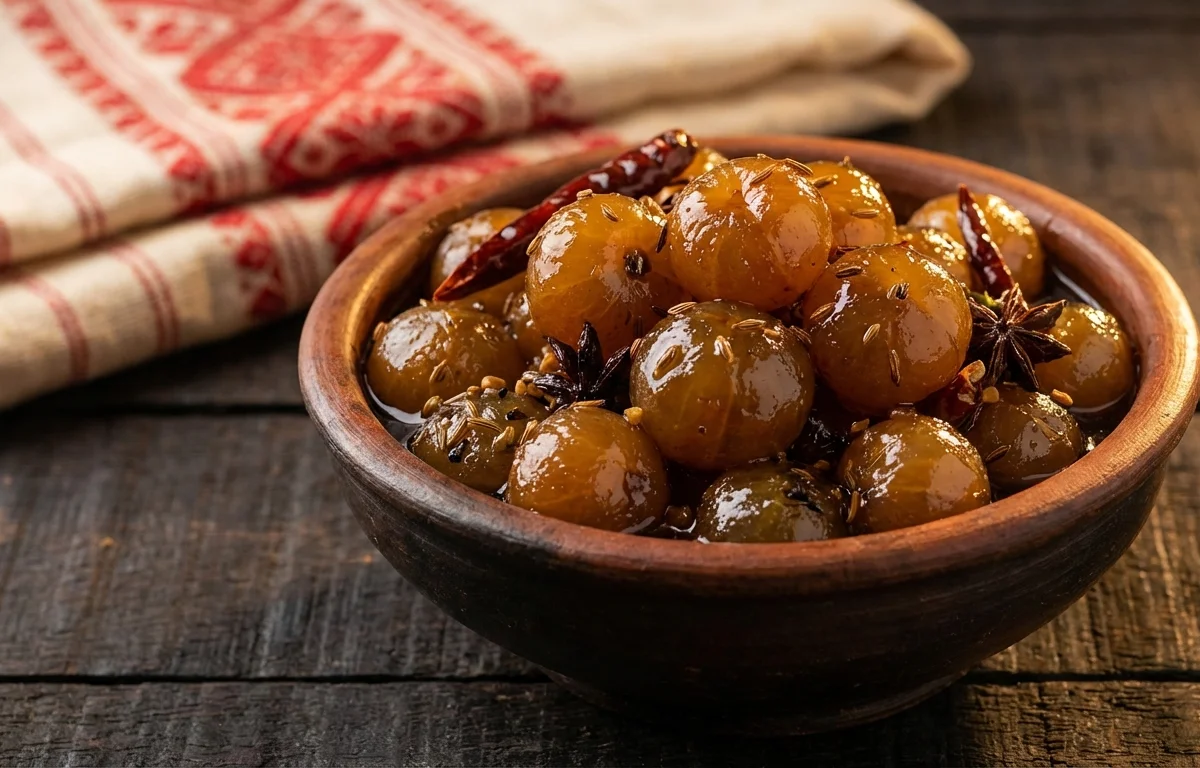
Amlokhi'r Achar
A bright, sweet-tangy Bengali pickle made with Indian gooseberries, mustard oil, and warm spices. The fruit turns tender while still holding its shape, making this achar lovely with rice, khichuri, or simple dal.
For 8 servings
- boil · ~10 min
Boil the amla until just tender.
1.Bring the water to a boil in a saucepan.2.Add the amla and cook until the segments loosen but the fruit still holds its shape, 8 to 10 minutes.3.Drain well and let the amla cool enough to handle.4.Separate into segments and remove the seeds.TIPDo not overcook the amla or it will turn mushy in the pickle. - temper · ~2 min
Heat the mustard oil and bloom the spices.
1.Heat the mustard oil in a pan until it reaches a light smoke, then lower the heat.2.Add fennel seeds, nigella seeds, mustard seeds, and dried red chili.3.Let the spices sizzle for 20 to 30 seconds until fragrant. - saute · ~5 min
Cook the amla with jaggery and spice powders.
1.Add the amla segments to the pan and toss gently in the spiced oil.2.Add turmeric powder, red chili powder, and salt.3.Add the jaggery and cook on low heat until it melts and lightly coats the amla.4.Cook 4 to 5 minutes, stirring gently, until the pickle looks glossy and slightly sticky.TIPKeep the heat low once the jaggery goes in so it melts smoothly and does not catch at the bottom. - rest · ~30 min
Cool the achar completely.
Take the pan off the heat and let the pickle cool fully before storing. The flavors deepen as it sits.
- serve
Store in a clean dry jar and serve as needed.
What to keep in mind.
6 tips from the recipe — small details that make a real difference to the final dish.
- 1Boil the amla only until the natural ridges start opening; if the segments split apart in water, they are overdone.
- 2After draining, spread the amla briefly on a plate so excess moisture evaporates before it goes into the oil.
- 3Heat mustard oil to a light smoke first to mellow its raw sharpness, then cool slightly before adding the whole spices.
- 4Stir very gently once the amla is segmented so the pieces stay intact and look glossy in the finished achar.
- 5Keep the flame low after adding jaggery; it should melt into a syrupy coating, not caramelize into hard patches.
- 6Cool completely before jarring, and always use a dry spoon to keep the pickle fresh longer in the refrigerator.
Adapt it for your goals.
Spicier
Add an extra dried red chili or a little more chili powder for a hotter achar that pairs especially well with plain rice or khichuri.
less sweetLess-sweet
Reduce the jaggery slightly if you prefer a sharper, more tart pickle where the amla's natural sourness stands out.
panch phoron stylePanch-phoron-style
Use panch phoron in place of the separate fennel, nigella, and mustard seeds for a more classic Bengali mixed-spice aroma.
ginger forwardGinger-forward
Add a little finely julienned ginger with the amla for extra warmth and a brighter, more savory finish.
Why this is on our healthy list.
Amla-Rich Antioxidants
Indian gooseberry is traditionally valued for its naturally high antioxidant content, making this pickle more than just a condiment.
Digestive Spice Support
Fennel, mustard seeds, nigella, and chili bring aromatic compounds that are often used in pickles to add depth and digestive warmth.
Small-Amount Flavor Booster
Because achar is usually eaten in small portions alongside meals, it can add strong taste without needing a large serving.
Frequently asked questions
The fruit should be just tender, with segments loosening around the seed, but it must still hold its shape. If it feels soft and collapsing, it has gone too far.


