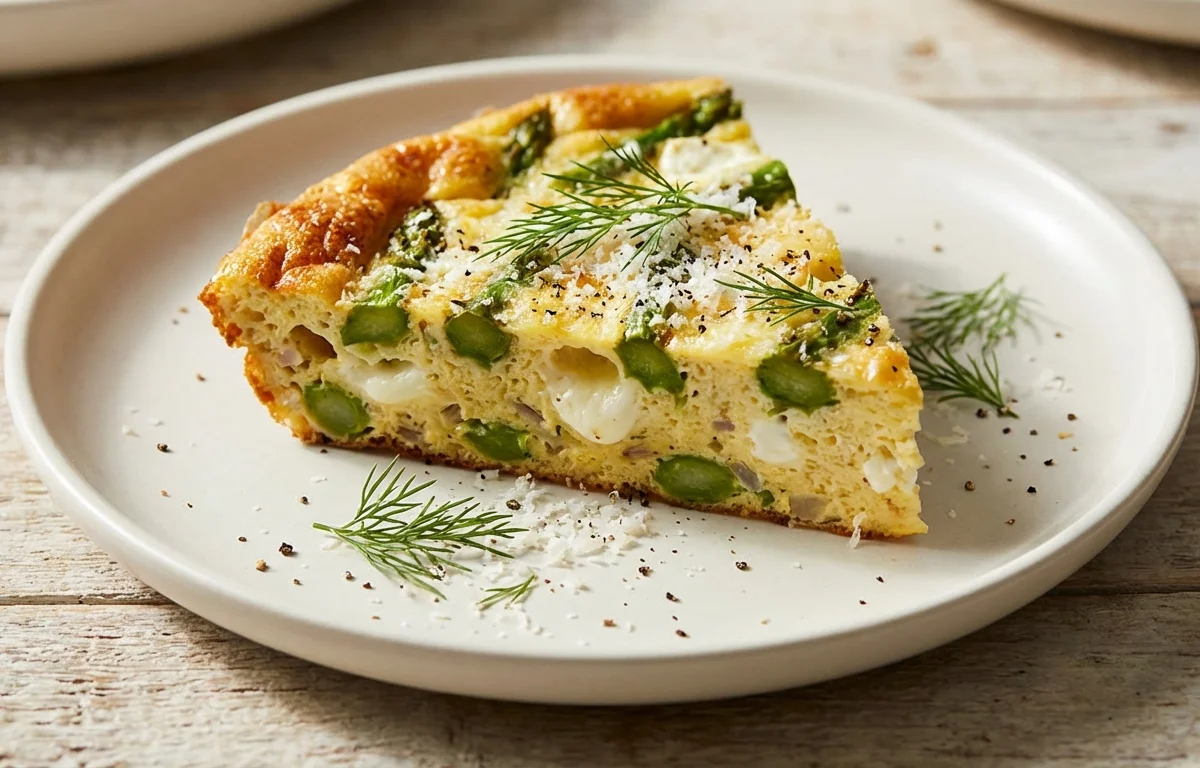
Asparagus Goat Cheese Frittata
A light, fluffy frittata bursting with tender asparagus and creamy, tangy goat cheese. This elegant yet simple dish comes together in one skillet and works beautifully for brunch, lunch, or a quick weeknight dinner with a side salad.
For 4 servings
- prep · ~3 min
Preheat the oven and whisk the eggs.
1.Position an oven rack in the upper third and preheat to 400°F (200°C).2.Crack 8 eggs into a medium bowl, add 2 tbsp milk, 1 pinch salt, and 1 pinch black pepper.3.Whisk vigorously until the eggs are smooth and slightly frothy, about 30 seconds. - saute · ~8 min
Sauté the asparagus and onion.
1.Heat 1 tbsp olive oil in a 10-inch oven-safe skillet over medium heat.2.Add the chopped onion and cook until softened, about 3 minutes.3.Add the asparagus pieces and sauté until bright green and tender-crisp, 4 to 5 minutes.4.Spread the vegetables evenly across the bottom of the skillet.TIPDon't overcook the asparagus here — it will continue to cook in the oven. - assemble · ~2 min
Add the eggs and goat cheese.
1.Reduce the heat to low. Pour the whisked eggs evenly over the vegetables.2.Dot the crumbled goat cheese evenly across the surface of the eggs.3.Let it cook undisturbed on the stovetop until the edges just start to set, about 2 minutes. - bake · ~12 min
Bake the frittata until puffed and golden.
Transfer the skillet to the preheated oven and bake until the center is set and the top is lightly golden, 10 to 12 minutes. The frittata should spring back when gently pressed.
TIPWatch closely after 8 minutes — goat cheese can brown quickly. - rest · ~5 min
Rest briefly before slicing.
Remove the skillet from the oven and let the frittata rest for 5 minutes. This allows it to set fully and makes slicing cleaner.
- garnish · ~1 min
Garnish with chives and serve.
1.Scatter the chopped fresh chives over the top of the frittata.2.Slice into 4 wedges directly in the skillet.3.Serve warm or at room temperature.
What to keep in mind.
6 tips from the recipe — small details that make a real difference to the final dish.
- 1For the fluffiest texture, whisk the eggs until they are uniformly frothy and pale yellow.
- 2Use an oven-safe skillet with a lid if you prefer a softer top; skip the lid for a golden-brown finish.
- 3Cut asparagus into uniform 1-inch pieces so they cook evenly alongside the onion.
- 4Let the frittata rest for the full 5 minutes after baking — this firms the eggs and prevents a watery slice.
- 5Goat cheese can be swapped for feta if you want a saltier, brinier flavor profile.
- 6Leftover frittata keeps well in the fridge for up to 3 days; reheat gently in a low oven or microwave.
Adapt it for your goals.
Low-carb / keto
Omit the milk and increase the eggs to 10 for an even denser, higher-protein frittata that fits low-carb and keto diets.
vegetarian protein boostVegetarian protein boost
Add 1/2 cup of cooked, crumbled vegetarian sausage or sautéed mushrooms for extra heartiness and umami depth.
gluten freeGluten-free
This frittata is naturally gluten-free — just confirm your goat cheese is made without any gluten-containing stabilizers.
dairy freeDairy-free
Replace the milk with unsweetened almond or oat milk and skip the goat cheese (or use a dairy-free soft cheese alternative) for a lighter, dairy-free version.
Why this is on our healthy list.
Rich in Protein
Eggs provide high-quality, complete protein that supports muscle repair and keeps you full for hours.
Good Source of Vitamin K
Asparagus is packed with vitamin K, which is important for bone health and proper blood clotting.
Low in Carbohydrates
With only a few grams of carbs per serving, this frittata works well for low-carb and balanced eating plans.
Contains Probiotics
Goat cheese contains beneficial live cultures that can support gut health when the cheese is unpasteurized or labeled as containing active cultures.
Frequently asked questions
Yes, but thaw and pat it very dry first to avoid excess water in the frittata. Sauté just until tender-crisp.