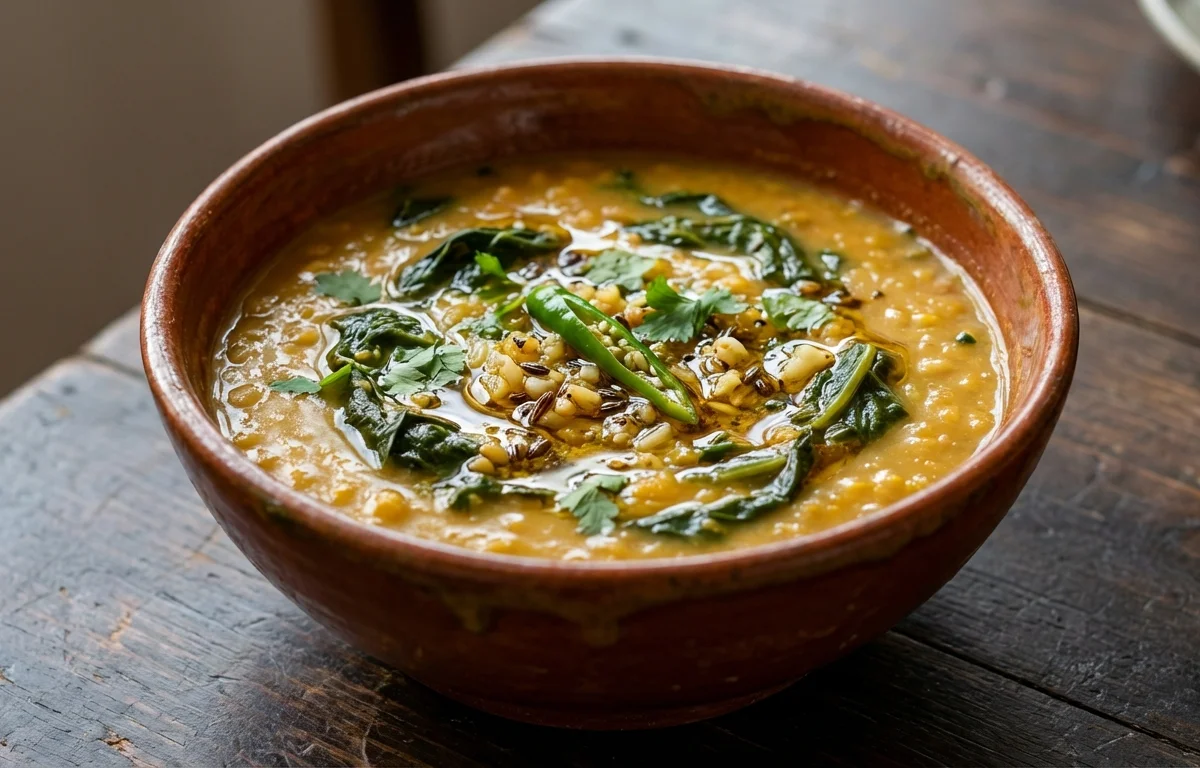
Assamese Dal
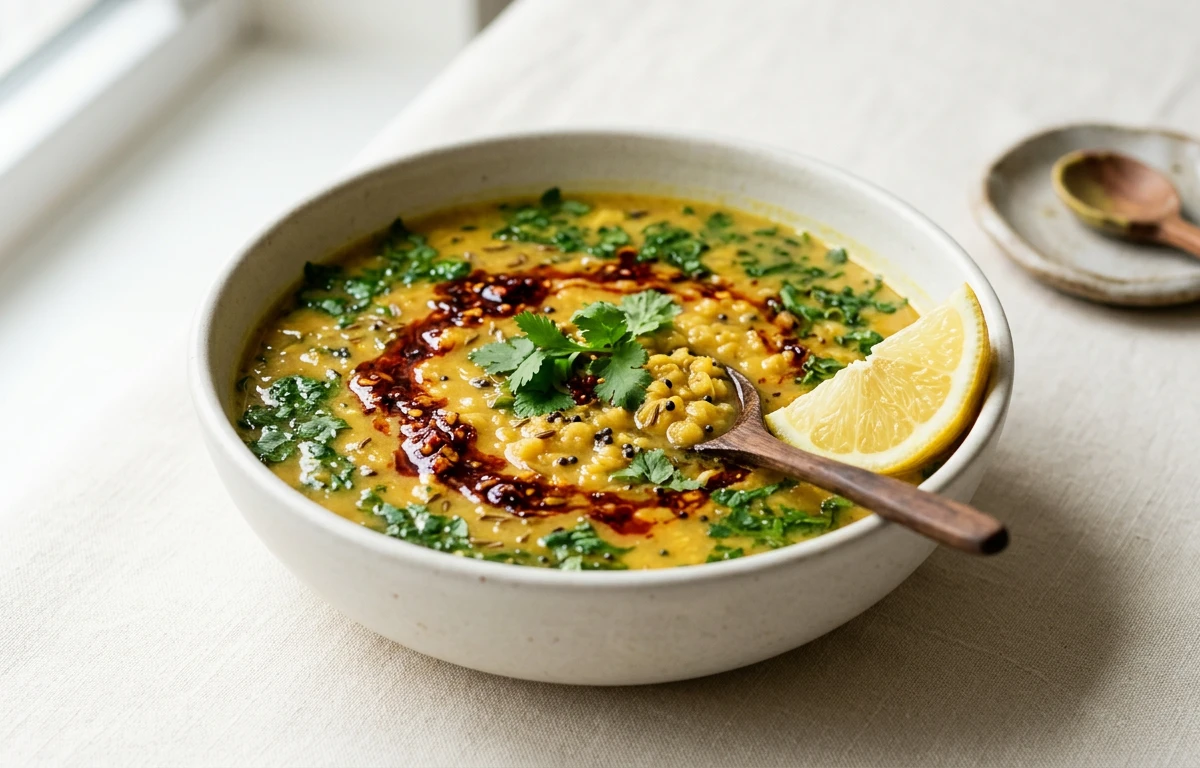
A light, comforting lentil soup from Assam that lets the natural sweetness of masoor dal shine through. Tempered simply with mustard oil, panch phoron, and dried red chilies, this everyday dal skips heavy spices. Finished with a squeeze of lemon and fresh cilantro, it's soothing on its own or with steamed rice.
For 4 servings
- prep
Rinse and prepare the dal.
Wash the masoor dal in several changes of water until the water runs clear. Drain well and set aside.
- boil · ~25 min
Boil the dal with turmeric.
In a medium saucepan, combine the rinsed dal, water, and turmeric powder. Bring to a boil over medium-high heat, then reduce to a gentle simmer. Cook uncovered for 20–25 minutes, stirring occasionally, until the lentils are soft and break apart. Skim off any foam that rises to the surface.
TIPStir occasionally to prevent sticking. The dal should be soup-like, not too thick. - mix · ~1 min
Season and whisk the cooked dal.
Add the salt to the cooked dal and whisk briskly for 30 seconds to break down the lentils and create a smooth, uniform consistency. If the dal is too thick, add a splash of warm water to reach a light, soupy texture. Keep warm on low heat.
- temper · ~2 min
Make the tempering with mustard oil.
1.Heat the mustard oil in a small pan over medium-high heat until it reaches its smoking point and the raw smell disappears.2.Reduce the heat to low and add the panch phoron. Let it splutter for 10–15 seconds.3.Add the dried red chilies and sliced garlic. Sauté until the garlic turns light golden (30–40 seconds).TIPHeating mustard oil to its smoke point is essential to mellow its pungent bite. - mix · ~1 min
Pour the tempering over the dal.
Immediately pour the hot tempering over the simmering dal. Be careful — it will sizzle. Stir well to combine and let it simmer together for 1 minute so the flavors meld.
- mix
Finish with lemon and garnish.
Turn off the heat. Stir in the lemon juice and adjust salt if needed. Ladle into bowls and sprinkle with fresh coriander leaves.
TIPAdd the lemon juice off the heat to keep its bright, fresh flavor intact. - serve
Serve hot with steamed rice.
Ladle the dal into serving bowls. Serve immediately alongside plain steamed rice and a wedge of lemon on the side.
What to keep in mind.
5 tips from the recipe — small details that make a real difference to the final dish.
- 1Heating mustard oil to its smoking point is essential to mellow its pungent bite and bring a nutty depth.
- 2Whisk the cooked dal vigorously for 30 seconds to break down lentils into a smooth, soup-like consistency.
- 3Add lemon juice only after turning off the heat to preserve its bright, fresh acidity without bitterness.
- 4Skim off any foam that rises during boiling for a cleaner, clearer dal with better texture.
- 5Let the tempering sizzle into the dal, then simmer together for 1 minute to marry the flavors deeply.
Adapt it for your goals.
Richer dal
Add 1/4 cup coconut milk or a teaspoon of ghee after tempering for a creamier, subtly sweet version — ideal when serving without a side dish.
herb twistHerb twist
Swap cilantro for a handful of fresh curry leaves or mint leaves at the end for a different aromatic lift.
add vegetablesAdd vegetables
Stir in finely chopped tomato, spinach, or bottle gourd during the last 10 minutes of cooking for extra nutrients and texture.
spicier temperingSpicier tempering
Crush a dried red chili or add a pinch of red chili flakes with the panch phoron for a bolder heat.
Why this is on our healthy list.
Rich in Plant Protein
Masoor dal provides a solid dose of plant-based protein, supporting muscle repair and satiety.
High in Dietary Fiber
Red lentils are packed with soluble fiber, aiding digestion, blood sugar balance, and heart health.
Low in Fat & Calories
With minimal oil and no heavy cream, this dal is a light, heart-friendly meal option.
Good Source of Iron
Lentils supply non-heme iron; pairing with the lemon juice enhances absorption.
Contains Anti-inflammatory Spices
Turmeric and panch phoron provide curcumin and other compounds that may help reduce inflammation.
Frequently asked questions
Yes, but they need longer cooking (30–40 minutes) and won't break down as much — the dal will be chunkier and less creamy.