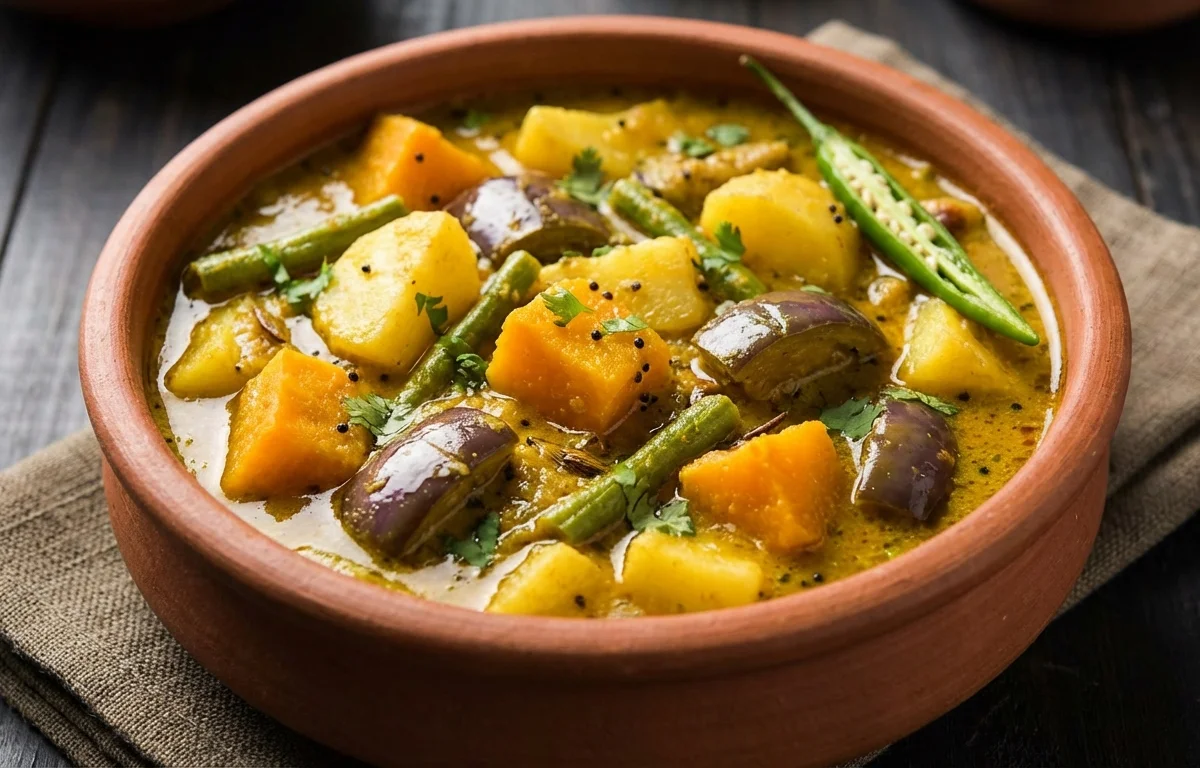
Assamese Mustard Vegetable Curry
A vibrant, nutrient-packed vegetable curry from Assam with a bold mustard kick. Seasonal vegetables are simmered in a freshly ground mustard seed paste until tender, creating a pungent, slightly bitter gravy that pairs beautifully with steamed rice. Simple, rustic, and deeply satisfying.
For 4 servings
- prep
Soak the mustard seeds.
Soak yellow mustard seeds in warm water for 30 minutes. Drain and grind to a smooth paste using a mortar and pestle or small blender with a splash of water.
TIPSoaking reduces bitterness and makes grinding easier. Grind just before use for the best pungency. - prep
Prepare the vegetables.
Peel and cube the potato. Cut cauliflower into small florets. Slice radish into half-moons. Trim green beans and cut into 1-inch pieces. Slit green chilies.
- boil · ~12 min
Cook the vegetables.
Place potato, cauliflower, radish, green beans, and green chilies in a pan. Add 1/2 cup water, turmeric powder, and salt. Cover and simmer until vegetables are just tender, about 10-12 minutes.
TIPThe vegetables should be fork-tender but not mushy. They will cook further with the mustard paste. - temper · ~2 min
Make the tempering with mustard oil.
Heat mustard oil in a small pan until it reaches smoking point. Remove from heat and let it cool slightly for 30 seconds. Add crushed garlic and chopped ginger, sautéing until fragrant and lightly golden.
TIPHeating mustard oil to its smoking point removes its raw pungency and makes it safe for consumption. - mix
Add mustard paste and tempering to the vegetables.
Stir the ground mustard paste into the cooked vegetables along with the tempering of garlic, ginger, and oil. Mix well to coat all the vegetables evenly.
TIPDo not cook the mustard paste for too long after adding, or it will lose its characteristic pungency. - simmer · ~5 min
Simmer the curry until flavors meld.
Cook on low heat for 4-5 minutes, stirring occasionally, until the raw smell of mustard disappears and the curry thickens slightly. Adjust salt if needed.
TIPThe curry should be semi-dry, coating the vegetables well, not swimming in water. - rest · ~5 min
Rest for 5 minutes before serving.
Remove from heat and let the curry sit covered for 5 minutes. This allows the mustard flavor to mellow and settle.
TIPThis curry tastes even better after an hour as the flavors deepen.
What to keep in mind.
6 tips from the recipe — small details that make a real difference to the final dish.
- 1Soak mustard seeds in warm water for 30 minutes to reduce bitterness and make grinding smoother.
- 2Heat mustard oil until it reaches its smoking point to mellow its raw, harsh flavor.
- 3Add the mustard paste only after the vegetables are cooked to preserve its pungent kick.
- 4Do not overboil vegetables — they should be fork-tender, not mushy, as they continue cooking with the paste.
- 5Let the curry rest for 5-10 minutes after cooking so the mustard heat mellows and flavors meld.
- 6For a thicker gravy, mash one or two potato cubes into the curry before adding the paste.
Adapt it for your goals.
Vegan
Naturally vegan as written — no changes needed. Perfect for plant-based diets without sacrificing bold flavor.
low oilLow-oil
For a lighter version, reduce mustard oil to 1 teaspoon and dry-toast garlic and ginger before adding to the vegetables. The flavor remains robust with less fat.
extra vegetablesExtra-vegetables
Add cubed pumpkin, sweet potato, or eggplant for a heartier, sweeter variation. These vegetables complement the bitter mustard wonderfully.
protein boostProtein boost
Stir in boiled chickpeas or pan-fried tofu cubes along with the mustard paste for a more substantial meal.
Why this is on our healthy list.
Rich in Fiber
This curry packs a mix of cauliflower, green beans, and radish — all high in dietary fiber, which supports healthy digestion.
Low in Calories
A water-based vegetable curry with minimal oil, making it a light yet satisfying option for weight management.
Good Source of Vitamin C
Cauliflower and radishes are naturally rich in vitamin C, helping to support immune function.
Contains Anti-inflammatory Compounds
Mustard seeds and turmeric both contain compounds that have anti-inflammatory properties and may aid overall wellness.
Frequently asked questions
Yes, you can substitute with vegetable oil, coconut oil, or ghee. However, the dish will lose its characteristic pungent aroma that mustard oil provides.