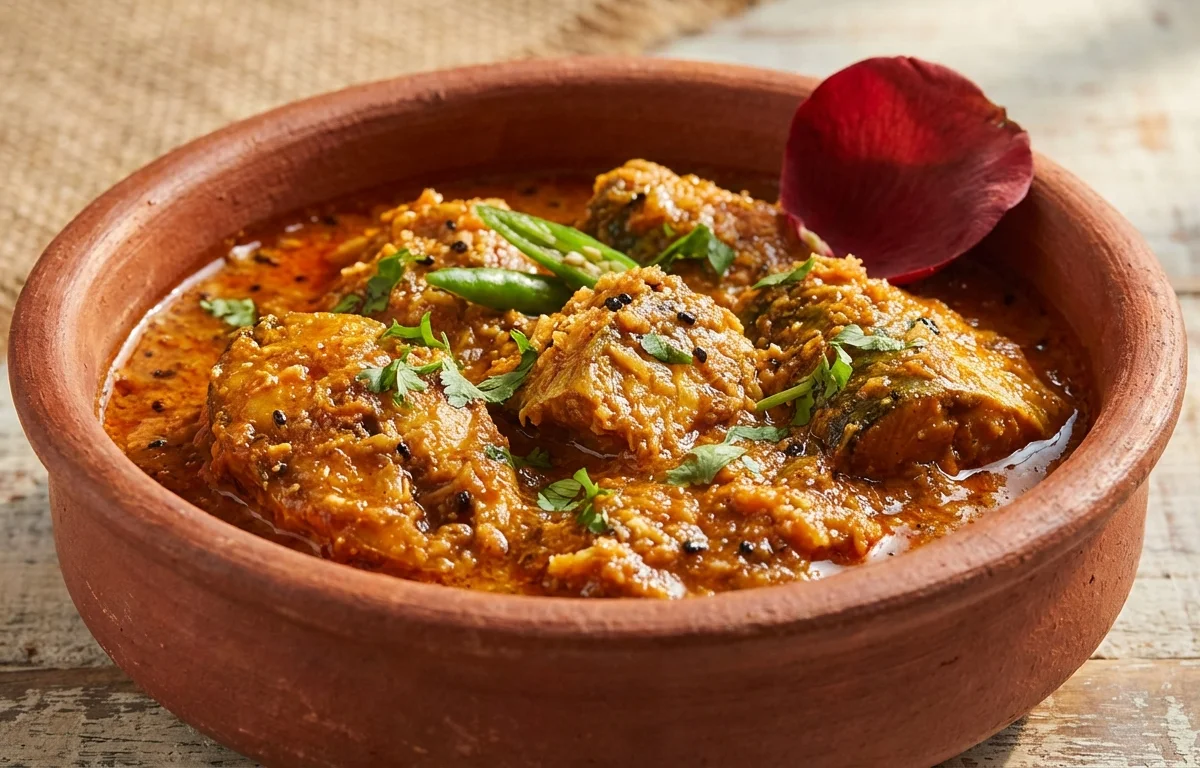
Bangda Uddamethi
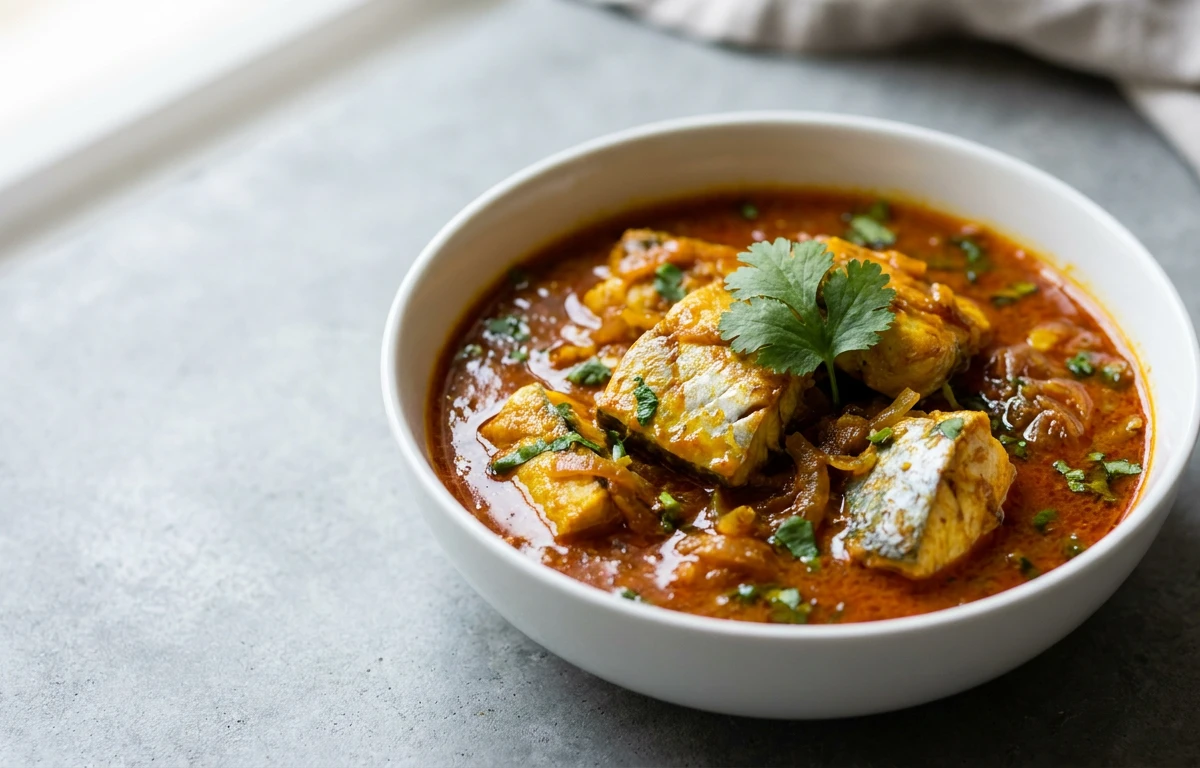
A coastal fish curry with mackerel simmered in a lightly bitter, earthy gravy made from fenugreek and urad dal. The flavors are bold yet balanced, with tamarind adding tang and spices rounding out the sauce.
For 4 servings
- prep · ~20 min
Soak the urad dal and fenugreek.
Rinse the urad dal and fenugreek seeds, then soak them in water for 20 minutes so they soften slightly and blend more easily.
- prep · ~5 min
Clean and salt the fish.
Wash the mackerel pieces well and rub them with a little of the salt. Set aside while you make the curry base.
- saute · ~7 min
Cook the masala base.
1.Heat oil in a pan over medium heat.2.Add onion and cook until soft and light golden, about 4 to 5 minutes.3.Add garlic, ginger, and dry red chili and cook for 1 minute.4.Add tomato, turmeric powder, and coriander powder, then cook until the tomato turns soft.TIPKeep the heat medium so the spices deepen in flavor without turning bitter. - mix · ~4 min
Grind the curry paste.
Drain the soaked urad dal and fenugreek seeds. Grind them with the cooked masala and a little water to make a smooth, pourable paste.
- simmer · ~6 min
Simmer the gravy.
Transfer the ground paste to a pot, add the remaining water, tamarind paste, and the rest of the salt. Bring it to a gentle simmer and cook for 5 to 6 minutes, stirring now and then.
- simmer · ~10 min
Cook the fish in the gravy.
Slide the mackerel pieces into the simmering gravy in a single layer. Cover and cook gently for 8 to 10 minutes, until the fish is just cooked through and the gravy is slightly thickened.
TIPDo not stir vigorously after adding the fish or the pieces may break. Swirl the pot gently instead. - rest · ~5 min
Rest the curry for 5 minutes.
- serve
Serve hot with rice.
What to keep in mind.
7 tips from the recipe — small details that make a real difference to the final dish.
- 1Soak the urad dal and fenugreek fully for the stated time so the paste grinds smooth and the gravy cooks up silky, not grainy.
- 2Salting the mackerel briefly before cooking helps season the fish inside and firms the flesh so it holds together better in the curry.
- 3Cook the onion only to light golden; a dark brown base can make the fenugreek taste overly bitter.
- 4Grind the masala to a pourable, very smooth paste so the urad dal thickens the curry evenly without lumps.
- 5Let the gravy simmer before adding the fish; raw mackerel should go into hot, seasoned liquid so it cooks quickly and stays moist.
- 6After adding the fish, swirl the pot instead of stirring with a spoon to keep the medium pieces from breaking apart.
- 7Rest the curry for 5 minutes before serving so the tamarind, fenugreek, and fish flavors settle and the gravy thickens slightly.
Adapt it for your goals.
Low-oil
Reduce the oil slightly and cook the onion with a splash of water as needed; the urad dal still gives enough body to the gravy.
spicierSpicier
Add 1 or 2 extra dried red chilies while sautéing for a hotter, more assertive coastal-style curry.
milderMilder
Use fewer dried red chilies and a little extra tomato to soften the heat while keeping the tangy-bitter balance.
sardineSardine
Swap the mackerel for sardines if you want a stronger, more intensely fishy coastal flavor that suits this gravy well.
Why this is on our healthy list.
Rich in Omega-3 Fats
Mackerel is an oily fish known for beneficial fats, making this curry a flavorful way to include more seafood in the diet.
Protein from Fish and Dal
The combination of mackerel and urad dal adds satisfying protein, helping make the dish more filling than a thin fish curry.
Spice and Aromatic Support
Garlic, ginger, turmeric, and dried red chili bring depth along with plant compounds commonly valued in traditional cooking.
Frequently asked questions
Yes, thaw it completely, pat it dry, and then salt it lightly before cooking so it does not water down the gravy.