
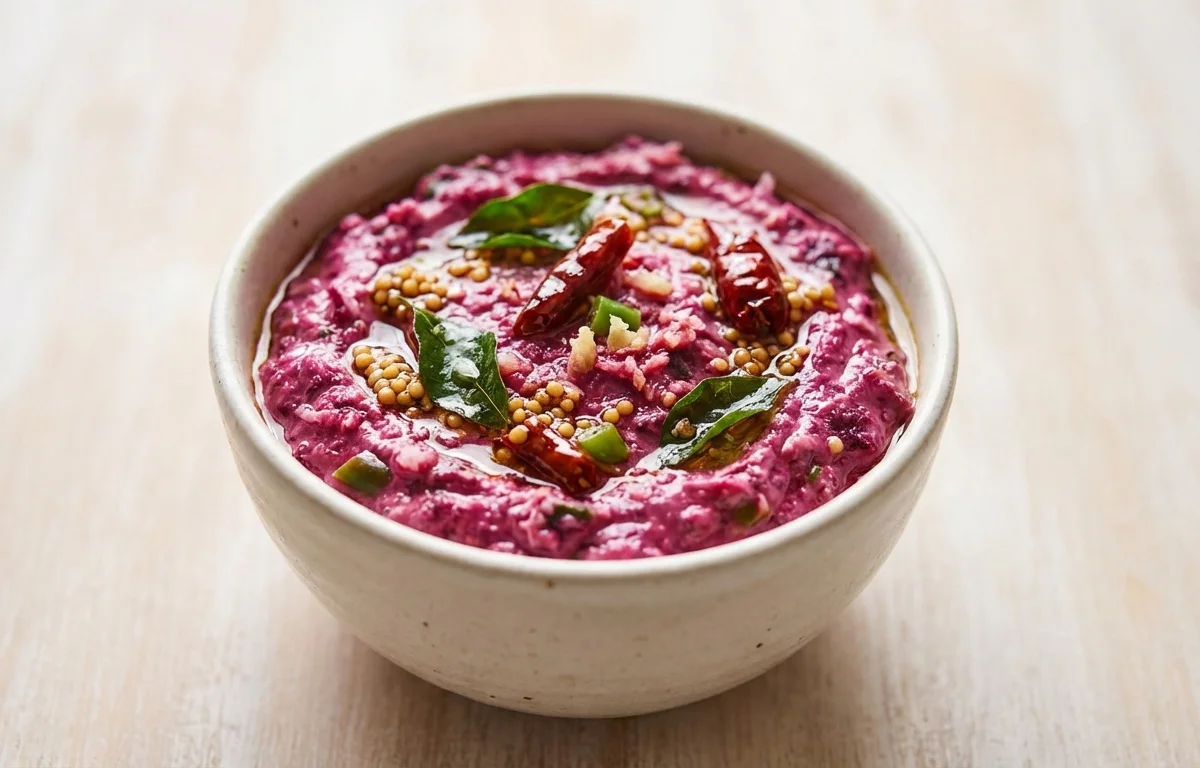
Beetroot Pachadi
A bright, creamy Kerala-style pachadi made with tender beetroot, coconut, yogurt, and a simple tempering. It is lightly sweet, gently tangy, and adds beautiful color to any South Indian meal.
For 4 servings
- prep · ~5 min
Prep the beetroot and whisk the yogurt.
Peel and finely chop the beetroot. Whisk the yogurt in a bowl until smooth and set it aside.
- boil · ~10 min
Cook the beetroot until tender.
Add the beetroot, water, and salt to a small pan. Cover and cook over medium heat until the beetroot is soft and the water is almost gone.
TIPCook just until tender so the pachadi stays bright and not watery. - mix · ~3 min
Grind the coconut paste.
1.Add grated coconut, green chili, and cumin seeds to a small grinder jar.2.Blend to a smooth paste with a spoonful or two of the cooked beetroot water if needed.3.Keep the paste thick so the pachadi does not turn loose. - mix · ~2 min
Mix the beetroot with the coconut paste.
Add the coconut paste to the cooked beetroot and stir well over low heat for 1 to 2 minutes. Turn off the heat and let it cool slightly.
- mix · ~1 min
Fold in the yogurt.
Once the beetroot mixture is warm, not hot, add the whisked yogurt and mix until creamy and evenly pink.
TIPDo not add yogurt to a very hot mixture or it may split. - temper · ~1 min
Make the tempering.
1.Heat coconut oil in a small pan over medium heat.2.Add mustard seeds and let them splutter.3.Add dried red chili and curry leaves and cook for a few seconds until fragrant. - assemble · ~1 min
Pour the tempering over the pachadi.
Pour the hot tempering over the beetroot yogurt mixture and stir gently once.
- serve · ~1 min
Serve the beetroot pachadi.
Serve at room temperature or slightly chilled as a side with rice and a South Indian meal.
What to keep in mind.
7 tips from the recipe — small details that make a real difference to the final dish.
- 1Chop the beetroot very fine so it cooks quickly and blends evenly into the creamy pachadi.
- 2Cook off most of the beetroot water before adding the coconut paste, or the pachadi can turn runny.
- 3Use only a little beetroot cooking liquid while grinding the coconut so the paste stays thick and smooth.
- 4Let the beetroot mixture cool to warm before mixing in yogurt to prevent curdling or splitting.
- 5For the best Kerala-style aroma, pour the hot coconut oil tempering over the pachadi just before serving.
- 6This pachadi tastes even better after 20 to 30 minutes of resting, when the cumin, chili, and coconut settle in.
- 7Refrigerate leftovers and serve slightly chilled or bring to room temperature; avoid reheating after yogurt is added.
Adapt it for your goals.
Jaggery-touch
Add a tiny pinch of jaggery if your beetroot is earthy rather than sweet; it rounds out the yogurt's tang.
spicierSpicier
Increase the green chili or add one more dried red chili in the tempering for a sharper heat.
veganVegan
Replace yogurt with a thick unsweetened coconut-based curd to keep the creamy texture without dairy.
onam styleOnam-style
Serve it slightly chilled as part of a Kerala sadya alongside rice, sambar, and thoran.
Why this is on our healthy list.
Vegetable-rich side dish
Beetroot makes this pachadi a colorful way to add more vegetables to a South Indian meal.
Contains probiotics from yogurt
The yogurt adds a tangy dairy element and can contribute beneficial live cultures when using active-culture curd.
Healthy fats from coconut
Fresh coconut and coconut oil add richness, helping the dish feel satisfying even in a small serving.
Frequently asked questions
It usually happens when yogurt is added to a very hot beetroot mixture. Let it cool to warm, then fold in the whisked yogurt.



.webp)


.webp)