
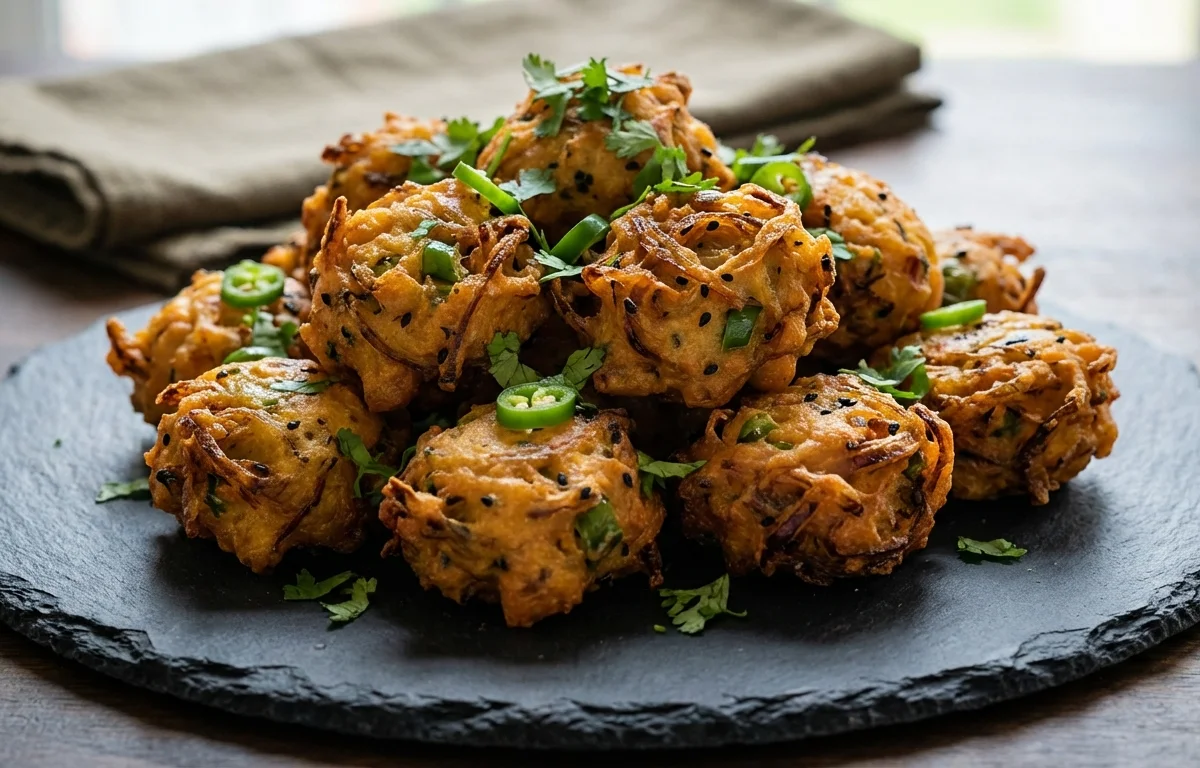
Bengali Pyazi
Crispy, golden onion fritters with a delicate, lacy texture. Thinly sliced onions are folded into a spiced chickpea flour batter and deep-fried until crunchy on the outside and tender within. A beloved Bengali tea-time snack and monsoon staple.
For 4 servings
- prep · ~10 min
Prepare the onions.
Peel the onions, halve them lengthwise, and slice very thinly into half-moons. Separate the layers with your fingers and place in a large mixing bowl. Add the salt and toss well. Let the onions sit for 10 minutes to soften and release a bit of moisture.
- mix · ~2 min
Make the batter.
In the same bowl with the softened onions, add chickpea flour, rice flour, chopped green chilies, grated ginger, red chili powder, turmeric, crushed cumin seeds, nigella seeds, baking soda, and sugar. Mix with your hands, squeezing the onions gently to release more moisture. Add water 1 tablespoon at a time, just enough to make a thick, sticky batter that heavily coats the onion strands. The batter should not be runny.
- fry · ~4 min
Heat the oil.
Pour the oil into a heavy-bottomed kadai and set over medium heat. Let the oil heat until a tiny drop of batter sizzles and rises steadily to the surface without browning immediately. A medium frying temperature ensures the inside cooks through before the outside burns.
- fry · ~5 min
Fry the pyazi in small batches.
1.Take a small cluster of batter-coated onions using your fingers or a fork and carefully drop into the hot oil to form small, uneven clusters. Do not overcrowd; fry 4 to 5 pieces at a time.2.Let them fry undisturbed for the first minute, then turn gently with a slotted spoon.3.Fry for 4 to 5 minutes total, turning occasionally, until the pyazi are deep golden and strikingly crisp on all sides.4.Remove with the slotted spoon and drain on paper towels. - other · ~10 min
Repeat with remaining batter.
Bring the oil back to temperature between batches. Continue frying with the remaining onion mixture until all the batter is used up. Do not let the oil smoke; lower the heat slightly if needed.
- serve
Serve immediately.
Pile the hot, crispy pyazi onto a serving plate. Serve right away with a side of kasundi or tomato ketchup and a steaming cup of chai.
TIPServe immediately for the best crunch. Pyazi soften as they sit, but the flavor stays wonderful.
What to keep in mind.
7 tips from the recipe — small details that make a real difference to the final dish.
- 1Use a heavy-bottomed kadai or pan to maintain stable oil temperature for even frying.
- 2Thinly slice onions into half-moons and separate layers so each strand gets coated in batter.
- 3Let the salted onions rest for 10 minutes to release moisture, which helps the batter cling.
- 4Squeeze the onion mixture gently with your hands to activate the chickpea flour’s binding power.
- 5Fry in small batches of 4 to 5; overcrowding drops oil temperature and makes pyazi greasy.
- 6Wait until the oil returns to medium heat between batches to keep the fritters crispy.
- 7Serve immediately for maximum crunch — pyazi soften quickly as they cool.
Adapt it for your goals.
Herb-spiked
Add 2 tablespoons of finely chopped fresh coriander or mint leaves to the batter for a bright, herbal note that pairs beautifully with the cumin and nigella seeds.
gluten freeGluten-free
This recipe is naturally gluten-free as written, but ensure your chickpea flour and rice flour are certified gluten-free if serving sensitive guests.
stuffed pyaziStuffed pyazi
Place a small piece of boiled potato or paneer between two onion slices before coating in batter for a heartier, stuffed fritter.
Why this is on our healthy list.
Rich in Plant Protein
Chickpea flour provides a good dose of plant-based protein and fiber, making these fritters more satisfying than all-purpose flour versions.
Antioxidant Spices
Turmeric and cumin seeds offer anti-inflammatory compounds and antioxidants that support overall wellness.
Digestive Support
Nigella seeds and ginger are traditionally used in Indian cooking to aid digestion and reduce bloating.
Frequently asked questions
Greasy pyazi usually means the oil wasn't hot enough when you added the batter, or you overcrowded the pan. Maintain medium heat and fry only 4-5 pieces at a time.



-curry.webp)
.webp)