
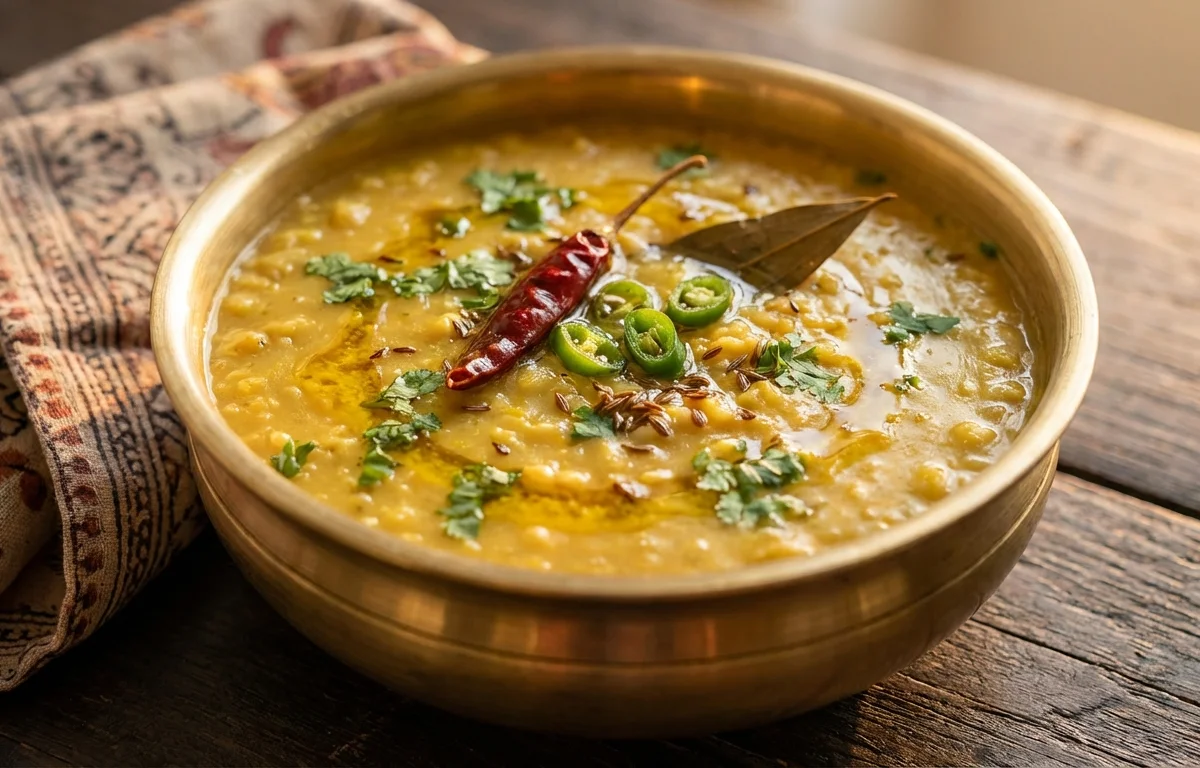
Bhaja Moong Dal
A deeply comforting Bengali dal with a gorgeous golden hue, made from dry-roasted yellow moong dal that releases a warm, nutty aroma. Slow-simmered with ginger and tempered with bay leaf, cumin, and a touch of ghee, this is simplicity in a bowl — perfect with steamed rice.
For 4 servings
- prep
Wash the moong dal.
Rinse the moong dal in several changes of water until the water runs clear. Drain and set aside.
- roast · ~6 min
Dry-roast the dal until golden and fragrant.
1.Place a heavy-bottomed pan over medium-low heat.2.Add the washed, drained moong dal to the dry pan.3.Stir continuously for 5-6 minutes until the dal turns a light golden-brown and releases a nutty aroma.TIPKeep the heat on medium-low and stir constantly — the dal can burn quickly and turn bitter. - simmer · ~25 min
Cook the dal with water, ginger, and chili.
1.Add 3 cups of water to the pan with the roasted dal.2.Stir in turmeric powder, grated ginger, and slit green chilies.3.Bring to a boil, then reduce heat to low and cover.4.Simmer for 20-25 minutes until the dal is soft and mushy but still has some texture.TIPBhaja moong dal should be creamy but not completely homogenous — a few whole grains should remain. - mix · ~2 min
Season with salt and adjust consistency.
Add the salt and stir well. If the dal is too thick, add a splash of warm water to reach a smooth, pourable consistency. Simmer for 2 more minutes.
TIPAdd salt only after the dal is cooked — adding it earlier can toughen the lentil skins. - temper · ~1 min
Make the ghee tempering.
1.In a small tadka pan, heat the ghee over medium heat until shimmering.2.Add the bay leaf and dried red chili; let sizzle for 15 seconds.3.Add cumin seeds and let them crackle and turn dark brown — about 30 seconds. - mix
Pour the tempering over the dal and mix.
Pour the hot ghee with whole spices directly over the simmered dal. Stir gently to combine. The dal will sizzle as the tempering hits.
- garnish
Garnish with fresh coriander and serve hot.
Sprinkle chopped coriander leaves on top. Serve hot with steamed rice.
What to keep in mind.
7 tips from the recipe — small details that make a real difference to the final dish.
- 1Wash the moong dal until the water runs clear to remove dust and prevent bitterness.
- 2Keep stirring constantly during dry-roasting — the dal can burn in seconds and become bitter.
- 3Simmer the dal on low heat and partially cover the pan to prevent splattering.
- 4Add salt only after the dal is fully cooked; adding it earlier can make the lentils firm.
- 5For a richer flavor, use homemade ghee or add a teaspoon more to the tempering.
- 6Taste the dal before serving and adjust salt — roasted dal absorbs salt differently than plain lentils.
- 7Leftover dal thickens overnight; thin it with a splash of warm water before reheating.
Adapt it for your goals.
Vegan
Replace the ghee in the tempering with coconut oil or neutral vegetable oil. The nutty flavour will shift slightly, but the dal remains delicious and fully plant-based.
lower oilLower-oil
Skip the ghee tempering entirely and instead stir in a pinch of asafoetida (hing) powder along with cumin seeds at the end for a low-fat yet aromatic finish.
protein boostProtein-boost
Add one finely chopped tomato and a handful of baby spinach during the simmering stage for extra lycopene, iron, and a subtle tangy depth.
spicierSpicier
Include 1/2 teaspoon of red chili powder or a few crushed black peppercorns along with the green chilies to turn up the heat without overwhelming the dal's natural sweetness.
Why this is on our healthy list.
Rich in Plant Protein
Moong dal is one of the most digestible pulses and provides a solid source of plant-based protein, making this dish a comforting, muscle-friendly meal.
Natural Digestive Aid
Cumin seeds and ginger both support digestion and reduce bloating, while the light, easy-to-digest nature of moong dal makes it ideal for sensitive stomachs.
Good Source of Folate and Iron
Yellow moong lentils are naturally high in folate and iron, which are important for red blood cell formation and energy metabolism.
Low in Fat
The only added fat is one teaspoon of ghee per serving, making this a low-fat, heart-friendly preparation that still feels satisfyingly rich.
Anti-Inflammatory Spices
Turmeric and ginger contain potent anti-inflammatory compounds (curcumin and gingerol) that may help reduce oxidative stress in the body.
Frequently asked questions
Dry-roasting deepens the nutty, toasty flavour of the dal and changes its texture so it becomes creamy but not mushy — it also shortens the cooking time slightly.


