
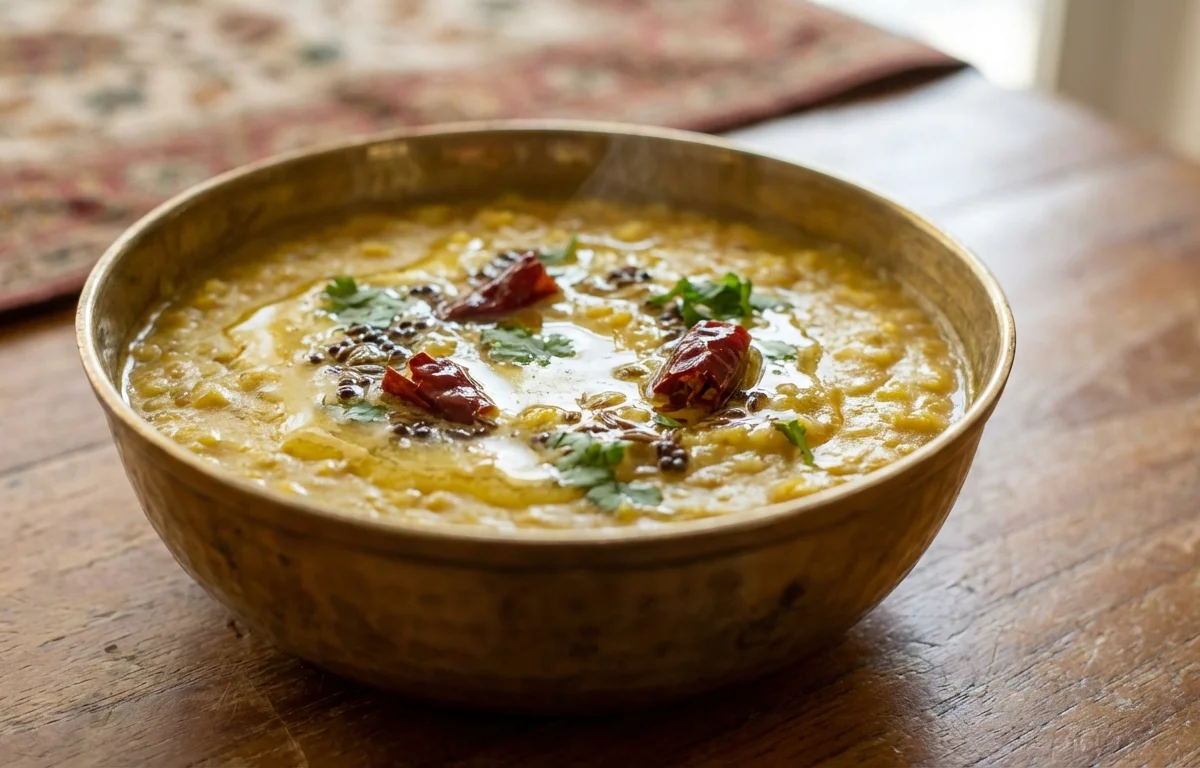
Bhatia Moong Dal Khichdi
A soulful, one-pot comfort meal straight from Bhatia kitchens where moong dal and rice melt together into a soft, porridge-like khichdi. Lightly spiced and finished with a generous ghee tadka, this gentle dish is perfect for lazy days or whenever you crave something soothing and satisfying.
For 4 servings
- prep
Wash and soak the dal and rice.
Wash the moong dal and rice together under running water until water runs clear. Soak in enough water for 20 minutes, then drain completely.
- temper · ~2 min
Make the ghee tadka.
1.Heat 2 tbsp ghee in a pressure cooker over medium flame until it melts.2.Add cumin seeds and let them sizzle for 15-20 seconds.3.Drop in cloves, cinnamon, and peppercorns; stir until fragrant, about 30 seconds.4.Add asafoetida and grated ginger; sauté for 30 seconds until the raw aroma fades.TIPKeep the flame medium-low so the spices bloom without burning. - pressure cook
Pressure cook the khichdi with spices.
1.Add the drained rice and dal into the cooker; stir gently for 1 minute to coat the grains with ghee.2.Sprinkle turmeric powder and salt; mix well.3.Pour 4 cups of hot water and give one final stir.4.Close the lid, put the weight on, and cook on medium flame for 3-4 whistles.TIPHot water helps the cooker build pressure faster and keeps the dal grains soft. - rest · ~10 min
Let the pressure release naturally.
Turn off the flame and let the cooker depressurise on its own. Do not force-open the valve — the resting time helps the khichdi settle into its creamy texture.
TIPDo not stir aggressively after opening; the grains are delicate and will break into a mushy consistency naturally. - mix · ~1 min
Adjust consistency and finish.
Open the lid and whisk the khichdi lightly with a ladle to bring everything together. If it looks too thick, stir in a splash of hot water to reach a loose, porridge-like consistency. Check salt and adjust if needed.
- garnish
Drizzle with ghee and garnish.
Ladle the steaming khichdi into bowls. Drizzle a tiny bit of raw ghee on top of each serving and scatter fresh coriander leaves. Serve immediately.
What to keep in mind.
6 tips from the recipe — small details that make a real difference to the final dish.
- 1Soaking the dal and rice for at least 20 minutes ensures even cooking and a creamier texture.
- 2Use hot water to build pressure faster and prevent the dal from turning grainy.
- 3Let the pressure release naturally; forcing the valve open can make the khichdi watery and uneven.
- 4If the khichdi thickens after resting, loosen it with a splash of hot water before serving.
- 5For extra aroma, use good-quality ghee — it makes a noticeable difference in the final tadka.
- 6Stir the grains gently after opening; over-mixing can turn the khichdi into a gluey paste.
Adapt it for your goals.
Vegan
Replace ghee with a neutral oil (like coconut or avocado) for the tadka and omit the final ghee drizzle. The dish remains just as comforting.
High ProteinHigh-Protein
Swap half the rice with an extra ¼ cup of moong dal. This boosts protein content while keeping the soft, porridge-like consistency intact.
Low OilLow-Oil
Reduce the tadka ghee to 1 tablespoon and skip the final drizzle. The spices and turmeric will still provide plenty of flavour.
JainJain
Skip the asafoetida (which may contain starch derivatives) and use a pinch of hing that is confirmed starch-free. Also replace ginger with a pinch of dry ginger powder.
Tadka FreeTadka-Free
For an even gentler digestion, skip the tadka entirely and simply boil the soaked dal and rice with turmeric and salt before mashing lightly.
Why this is on our healthy list.
Easy to Digest
The combination of split moong dal and rice, cooked until porridge-like, is naturally light on the stomach and often recommended for recovery or sensitive digestion.
Rich in Plant Protein
Moong dal provides a solid plant-based protein boost, making this khichdi a nourishing meal on its own.
Low in Fat
With only a small amount of ghee, this dish is relatively low in fat compared to many other Indian comfort foods, yet still satisfying.
Anti-inflammatory Spices
Turmeric, ginger, and black pepper all contain compounds with anti-inflammatory properties, adding a gentle wellness boost alongside the flavour.
Frequently asked questions
Yes. Use a heavy-bottomed pot and cook on low heat, covered, for about 30–35 minutes, stirring occasionally and adding hot water as needed until the dal and rice are soft and mushy.



.webp)
.webp)
.webp)