
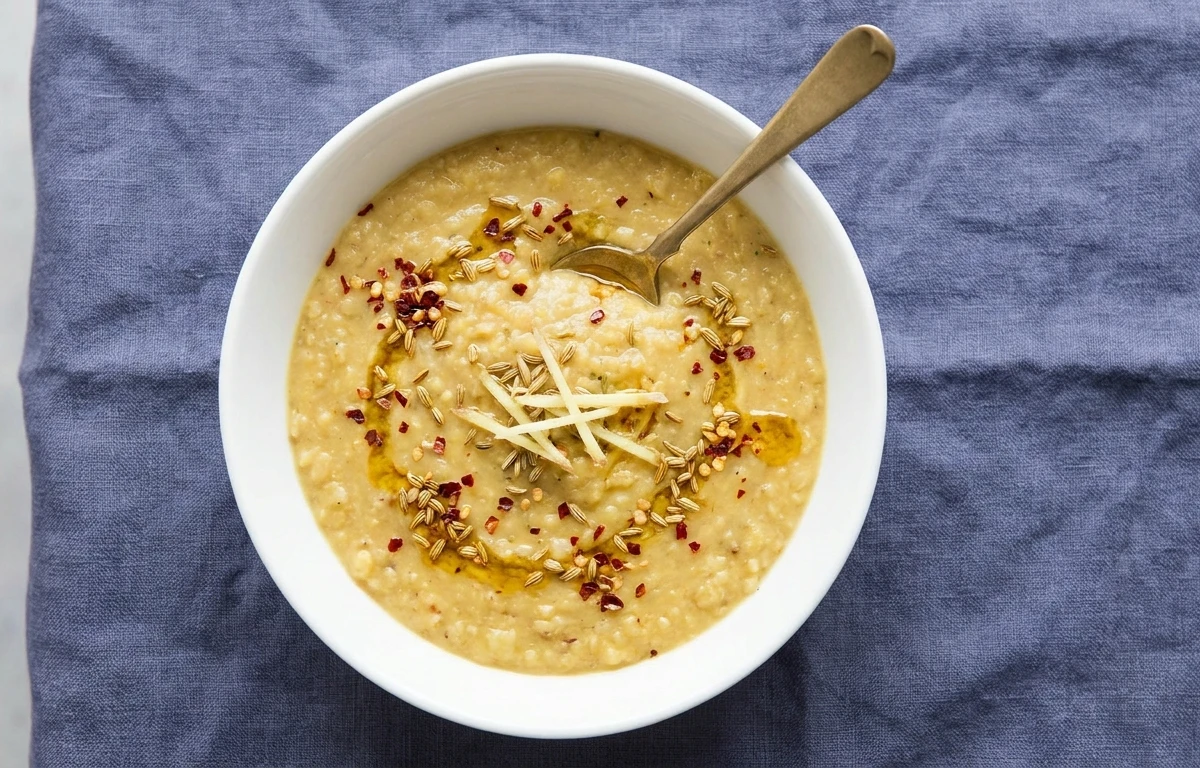
Biulir Dal
A light, fragrant Bengali-style split urad dal with an aromatic tempering of fennel seeds and ginger. Slow-simmered to creamy perfection, this humble dal carries a subtle sweetness from fennel and warmth from fresh ginger—pure comfort in a bowl that pairs beautifully with steamed rice.
For 4 servings
- prep
Soak the dal.
Rinse the split urad dal under running water until the water runs clear. Soak in enough water to cover for 30 minutes, then drain.
- boil · ~30 min
Cook the dal until soft.
1.Transfer the drained dal to a heavy-bottomed pot with 3 cups of fresh water.2.Add the turmeric powder and stir once.3.Bring to a boil over medium-high heat, then reduce to a gentle simmer.4.Cook uncovered for 25-30 minutes, stirring occasionally, until the dal grains are completely soft and mash easily against the side of the pot.TIPSkim off any white foam that rises to the surface during the first few minutes for a cleaner taste. - mix · ~2 min
Whisk and season the dal.
Take the pot off the heat. Use a whisk or a sturdy spoon to beat the dal vigorously for a minute until it turns smooth and creamy. Stir in the salt and return to a very low simmer for 2 minutes.
TIPA whisk gives you that signature silky, homogenous texture Bengali dals are known for. - temper · ~2 min
Make the fragrant fennel-ginger tempering.
1.Heat the ghee in a small tadka pan over medium heat.2.Add the fennel seeds and let them crackle and turn light golden, about 20 seconds.3.Drop in the broken dried red chilies and fry for another 15 seconds until they darken slightly.4.Add the julienned ginger and sauté until fragrant, about 30 seconds.TIPDo not let the fennel seeds burn — they turn bitter easily. As soon as they sizzle and colour, move to the next step. - mix · ~2 min
Pour the tempering over the dal and serve.
Pour the hot tempering directly over the simmering dal. It will sizzle and release a beautiful aroma. Stir well, cover the pot, and let it rest for 2 minutes so the flavours meld.
- serve
Serve warm with steamed rice.
Ladle the dal into bowls. Serve immediately with hot steamed rice — a drizzle of extra ghee on top of the dal is a classic Bengali touch.
What to keep in mind.
6 tips from the recipe — small details that make a real difference to the final dish.
- 1Soaking the urad dal for at least 30 minutes ensures even cooking and a creamier texture.
- 2Skim the white foam that rises during the first few minutes of boiling for a cleaner, clearer dal.
- 3Whisk the dal vigorously after cooking to achieve the silky, homogenous texture characteristic of Bengali dals.
- 4Do not burn the fennel seeds in the tempering — they turn bitter quickly; remove from heat as soon as they crackle and color.
- 5Let the tempered dal rest covered for 2 minutes before serving so the infused flavors meld fully.
- 6For a richer finish, drizzle a little extra ghee over each serving just before eating.
Adapt it for your goals.
Low-Oil / Light
Replace ghee with mustard oil (Bengali-style) for a pungent twist, or use a dry tadka of fennel and chili in a nonstick pan to reduce fat.
High Protein / VeganHigh-Protein / Vegan
Swap ghee with coconut oil or a neutral oil for a vegan version; add a handful of chopped spinach or grated carrot in the last 5 minutes of cooking for extra nutrients.
Spicy KickSpicy Kick
Add ½ teaspoon of crushed dried red chilies or a green slit chili to the tempering for a fiery counterpoint to the dal's creaminess.
Tomato BrightTomato-Bright
Stir in one small finely chopped tomato after whisking the dal — the acidity lifts the dish and adds a subtle tang enjoyed in some Bengali homes.
Why this is on our healthy list.
Rich in Plant Protein
Urad dal is a excellent source of plant-based protein, supporting muscle repair and keeping you full longer.
Good Source of Dietary Fiber
The soluble fiber in split urad dal aids digestion and helps maintain steady blood sugar levels.
Ginger's Anti-Inflammatory Properties
Fresh ginger in the tempering adds warmth and may help soothe the stomach and reduce inflammation.
Low in Fat (with Ghee in Moderation)
This dal uses just 2 teaspoons of ghee per serving, keeping the saturated fat minimal while adding flavor.
Frequently asked questions
Soaking is highly recommended — it reduces cooking time by 10-15 minutes and ensures the dal becomes creamy and soft, not grainy.



-curry.webp)
.webp)