
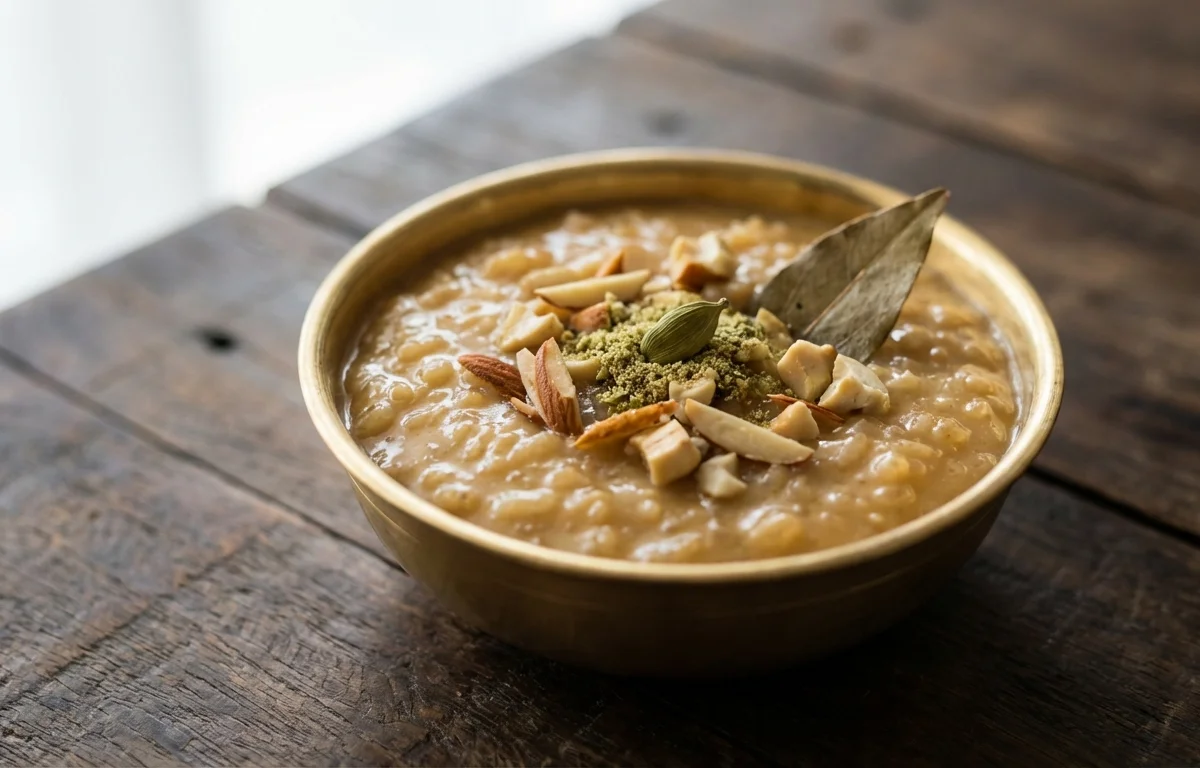
Bora Saulor Payokh
A soul-warming Assamese rice pudding made with indigenous sticky rice slow-cooked in milk until creamy and luxuriously thick. Jaggery adds a deep, caramel-like sweetness balanced by delicate notes of bay leaf and cardamom. This treasured Bihu festival treat celebrates the unique glutinous texture of Bora Saul, a heritage grain exclusive to Assam.
For 4 servings
- prep · ~30 min
Wash and soak the sticky rice.
1.Wash the bora saul under running water until the water runs clear.2.Soak the washed rice in enough water for 30 minutes.3.Drain the rice thoroughly and set aside.TIPSoaking is crucial — unsoaked sticky rice takes much longer to cook and can stay firm in the center. - boil · ~20 min
Reduce the milk.
1.Pour milk into a heavy-bottomed pot and set it over medium heat.2.Bring the milk to a boil, stirring occasionally to prevent scorching.3.Lower the heat to medium-low and simmer, stirring often, until the milk reduces by about one-fourth (15-20 minutes).TIPScrape the milk solids from the sides back into the pot — they add richness to the pudding. - simmer · ~25 min
Cook the sticky rice in milk.
1.Add the drained rice, bay leaves, and crushed cardamom pods to the simmering milk.2.Stir well and continue cooking over low heat, stirring frequently.3.Cook until the rice grains are soft, tender, and the mixture has thickened considerably (20-25 minutes).TIPBora saul releases starch and thickens rapidly — keep stirring to avoid sticking at the bottom. - fry · ~3 min
Fry the nuts and raisins in ghee.
1.Heat ghee in a small pan over medium-low heat.2.Add cashew nuts and sauté until light golden.3.Add raisins and fry until they puff up (30 seconds).4.Remove the pan from heat and set aside.TIPFry cashews slowly on low heat — they burn fast and turn bitter if overcooked. - mix · ~4 min
Sweeten and finish the payokh.
1.Remove the bay leaves and cardamom pods from the pot.2.Add the grated jaggery and a pinch of salt. Stir until the jaggery completely dissolves.3.Cook for 2-3 minutes more until the payokh is smooth and glossy.4.Fold in the fried cashew nuts and raisins, reserving a few for garnish.TIPAdd jaggery only after the rice is fully cooked. Adding it too early can split the milk or harden the rice. - rest · ~10 min
Rest the payokh before serving.
Turn off the heat and let the payokh rest in the pot for 10 minutes. It will continue to thicken as it cools.
TIPBora Saulor Payokh tastes even better after resting — the flavors meld and the rice absorbs more sweetness. - serve
Garnish with fried nuts and serve warm or chilled.
Spoon into individual katoris, top with reserved fried cashews and raisins, and serve warm for a comforting dessert. Chilled payokh is equally delightful and holds a thicker, pudding-like texture.
What to keep in mind.
6 tips from the recipe — small details that make a real difference to the final dish.
- 1Use full-fat milk for the creamiest texture; low-fat milk will thin out the pudding.
- 2Soak the Bora Saul for exactly 30 minutes — under-soaking leaves a hard core, over-soaking makes it mushy.
- 3Stir constantly once the rice is added; the sticky starch can scorch quickly at the bottom.
- 4A pinch of salt balances the sweetness of jaggery without making the payokh salty.
- 5Always add jaggery at the end; early addition can curdle the milk or toughen the rice grains.
- 6Let the payokh rest for 10 minutes before serving so it thickens to the perfect spoonable consistency.
Adapt it for your goals.
Vegan
Replace milk with full-fat coconut milk and use coconut oil instead of ghee. The coconut cream adds a luscious, dairy-free richness that pairs beautifully with jaggery's caramel notes.
low oilLow-oil
Skip frying the cashews and raisins in ghee; simply stir them raw into the hot payokh. The nuts will warm through from the heat, and you save calories without losing crunch.
high proteinHigh-protein
Fold in 2 tablespoons of toasted sesame seeds or crushed peanuts alongside the cashews. This adds plant-based protein and nuttiness that complements the jaggery.
spiced chaiSpiced chai
Add a 2-inch piece of cinnamon stick and 4 whole cloves along with the bay leaves. The warm chai spices turn this into a festive winter dessert reminiscent of masala chai.
Why this is on our healthy list.
Rich in Complex Carbs
Bora Saul sticky rice provides sustained energy release due to its natural starch composition, making this dessert a satisfying treat that fuels the body without a sugar crash.
Mineral Boost from Jaggery
Jaggery, an unrefined cane sugar, retains trace minerals like iron, magnesium, and potassium — unlike white sugar, it adds sweetness with a small micronutrient bonus.
Good Source of Calcium
Prepared with a full liter of whole milk, this payokh supplies a generous amount of calcium that supports bone health and teeth strength.
Antioxidant Spices
Both cardamom and bay leaf contain antioxidant compounds that help fight oxidative stress, adding a subtle health layer to this traditional dessert.
Frequently asked questions
Yes, but the texture will be less sticky and creamy. Use sushi rice or Thai glutinous rice as the closest substitute, and soak it for 20 minutes instead of 30.


