Loading...
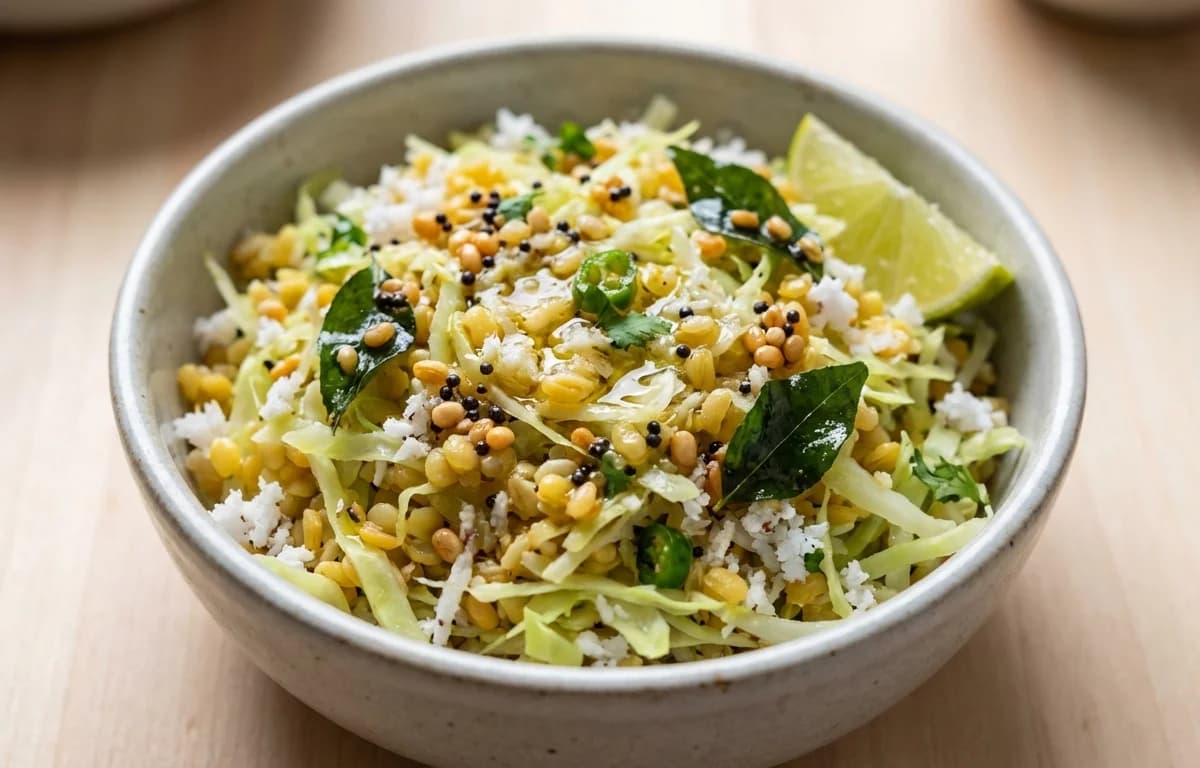
A refreshing and crunchy South Indian salad made with finely shredded cabbage, soaked moong dal, and fresh coconut. The simple mustard seed tempering adds a burst of flavor. It’s a perfect light side dish for any meal.
Prep the Dal: Rinse the moong dal under running water until the water runs clear. Soak it in enough water for 30-45 minutes. After soaking, drain all the water completely using a fine-mesh sieve and set aside. This step is crucial to avoid a soggy salad.
Combine Salad Ingredients: In a large mixing bowl, add the finely shredded cabbage, the drained moong dal, grated fresh coconut, finely chopped green chilies, and chopped coriander leaves. Gently toss to combine.
Prepare the Tempering (Tadka): Heat coconut oil in a small pan or tadka pan over medium heat. Once the oil is hot (about 30 seconds), add the mustard seeds and let them splutter completely. Then, add the urad dal and sauté for about 30-45 seconds until it turns a light golden brown. Finally, add the hing and curry leaves, and fry for another 10 seconds until the leaves are crisp.
Combine and Serve: Immediately pour the hot tempering over the cabbage mixture in the bowl. You will hear a sizzling sound, which helps to slightly wilt the cabbage and infuse the flavors. Toss everything well. Just before serving, add the salt and fresh lemon juice. Mix thoroughly one last time and serve immediately to enjoy its fresh, crunchy texture.
A refreshing and crunchy South Indian salad made with finely shredded cabbage, soaked moong dal, and fresh coconut. The simple mustard seed tempering adds a burst of flavor. It’s a perfect light side dish for any meal.
This south_indian recipe takes 20 minutes to prepare and yields 4 servings. At 131.93 calories per serving with 5.34g of protein, it's a beginner-friendly recipe perfect for lunch or dinner or side.
Discover authentic recipes from cuisines around the world.
Find recipes that fit your dietary preferences.
Find recipes optimized for your goal.
Incorporate 1/2 cup of grated carrots or finely chopped cucumber for added color, flavor, and nutrition.
You can also make this salad with soaked chana dal (split chickpeas) instead of moong dal for a different texture.
For a sweet and tangy twist, add 1/4 cup of pomegranate arils or finely chopped raw mango.
Add one broken dried red chili to the tempering along with the mustard seeds for extra heat.
Cabbage and moong dal are excellent sources of dietary fiber, which promotes regular bowel movements and supports a healthy gut microbiome. The hing in the tempering also helps reduce gas and bloating.
This salad is low in calories but high in fiber and protein, which helps you feel full and satisfied for longer. This can help reduce overall calorie intake and support weight loss goals.
Cabbage is packed with Vitamin C and Vitamin K. Moong dal provides plant-based protein and folate, while coconut offers healthy fats and minerals like manganese, making this a nutrient-dense dish.
The high Vitamin C content from both cabbage and lemon juice acts as a powerful antioxidant, helping to strengthen the immune system and protect the body against infections.
One serving of Cabbage Kosambari (approximately 145g) contains around 110-130 calories. The exact count can vary based on the amount of oil and coconut used.
Yes, it is very healthy. It's rich in dietary fiber from cabbage, provides plant-based protein from moong dal, and contains essential vitamins and minerals. It's a light, low-calorie salad that's great for digestion.
It is best served fresh. However, you can do the prep work in advance: shred the cabbage, soak and drain the dal, and chop the herbs. Store them in separate airtight containers in the refrigerator. Assemble the salad and add the tempering, salt, and lemon juice just before you plan to serve it.
Cabbage Kosambari is a traditional South Indian side dish that pairs wonderfully with meals like sambar rice, rasam rice, vangi bath, and bisibelebath. It is also often served as 'prasadam' (a religious offering) during festivals like Rama Navami.
This recipe is naturally vegan. To ensure it is gluten-free, use a certified gluten-free hing (asafoetida), as some commercially available brands mix it with wheat flour.
There are two common reasons for a watery kosambari. First, the soaked moong dal might not have been drained properly. Second, salt and lemon juice were likely added too early, which draws moisture out of the cabbage. Always add them just before serving.
This recipe goes great with these complete meals

A warm, savory breakfast dish made from roasted semolina and simple spices. This quick, comforting, and classic South Indian tiffin item is soft, fluffy, and ready in under 30 minutes.
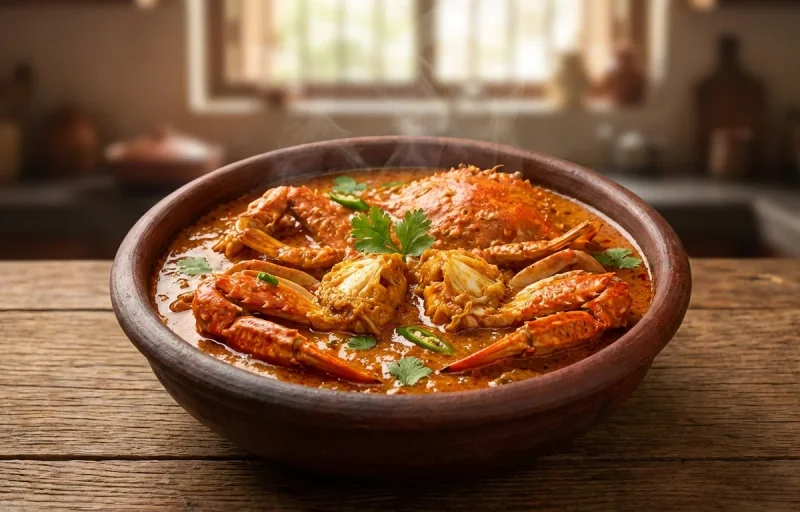
A fiery and tangy Mangalorean crab curry made with a freshly ground coconut and roasted spice masala. This coastal Karnataka specialty bursts with flavor and is best enjoyed with steamed rice or neer dosa.
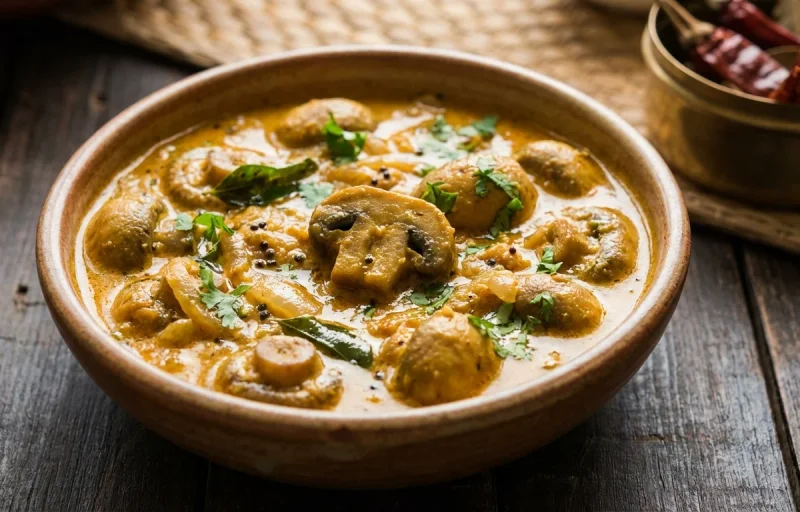
A classic Mangalorean curry featuring earthy mushrooms in a rich, tangy gravy made from roasted spices and fresh coconut. This flavorful dish, known as 'Anabe Gashi', pairs perfectly with steamed rice or neer dosa for a comforting South Indian meal.

A traditional Konkani curry made with tender raw jackfruit simmered in a fragrant, tangy coconut masala. This authentic dish from the Mangalorean coast offers a unique blend of sweet, sour, and spicy flavors, perfect with steamed rice.