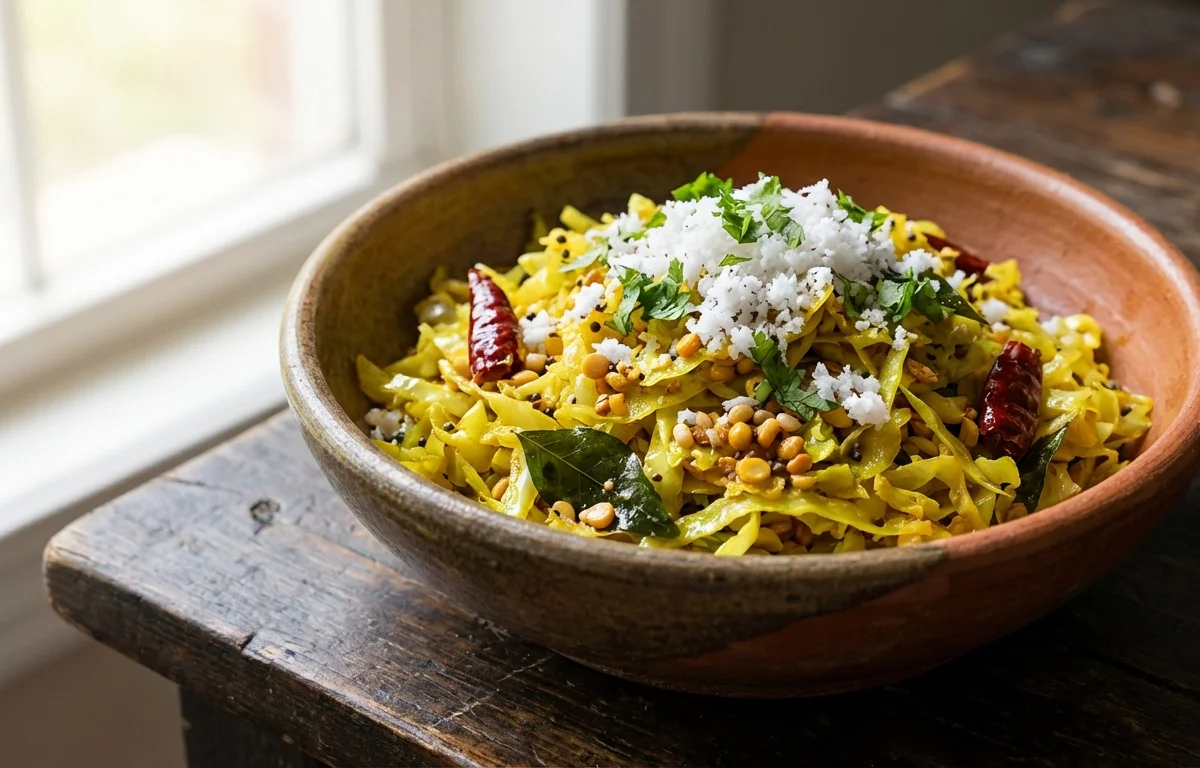
Cabbage Poriyal
Light, comforting South Indian cabbage stir-fry with coconut, mustard seeds, and curry leaves. It cooks quickly, stays gently crisp, and works beautifully as a simple side with rice, sambar, or rasam.
For 4 servings
- prep · ~15 min
Prepare the cabbage and other ingredients.
1.Shred the cabbage finely so it cooks quickly and evenly.2.Slit the green chili.3.Measure the grated coconut, spices, water, and lemon juice. - temper · ~2 min
Make the tempering.
1.Heat oil in a wide pan over medium heat.2.Add mustard seeds and let them splutter.3.Add urad dal and cook until lightly golden.4.Add curry leaves, green chili, and asafoetida for a few seconds.TIPKeep the heat medium so the urad dal turns golden without burning. - saute · ~3 min
Cook the cabbage.
1.Add the shredded cabbage to the pan and mix well with the tempering.2.Add turmeric powder and salt.3.Sprinkle in the water and toss again. - simmer · ~7 min
Cover and cook until just tender.
Cover the pan and cook on low heat until the cabbage softens but still keeps a little bite. Open once or twice and stir so it cooks evenly without catching at the bottom.
TIPDo not overcook the cabbage; poriyal tastes best when it stays light and not mushy. - mix · ~2 min
Finish with coconut and lemon juice.
Add the grated coconut and lemon juice, then toss for 1 to 2 minutes until everything is well mixed and the pan looks dry.
- serve
Serve the cabbage poriyal hot or warm.
What to keep in mind.
8 tips from the recipe — small details that make a real difference to the final dish.
- 1Use a wide pan so the cabbage steams lightly instead of sweating into a watery heap.
- 2Shred the cabbage very fine; thick pieces stay hard while the tempering flavours coat unevenly.
- 3Let the mustard fully splutter before adding urad dal, or the dal can darken before the seeds bloom.
- 4Add only the listed splash of water; too much moisture makes poriyal soft instead of gently crisp.
- 5Cook covered on low just until the raw smell goes and the cabbage still has bite.
- 6Stir the coconut in at the end and cook briefly, so it stays sweet and fresh-tasting.
- 7Add lemon juice off the hottest heat to keep its brightness and prevent any bitter edge.
- 8Leftovers keep well refrigerated for a day; reheat uncovered in a pan so the poriyal dries out again.
Adapt it for your goals.
No-onion-garlic
This recipe is already naturally no-onion and no-garlic, making it a simple satvik-style side for everyday South Indian meals.
jainJain
Skip the asafoetida if needed and use a compliant hing alternative; the dish still stays flavorful from curry leaves, chili, coconut, and lemon.
veganVegan
The recipe is already vegan, with coconut giving richness and no dairy needed.
more spicyMore-spicy
Increase the slit green chilies or add a pinch of crushed black pepper for a sharper heat that suits rasam rice especially well.
carrot cabbageCarrot-cabbage
Add a handful of finely grated carrot with the cabbage for color, mild sweetness, and a slightly more festive poriyal.
Why this is on our healthy list.
Fiber-Rich Vegetable Side
Cabbage brings fiber and bulk, making this a light but satisfying accompaniment to rice, sambar, or rasam.
Moderate in Added Fat
Only a small amount of oil is used, so the dish gets flavor from tempering without feeling heavy.
Plant-Based Ingredients
Made from cabbage, coconut, lentils, spices, and herbs, this poriyal fits well into vegetarian and vegan meals.
Digestive Spice Support
Tempering ingredients like curry leaves, asafoetida, green chili, and mustard seeds add aroma and traditional digestive appeal.
Frequently asked questions
Usually the cabbage was crowded in a small pan, cooked too long, or had too much water added. Use a wide pan and only a light sprinkle of water.