Loading...
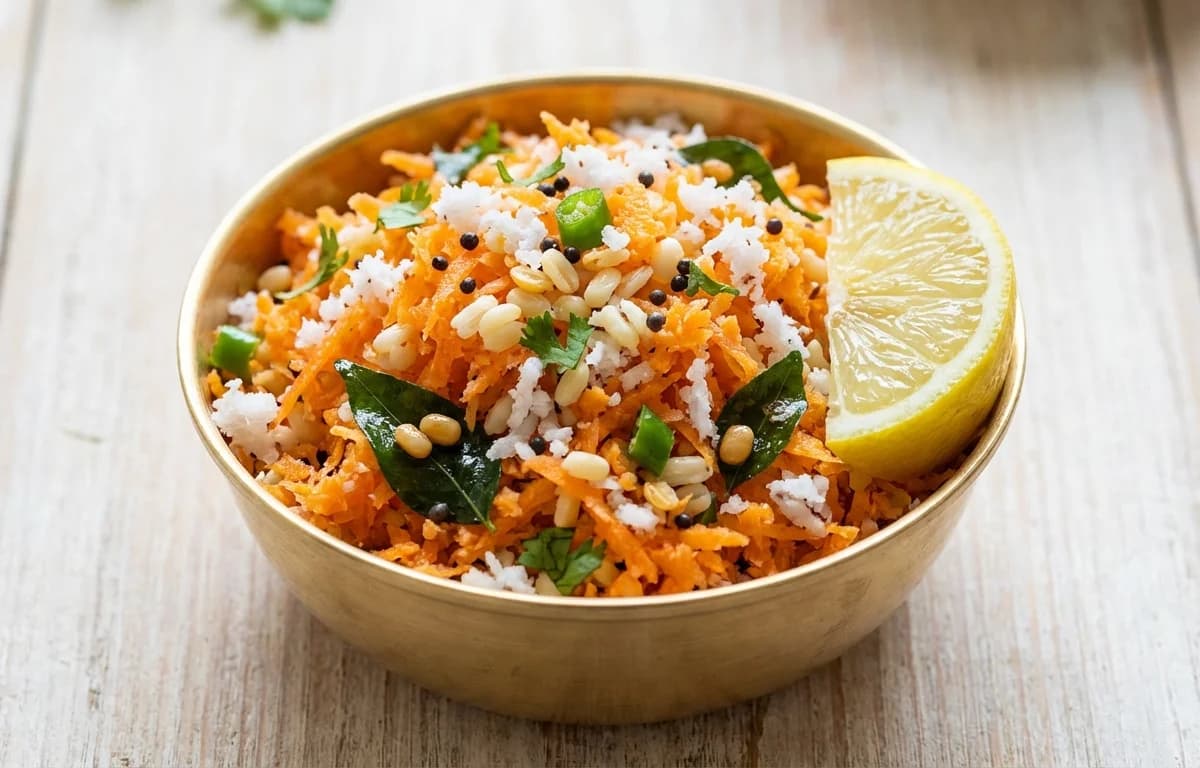
A refreshing and crunchy South Indian salad made with grated carrots and soaked moong dal. This simple recipe is finished with a classic tempering of mustard seeds and curry leaves, making it a perfect side dish for any meal.
Rinse the moong dal under running water until the water runs clear. Soak it in lukewarm water for 45-60 minutes. The dal should be tender enough to break with a fingernail but still have a slight crunch. Drain thoroughly in a colander and set aside.
In a large mixing bowl, combine the grated carrots, drained moong dal, grated fresh coconut, finely chopped green chilies, and chopped coriander leaves. Gently toss to mix.
Prepare the tempering (tadka). Heat coconut oil in a small pan over medium heat. Once hot, add the mustard seeds and allow them to splutter completely, which takes about 30 seconds.
Once the mustard seeds have spluttered, add the urad dal and sauté for 30-40 seconds until it turns a light golden brown. Be careful not to burn it. Immediately add the hing and curry leaves, and let them sizzle for another 10-15 seconds until the leaves are crisp.
Pour the hot tempering directly over the carrot mixture in the bowl. Just before serving, add the salt and fresh lemon juice. Mix everything together gently but thoroughly. Serve immediately to enjoy its fresh, crunchy texture.
A refreshing and crunchy South Indian salad made with grated carrots and soaked moong dal. This simple recipe is finished with a classic tempering of mustard seeds and curry leaves, making it a perfect side dish for any meal.
This south_indian recipe takes 20 minutes to prepare and yields 4 servings. At 165.44 calories per serving with 7.35g of protein, it's a beginner-friendly recipe perfect for side or lunch or snack or salad.
Discover authentic recipes from cuisines around the world.
Find recipes that fit your dietary preferences.
Find recipes optimized for your goal.
Replace the grated carrots with finely chopped cucumber. Squeeze out excess water from the cucumber before adding to prevent the salad from becoming watery.
For a tangy twist, add 1/4 cup of finely grated raw mango along with the carrots. You may need to adjust the lemon juice accordingly.
Add 1/4 cup of pomegranate arils just before serving for a pop of color, sweetness, and extra crunch.
For a nutritional boost, substitute the soaked moong dal with 1 cup of sprouted moong beans.
Carrots are an excellent source of beta-carotene, which the body converts into Vitamin A. This vitamin is crucial for good vision, a healthy immune system, and cell growth.
Moong dal provides a significant amount of plant-based protein, which is essential for building and repairing tissues, making enzymes, and supporting muscle health.
The combination of carrots, dal, and coconut offers substantial dietary fiber, which aids in digestion, promotes gut health, helps maintain stable blood sugar levels, and contributes to a feeling of fullness.
Raw vegetables like carrots have high water content. Along with the fresh lemon juice, this salad helps contribute to your daily hydration needs, which is vital for overall health.
Yes, Carrot Kosambari is very healthy. It's packed with vitamins from carrots (especially Vitamin A), plant-based protein from moong dal, and healthy fats from coconut. It's also high in fiber, low in calories, and naturally gluten-free and vegan.
A single serving of Carrot Kosambari (approximately 1 cup or 125g) contains an estimated 150-180 calories. The exact count can vary based on the amount of oil and coconut used.
It's best served fresh. However, you can prepare the components in advance. Keep the soaked and drained dal, grated carrots, and chopped herbs in separate airtight containers in the refrigerator. Prepare the tempering and store it at room temperature. Combine everything with salt and lemon juice just before you plan to serve.
Carrot Kosambari is a versatile side dish. It is traditionally served during festivals like Rama Navami and is a perfect accompaniment to South Indian meals like Sambar Rice, Rasam Rice, or Bisi Bele Bath. It also works well as a light, standalone snack.
There are two common reasons for a watery kosambari. First, the soaked moong dal might not have been drained properly. Second, adding salt and lemon juice too early causes the carrots to release their natural moisture. Always drain the dal thoroughly and add salt and lemon juice only at the very end.
This recipe goes great with these complete meals

A warm, savory breakfast dish made from roasted semolina and simple spices. This quick, comforting, and classic South Indian tiffin item is soft, fluffy, and ready in under 30 minutes.
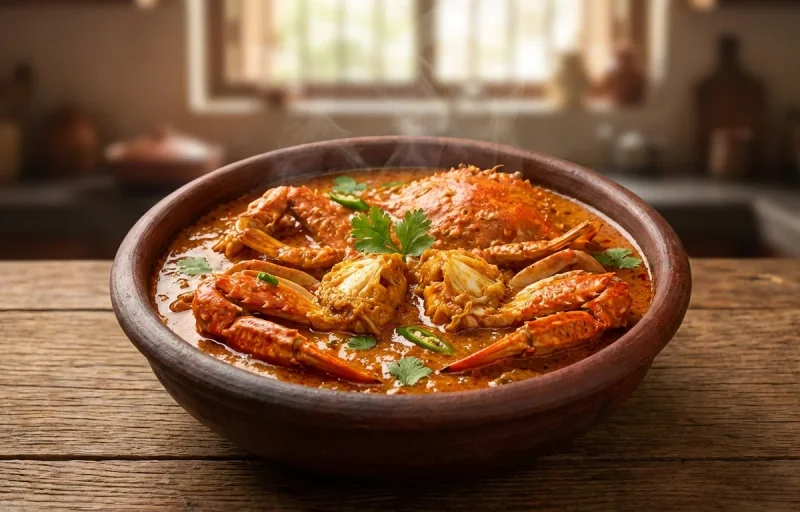
A fiery and tangy Mangalorean crab curry made with a freshly ground coconut and roasted spice masala. This coastal Karnataka specialty bursts with flavor and is best enjoyed with steamed rice or neer dosa.
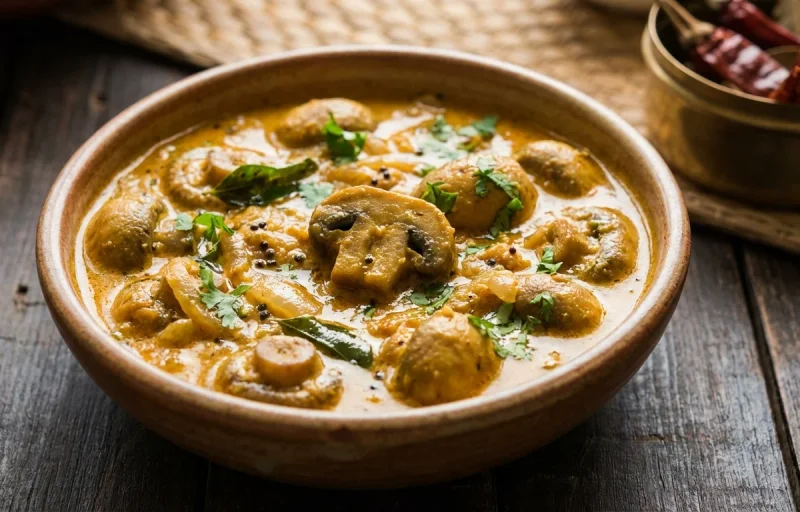
A classic Mangalorean curry featuring earthy mushrooms in a rich, tangy gravy made from roasted spices and fresh coconut. This flavorful dish, known as 'Anabe Gashi', pairs perfectly with steamed rice or neer dosa for a comforting South Indian meal.

A traditional Konkani curry made with tender raw jackfruit simmered in a fragrant, tangy coconut masala. This authentic dish from the Mangalorean coast offers a unique blend of sweet, sour, and spicy flavors, perfect with steamed rice.