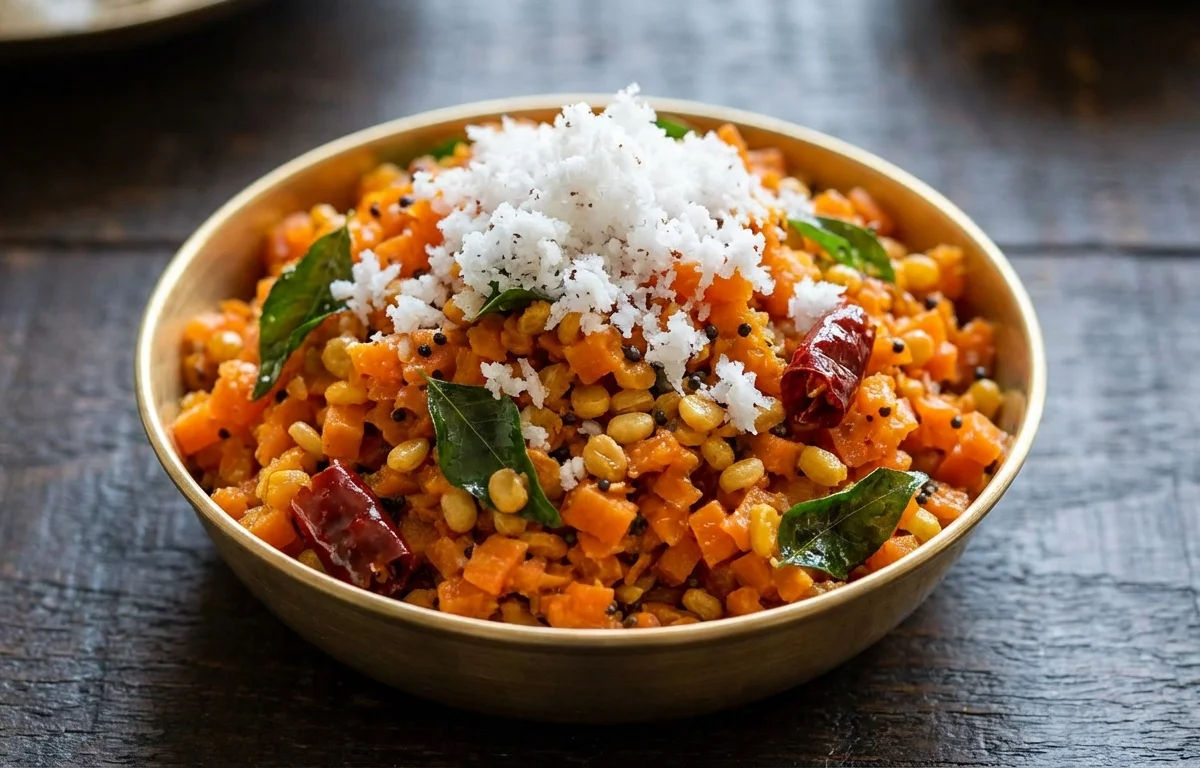
Carrot Poriyal
Lightly spiced South Indian carrot stir-fry with fresh coconut, curry leaves, and a gentle tempering. It cooks quickly, stays bright and tender, and fits beautifully alongside rice, sambar, or rasam.
For 4 servings
- prep · ~10 min
Prepare the carrots and other ingredients.
1.Peel and finely chop the carrot so it cooks quickly and evenly.2.Slit the green chili and break the dried red chili into pieces.3.Measure the coconut, spices, salt, oil, and water. - temper · ~2 min
Make the tempering.
1.Heat the oil in a pan over medium heat.2.Add mustard seeds and let them splutter.3.Add urad dal and cook until lightly golden.4.Add dried red chili, curry leaves, green chili, and asafoetida for a few seconds.TIPKeep the heat moderate so the urad dal turns golden without burning. - saute · ~8 min
Cook the carrots.
1.Add the chopped carrot and salt to the pan.2.Mix well so the tempering coats the carrot evenly.3.Pour in the water and cover the pan.4.Cook until the carrot is just tender, stirring once or twice.TIPUse only a little water to keep the poriyal dry and not soggy. - mix · ~2 min
Finish with coconut.
Remove the lid and cook off any remaining moisture. Add the grated coconut and mix for 1 minute until everything is well combined and the poriyal looks dry and fluffy.
- serve
Serve hot or warm.
What to keep in mind.
7 tips from the recipe — small details that make a real difference to the final dish.
- 1Chop the carrots very evenly so they soften at the same rate and keep the poriyal texture neat.
- 2Wait for the mustard seeds to fully splutter before adding urad dal, or the tempering will taste flat.
- 3Cook the urad dal only to light golden; darker than that turns bitter quickly in this small amount of oil.
- 4Use just the listed splash of water and keep the pan covered briefly so the carrots steam without becoming mushy.
- 5Uncover and dry off all moisture before adding coconut, so the finished poriyal stays fluffy instead of wet.
- 6Add the fresh coconut right at the end and cook only briefly to preserve its sweet taste and soft texture.
- 7This poriyal reheats best in a pan, not the microwave, so excess moisture can evaporate.
Adapt it for your goals.
Low-oil
Reduce the oil slightly and use a well-seasoned pan; the dish still works because the carrots steam with a little water.
no coconutNo-coconut
Skip the grated coconut for a plainer, lighter poriyal that pairs especially well with rich sambar or kuzhambu.
spicierSpicier
Add one extra green chili or another dried red chili if you want more heat without changing the basic flavour profile.
jainJain
Omit asafoetida if needed and keep the same tempering otherwise; the dish still stays simple, mild, and South Indian in style.
Why this is on our healthy list.
Vegetable-forward side dish
Carrot is the main ingredient, making this a simple way to add more vegetables to a South Indian meal.
Lightly cooked and balanced
The carrots are cooked just until tender, which helps retain their natural sweetness and pleasant bite without heavy frying.
Contains healthy fats
Fresh coconut and a small tempering of oil add satisfying richness that helps the dish feel complete alongside rice and dal.
Frequently asked questions
Yes, but grated carrots cook much faster and can turn softer, so reduce the covered cooking time and dry them well before adding coconut.