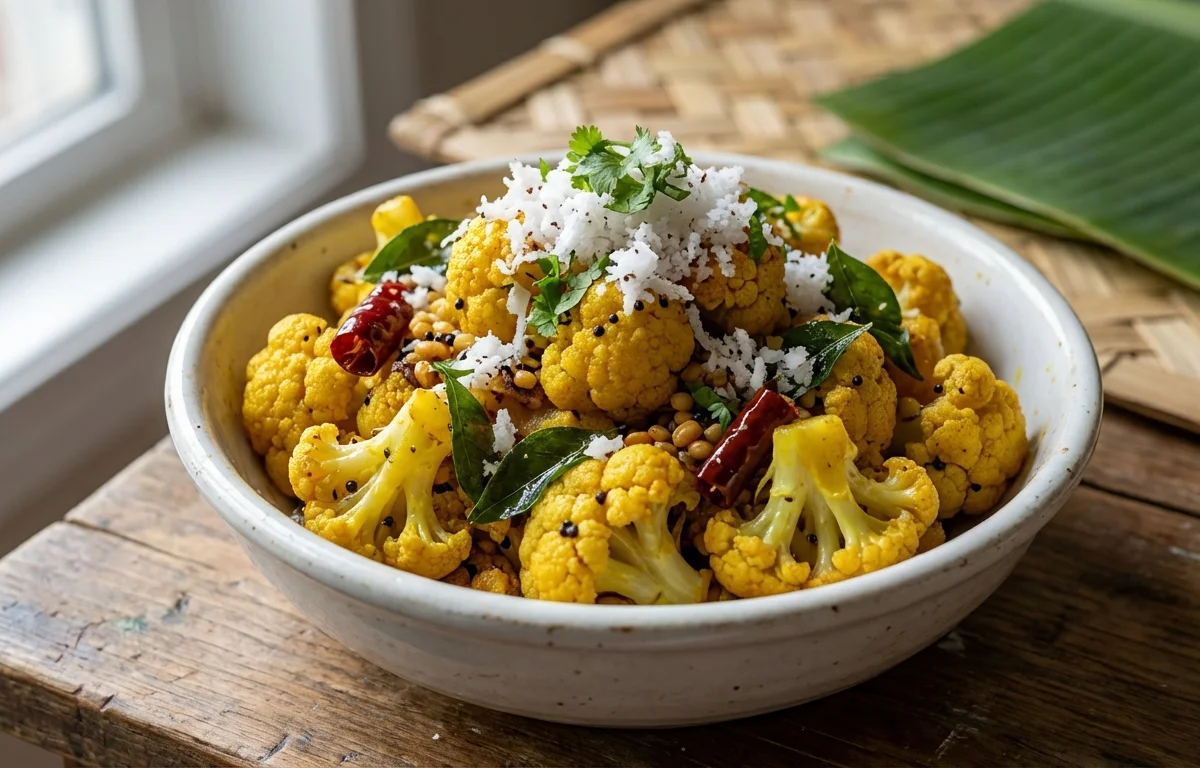
Cauliflower Upkari
A simple coastal-style cauliflower stir-fry with coconut, mustard seeds, curry leaves, and mild spices. It cooks quickly, stays light on the palate, and fits beautifully next to rice, dal, or chapati.
For 4 servings
- prep · ~10 min
Prepare the cauliflower and other ingredients.
1.Wash the cauliflower and cut it into small, even florets.2.Finely chop the onion and slit the green chilies.3.Grate the fresh coconut and keep the lemon juice ready. - temper · ~2 min
Make the tempering.
1.Heat oil in a kadai over medium heat.2.Add mustard seeds and let them splutter.3.Add urad dal and cook until lightly golden.4.Add curry leaves and green chilies and cook for a few seconds.TIPKeep the heat moderate so the urad dal turns golden without burning. - saute
Cook the onion.
Add the chopped onion and sauté for 3 to 4 minutes until soft and lightly translucent. Stir in the turmeric powder.
- steam · ~10 min
Steam the cauliflower until just tender.
1.Add the cauliflower florets and salt, then toss well with the onion mixture.2.Pour in the water and mix once.3.Cover the pan and cook on low heat until the cauliflower is just tender but still holds its shape.TIPDo not overcook the florets or the upkari will turn soft and watery. - mix · ~2 min
Mix in the coconut and lemon juice.
Uncover the pan and let any extra moisture dry for 1 to 2 minutes. Add the grated coconut and lemon juice, then toss gently until everything is evenly coated.
- serve
Serve the cauliflower upkari warm.
What to keep in mind.
7 tips from the recipe — small details that make a real difference to the final dish.
- 1Cut the cauliflower into small, even florets so they steam at the same rate and stay neat rather than crumbly.
- 2Let the mustard seeds fully splutter before adding urad dal, or the dal can darken before the tempering becomes fragrant.
- 3Keep the pan on low once water is added; gentle steaming cooks the cauliflower through without making it mushy.
- 4If moisture remains after cooking, uncover and dry it briefly before adding coconut so the upkari stays fluffy, not soggy.
- 5Add the grated coconut only at the end to keep its sweet freshness and soft texture intact.
- 6Stir the lemon juice in off the heat or at the very end so its brightness doesn't get dulled by prolonged cooking.
- 7This dish reheats best in a pan, not the microwave, which can over-soften the cauliflower and mute the tempering.
Adapt it for your goals.
Jain
Skip the onion and increase curry leaves slightly for a clean, sattvic-style version that still tastes aromatic and balanced.
low oilLow-oil
Use a little less oil and a good heavy pan; the dish still works because the covered steaming softens the cauliflower efficiently.
mixed vegetableMixed-vegetable
Add finely cut beans or carrots with the cauliflower for a more colorful upkari that pairs especially well with rice and dal.
spicierSpicier
Increase the green chilies or add a pinch of red chili powder after the onions if you want a sharper, hotter finish.
Why this is on our healthy list.
Fiber-Rich Vegetable Side
Cauliflower and onion contribute fiber, making this a light vegetable dish that pairs well with heavier mains.
Plant-Based Goodness
Cauliflower, coconut, curry leaves, and urad dal provide a mix of plant ingredients with varied nutrients and texture.
Moderate and Light Preparation
The recipe uses a small amount of oil and relies mostly on steaming, which keeps the dish lighter than deep-fried sides.
Frequently asked questions
Use small but not tiny florets, add only the stated water, and cook covered on low just until tender. Dry any excess moisture before finishing.