Chembu Fry
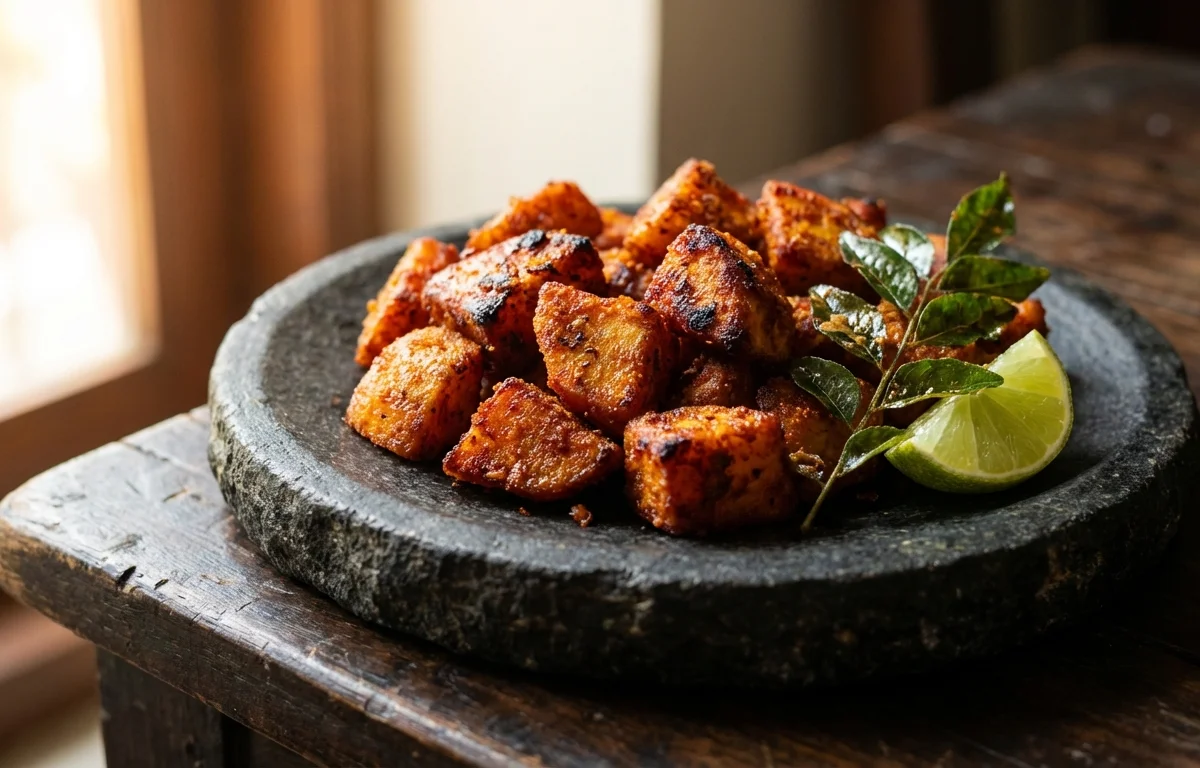
Crispy, golden chunks of colocasia with a spiced, caramelized crust. This Kerala-style stir-fry is tossed with cracked mustard seeds, curry leaves, and a gentle heat from dried red chilies—simple home cooking that pairs perfectly with steamed rice and moru curry.
For 4 servings
- prep · ~12 min
Wash and boil the chembu.
1.Scrub colocasia well under running water to remove all dirt.2.Place whole chembu in a saucepan with 750 ml water.3.Boil for 10-12 minutes until just fork-tender but still firm.4.Drain and let cool until you can handle them.TIPDon't overcook—mushy chembu will fall apart when frying. A knife should slide in with slight resistance. - prep · ~5 min
Peel and slice the chembu.
1.Peel the cooled chembu—the skin should slip off easily with a paring knife.2.Slice into 0.5 cm thick rounds or wedges.3.Pat dry with a kitchen towel to remove excess moisture. - temper · ~2 min
Make the tempering.
1.Heat coconut oil in a heavy-bottomed pan over medium heat.2.Add mustard seeds and let them splutter (30 seconds).3.Add dried red chilies and curry leaves—stir until fragrant (15 seconds). - fry · ~8 min
Fry the chembu slices.
1.Add the sliced chembu in a single layer.2.Sprinkle turmeric powder, red chili powder, and salt evenly over the top.3.Cook without stirring for 2-3 minutes on medium heat until the bottom is golden and crisp.4.Gently flip each piece and cook the other side for another 2-3 minutes.5.Toss gently once more and cook for a final 1-2 minutes until evenly browned and edges are crispy.TIPResist the urge to stir constantly—letting the chembu sit undisturbed builds the crispy crust that makes this dish. - serve
Serve hot.
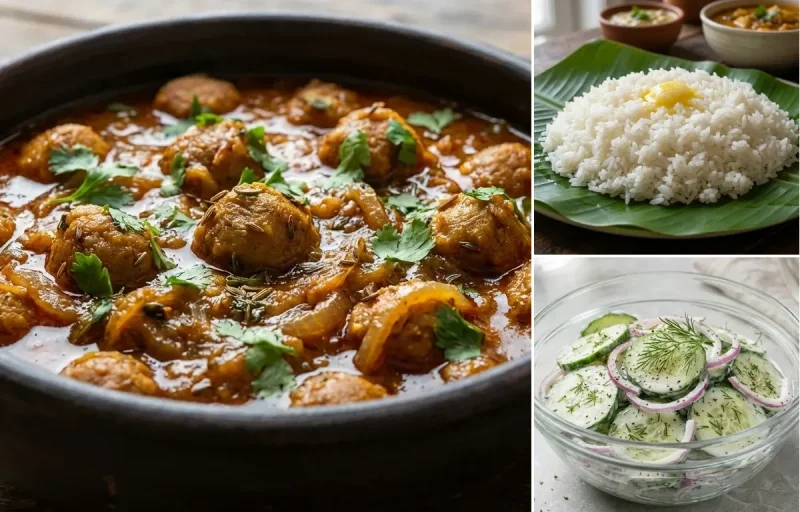
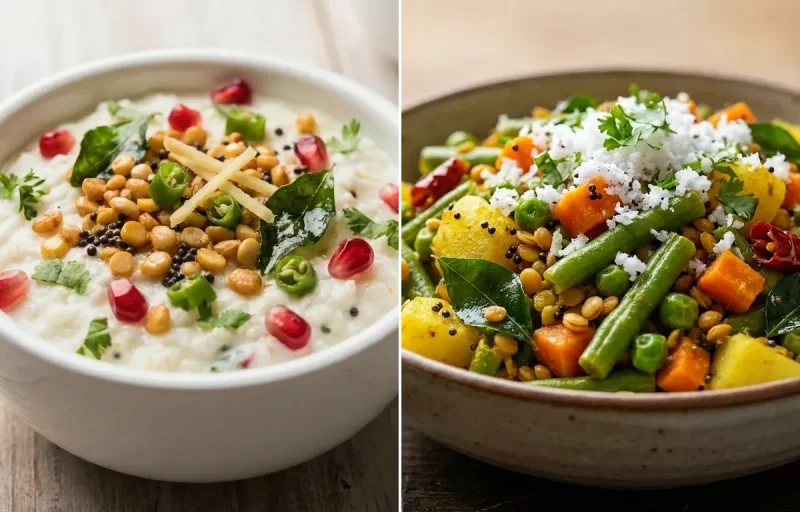
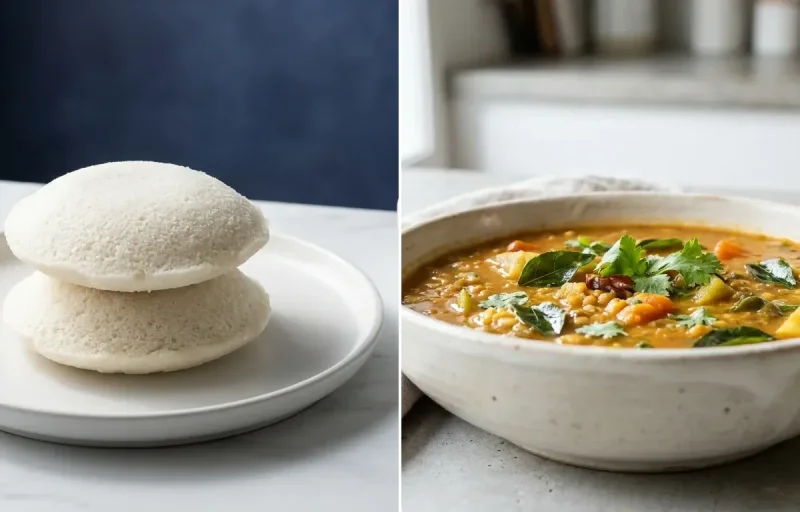
Transfer to a serving bowl and serve immediately with steamed rice and a yogurt-based curry like moru curry or sambar.
What to keep in mind.
6 tips from the recipe — small details that make a real difference to the final dish.
- 1Boil chembu until just fork-tender; overcooking makes them mushy and impossible to fry.
- 2Pat the sliced chembu thoroughly dry before frying to ensure a crispy, not soggy, crust.
- 3Let the chembu sit undisturbed in the pan for 2-3 minutes per side to develop a deep golden crust.
- 4Use a heavy-bottomed pan (preferably cast iron or nonstick) to distribute heat evenly and prevent sticking.
- 5If using larger taro roots, slice them into even 0.5 cm rounds so they cook uniformly.
- 6Leftover chembu fry can be stored in an airtight container in the fridge for up to 2 days; reheat in a dry skillet to restore crispness.
Adapt it for your goals.
Low-oil
Reduce coconut oil to 1 tablespoon and use a nonstick pan; cook on medium-low heat, shaking the pan occasionally, for a lighter version with less fat but still good crispness.
spicierSpicier
Add 1-2 more broken dried red chilies and an extra pinch of red chili powder for those who love intense heat.
garlic twistGarlic twist
Add 4-5 thinly sliced garlic cloves along with the curry leaves for a fragrant, punchy variation popular in some Kerala homes.
with grated coconutWith grated coconut
Sprinkle 2 tablespoons of fresh grated coconut over the cooked chembu in the last minute of frying for a subtle sweetness and texture contrast.
Why this is on our healthy list.
Rich in Resistant Starch
Colocasia is a good source of resistant starch, which acts like a prebiotic fiber, supporting gut health and improving digestion.
Packed with Potassium
This dish provides a meaningful amount of potassium from the taro root, which helps maintain healthy blood pressure and muscle function.
High in Antioxidants
Turmeric and curry leaves contribute curcumin and polyphenols that help combat oxidative stress and reduce inflammation.
Naturally Gluten-Free
This Kerala-style fry uses no wheat or gluten-containing ingredients, making it suitable for those with celiac disease or gluten sensitivity.
Frequently asked questions
Fresh chembu is best for texture. Frozen or pre-boiled colocasia can turn mushy and won't develop the same crispy crust.