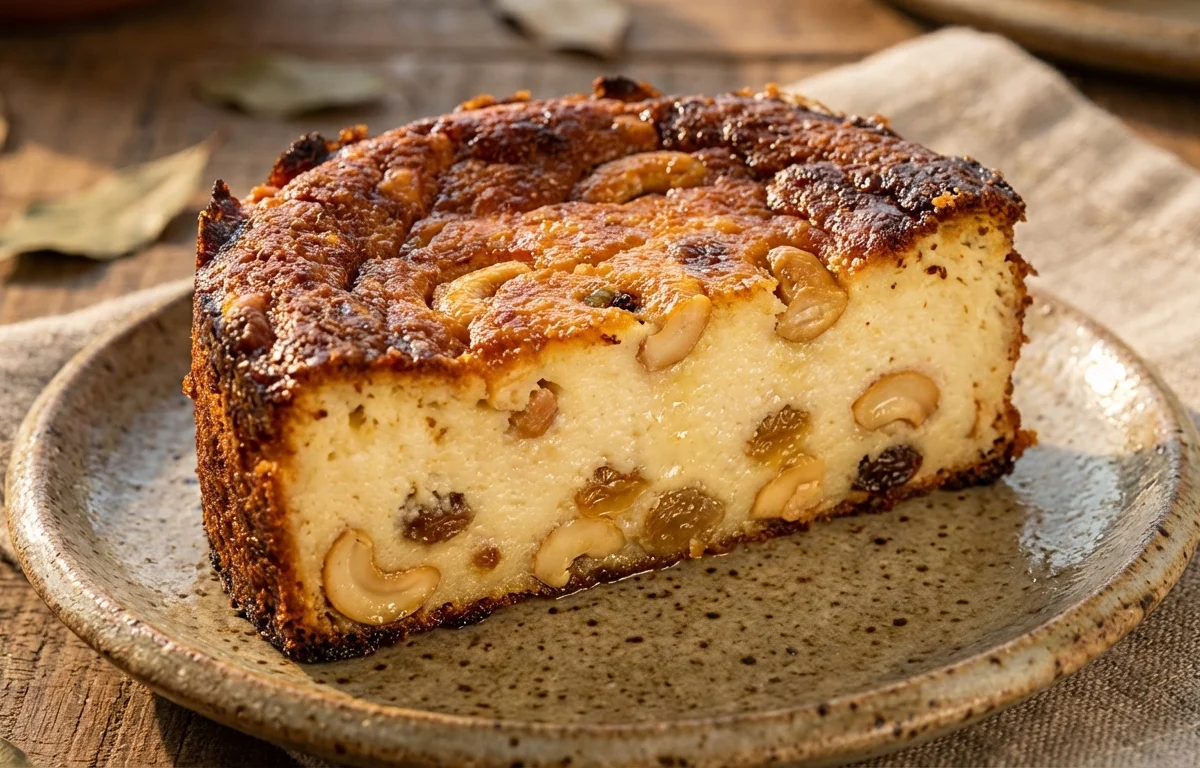
Chhena Poda
A beloved Odia baked cottage cheese dessert with a caramelized top and soft, lightly grainy center. Fresh chhena is mixed with sugar, semolina, and cardamom, then baked until deep golden and fragrant.
For 8 servings
- prep · ~10 min
Prepare the pan and heat the oven.
Heat the oven to 180°C. Grease a small round or loaf pan with ghee. Line the base and sides with banana leaf if using, and lightly grease it too.
- boil · ~15 min
Boil the milk.
Pour the milk into a heavy pot and bring it to a gentle boil over medium heat, stirring now and then so it does not catch at the bottom.
- mix · ~4 min
Curdle the milk to make chhena.
1.Lower the heat and add the diluted lemon juice a little at a time.2.Stir gently until the milk separates into curds and pale whey.3.Stop adding lemon juice as soon as the whey looks mostly clear.4.Let it stand for 2 minutes so the curds settle.TIPDo not overboil after curdling or the chhena can turn rubbery. - prep · ~20 min
Drain and rinse the chhena.
Strain the curdled milk through a clean cloth or fine strainer. Rinse the chhena with 1 liter water to remove the lemony taste, then let it drain well for 15 to 20 minutes until moist but not wet.
- mix · ~8 min
Mash the chhena with sugar and semolina.
1.Transfer the drained chhena to a wide bowl.2.Mash it well with your fingers or palm until mostly smooth but still lightly grainy.3.Add sugar, semolina, and powdered cardamom seeds.4.Mix and mash again until the sugar starts dissolving and the mixture holds together.TIPKeep a little texture in the chhena for the classic soft, grainy bite. - assemble · ~2 min
Spread the mixture in the pan.
Spoon the chhena mixture into the prepared pan and level the top gently without pressing too hard.
- bake · ~45 min
Bake until deep golden and caramelized.
Bake for 40 to 45 minutes, until the top is richly browned and the edges look slightly darker. A skewer inserted in the center should come out mostly clean.
TIPThe dark top is the signature of chhena poda, so let it color well without burning. - rest · ~30 min
Cool the chhena poda in the pan.
Set the pan on a rack and let the dessert cool completely so it firms up and slices neatly.
- serve
Unmold and cut into slices.
What to keep in mind.
7 tips from the recipe — small details that make a real difference to the final dish.
- 1Stop adding lemon juice as soon as the whey turns pale greenish-clear; extra acid can make the chhena tough.
- 2Drain the chhena until just moist, not dry; excess water makes the baked center pasty and slows browning.
- 3Mash only until the mixture holds together; a little graininess is what gives authentic chhena poda its texture.
- 4Do not pack the mixture tightly into the pan, or the dessert can turn dense instead of soft.
- 5Bake until the top is deeply browned, not merely golden; that caramelized crust is the hallmark flavor.
- 6Cool completely before unmolding so the semolina can set the center and the slices come out clean.
- 7Banana leaf lining adds a subtle earthy aroma and also helps prevent sticking at the edges.
Adapt it for your goals.
Low-sugar
Reduce the sugar slightly for a less sweet version; the dessert will be milder but still aromatic from cardamom and baked milk solids.
banana leaf bakedBanana-leaf baked
Use banana leaf to line the pan for a more traditional aroma and a faint smoky-earthy note.
jaggeryJaggery
Replace part of the sugar with grated jaggery for a deeper, warmer sweetness and darker color.
raisin cashewRaisin-cashew
Fold in a small handful of raisins and chopped cashews for festive texture and richer bites.
Why this is on our healthy list.
Protein From Fresh Chhena
Because it is made from whole milk curds, this dessert provides dairy protein that makes it more substantial than many syrup-based sweets.
Calcium-Rich Dairy Base
The milk-based chhena contributes calcium and other dairy nutrients along with the dessert's rich texture.
Minimal Ingredients Dessert
This recipe relies on milk, sugar, semolina, cardamom, and ghee, with no artificial flavorings needed for character.
Frequently asked questions
Usually the chhena was overcooked after curdling, too much lemon juice was used, or the curds were drained until too dry before mixing.