Chicken Katsu Plate Lunch
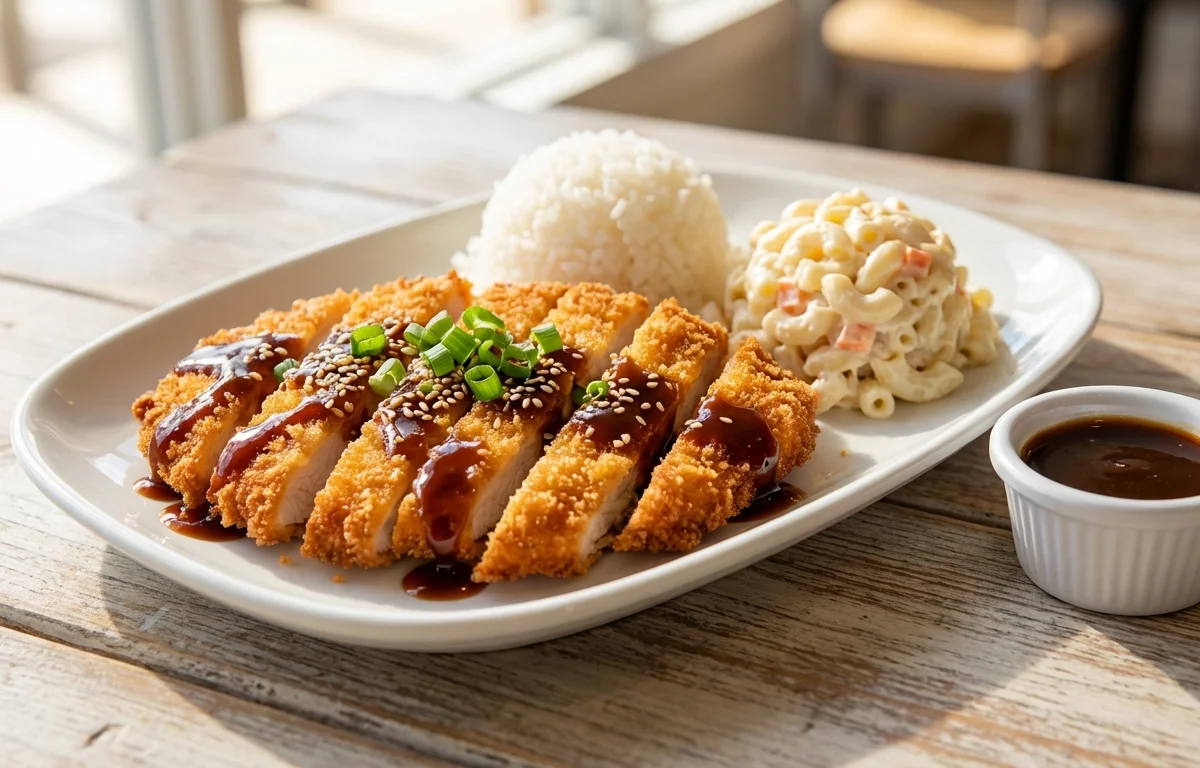
Crispy, golden panko-crusted chicken cutlets with a juicy, tender center, served alongside fluffy white rice and a tangy, creamy mac salad. This Hawaiian plate lunch staple brings Japanese comfort food to the islands — crunchy, satisfying, and utterly delicious.
For 4 servings
- prep
Prepare the chicken cutlets.
1.Slice each chicken breast in half horizontally to create 4 thin cutlets.2.Place cutlets between two sheets of plastic wrap and pound to an even 1/4-inch thickness.3.Season both sides lightly with a pinch of salt and black pepper. - mix
Make the mac salad dressing.
1.In a small bowl, whisk together mayonnaise, rice vinegar, sugar, and a pinch of salt.2.Fold in the grated onion and set aside. - boil · ~10 min
Cook the macaroni.
1.Bring a pot of water to a rolling boil.2.Cook elbow macaroni according to package directions until just past al dente.3.Drain, rinse briefly under cold water, and drain well.4.Toss warm pasta with the dressing and grated carrot. Chill in the refrigerator.TIPSlightly overcooking the pasta gives mac salad its signature soft texture. - boil · ~25 min
Cook the rice.
Combine rinsed short-grain rice and water in a pot with a lid. Bring to a boil, then reduce heat to low, cover, and simmer for 15 minutes. Remove from heat and let steam, covered, for 10 minutes.
- prep
Set up the breading station.
1.Place flour on a plate. Season with a pinch of salt.2.Place beaten eggs in a shallow bowl.3.Place panko breadcrumbs in a separate shallow bowl. - fry · ~10 min
Bread and fry the chicken.
1.Dredge each cutlet first in flour, shaking off excess.2.Dip into beaten egg, letting excess drip off.3.Press firmly into panko breadcrumbs on both sides.4.Heat oil in a deep heavy-bottomed pot to 340°F (170°C).5.Carefully lower breaded cutlets into hot oil and fry until golden brown and cooked through, about 3-4 minutes per side.6.Transfer to a wire rack to drain. Internal temperature should reach 165°F (74°C).TIPDon't overcrowd the pot — fry in batches to keep the oil temperature steady. - assemble
Assemble the plate lunch.
1.Slice each katsu into 1-inch strips against the grain.2.Arrange sliced katsu, a scoop of rice, and a scoop of mac salad on each plate.3.Drizzle tonkatsu sauce over the katsu or serve alongside.
What to keep in mind.
7 tips from the recipe — small details that make a real difference to the final dish.
- 1Pound chicken to an even 1/4-inch thickness for uniform cooking and tenderness.
- 2Use a thermometer to maintain oil at 170°C (340°F) for a crisp, non-greasy crust.
- 3Press panko firmly onto the cutlet so the coating adheres and creates shaggy, crunchy flakes.
- 4Slightly overcook the macaroni so it stays soft and absorbs the creamy dressing.
- 5Rinse the cooked macaroni under cold water to stop cooking and cool it quickly for the salad.
- 6Chill the mac salad for at least 30 minutes so the flavors meld and the texture firms up.
- 7Let fried chicken rest on a wire rack, not paper towels, to keep the crust crisp on all sides.
Adapt it for your goals.
Chicken-less
Swap chicken for firm tofu or thick king oyster mushroom cutlets; press tofu well and follow the same breading and frying method—ideal for vegetarians or a lighter meal without losing the crunch.
lightened upLightened-up
Air-fry the breaded cutlets at 200°C (400°F) for about 10 minutes, flipping halfway, to achieve a crisp coating with significantly less oil—perfect for a lower-calorie version.
spicy katsuSpicy katsu
Add 1 teaspoon of togarashi or cayenne pepper to the flour and mix sriracha into the tonkatsu sauce—great for those who love heat alongside the crispy chicken.
gluten freeGluten-free
Use gluten-free panko and all-purpose gluten-free flour for the breading—keeps the dish celiac-friendly while still delivering that signature crunch.
mac salad twistMac salad twist
Add a handful of frozen peas (thawed) and diced ham to the mac salad for extra color, sweetness, and protein—a classic Hawaiian side upgrade.
Why this is on our healthy list.
High in Lean Protein
Chicken breast provides a generous amount of lean protein that supports muscle repair and satiety without excess fat.
Source of Vitamin A
Carrots in the mac salad deliver beta-carotene, which the body converts to vitamin A for healthy vision and immune support.
Carbohydrate Fuel from Rice
Short-grain rice offers easily digestible carbohydrates to replenish energy, especially after active days.
Moderate in Calcium
The egg and dairy-based mayonnaise contribute small amounts of calcium for bone health, though the dish is not a primary calcium source.
Frequently asked questions
Pounding to an even 1/4-inch ensures the chicken cooks through in the same time the panko turns golden, preventing a raw center or burnt coating.