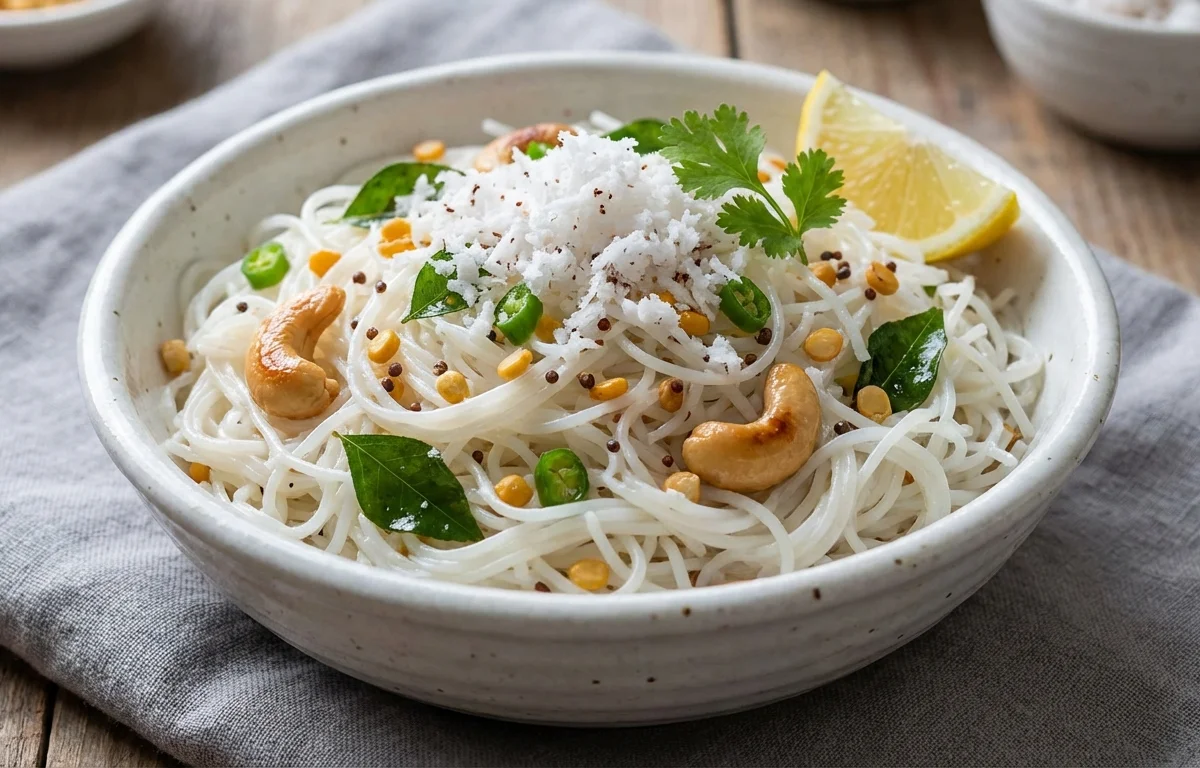
Coconut Sevai
Light, fluffy rice sevai tossed with fresh coconut, mild green chili, and a simple South Indian tempering. It makes a comforting breakfast or tiffin dish that feels delicate, fragrant, and easy on the stomach.
For 4 servings
- prep · ~5 min
Break and moisten the sevai.
Break the rice sevai into shorter lengths and place it in a wide bowl. Sprinkle 200 ml water over it, mix gently, and let it sit for 5 minutes so the strands soften slightly.
TIPDo not soak the sevai in excess water or it can turn sticky after steaming. - steam · ~10 min
Steam the sevai until soft.
Transfer the moistened sevai to a steamer plate and steam for 8 to 10 minutes until just cooked and fluffy. Remove, cool for 2 minutes, and loosen gently with a fork or fingers.
- temper · ~3 min
Make the tempering.
1.Heat oil in a wide pan over medium heat.2.Add mustard seeds and let them splutter.3.Add urad dal and chana dal and cook until light golden.4.Add green chili, curry leaves, and asafoetida and sauté for 20 seconds.TIPKeep the heat medium so the dals turn golden without burning. - mix · ~4 min
Toss the sevai with coconut and seasoning.
1.Add the steamed sevai to the pan and sprinkle in the salt.2.Pour in the remaining 400 ml water, a little at a time, only as needed to soften the strands evenly.3.Add the grated coconut and toss gently until everything is well mixed and heated through.4.Turn off the heat and mix in the lemon juice.TIPUse only enough water to loosen the sevai; the dish should stay light and separate, not wet. - garnish
Garnish with cilantro.
- serve
Serve the coconut sevai warm.
What to keep in mind.
6 tips from the recipe — small details that make a real difference to the final dish.
- 1After steaming, rest the sevai for 2 minutes and fluff gently so the strands stay separate.
- 2Add the remaining water little by little in the pan; you may not need all of it for a light, fluffy texture.
- 3Brown the urad dal and chana dal only to light golden so they stay crisp and nutty, not bitter.
- 4Mix in the lemon juice only after switching off the heat to keep its fresh, bright edge.
- 5Use finely grated fresh coconut so it coats the sevai evenly instead of sitting in clumps.
- 6If packing for tiffin, cool slightly before closing the box so trapped steam does not make the sevai soggy.
Adapt it for your goals.
Low-oil
Reduce the oil slightly and use a well-seasoned pan; the dish stays light while still getting flavor from curry leaves, chili, and coconut.
vegetable loadedVegetable-loaded
Add finely chopped carrots, beans, or peas to the tempering for extra color, texture, and a more filling breakfast.
peanutPeanut
Add roasted peanuts or cashews after tempering for crunch and a richer tiffin-style version.
milderMilder
Use fewer green chilies or slit them without cutting deeply if you want the aroma without much heat.
Why this is on our healthy list.
Light and Easy to Digest
Steamed rice sevai with a simple tempering makes this a gentle, comforting option often preferred for breakfast or a light meal.
Contains Healthy Plant Fats
Fresh coconut contributes natural fats that add satiety and help the dish feel satisfying without heavy gravy or frying.
Includes Lentil Crunch
Urad dal and chana dal in the tempering add a small boost of plant-based protein and texture.
Herb and Spice Aroma
Curry leaves, green chili, cilantro, and lemon juice add freshness and flavor, making the dish lively without needing rich sauces.
Frequently asked questions
Usually the sevai was soaked with too much water or overcooked. Sprinkle water to moisten, steam just until soft, and add extra water in the pan only as needed.