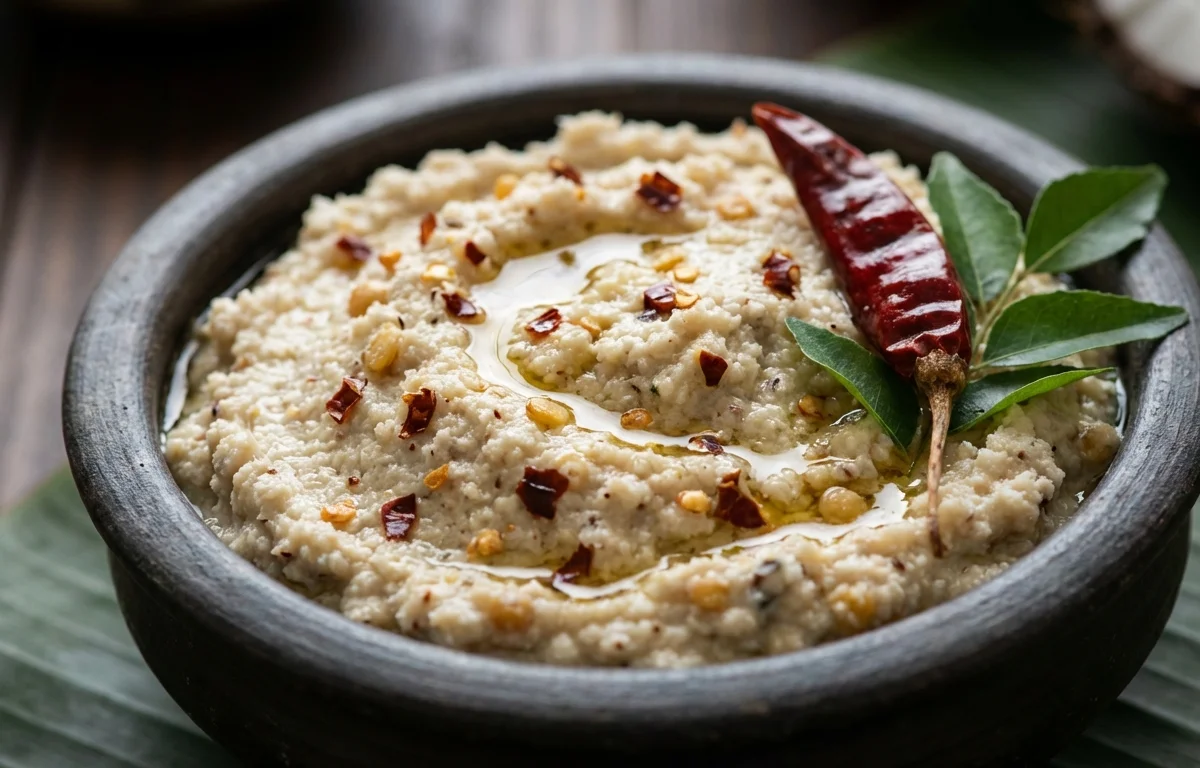
Coconut Thuvaiyal
This thick Tamil-style coconut thuvaiyal is packed with roasted lentils, dried red chili, and tamarind for a bold, nutty taste. It comes together quickly and pairs beautifully with hot rice, idli, or dosa.
For 8 servings
- prep
Measure and ready all the ingredients.
Keep the grated coconut, lentils, dried red chili, tamarind, salt, oil, and a little water ready near the stove and grinder.
- saute · ~5 min
Roast the lentils and chili.
1.Heat oil in a small pan over medium heat.2.Add chana dal and urad dal and cook until lightly golden and nutty (2-3 min).3.Add dried red chili and roast briefly until crisp and fragrant (20-30 sec).4.Turn off the heat and let the mixture cool for 2 minutes.TIPKeep the heat medium so the lentils turn golden without burning. - mix · ~3 min
Grind the thuvaiyal.
1.Add the roasted lentils and chili to a grinder jar.2.Add coconut, tamarind, and salt.3.Sprinkle in a little water and grind to a thick, slightly coarse paste.4.Stop and scrape the jar once if needed, then grind again.TIPUse very little water so the thuvaiyal stays thick and intense. - assemble
Transfer to a bowl.
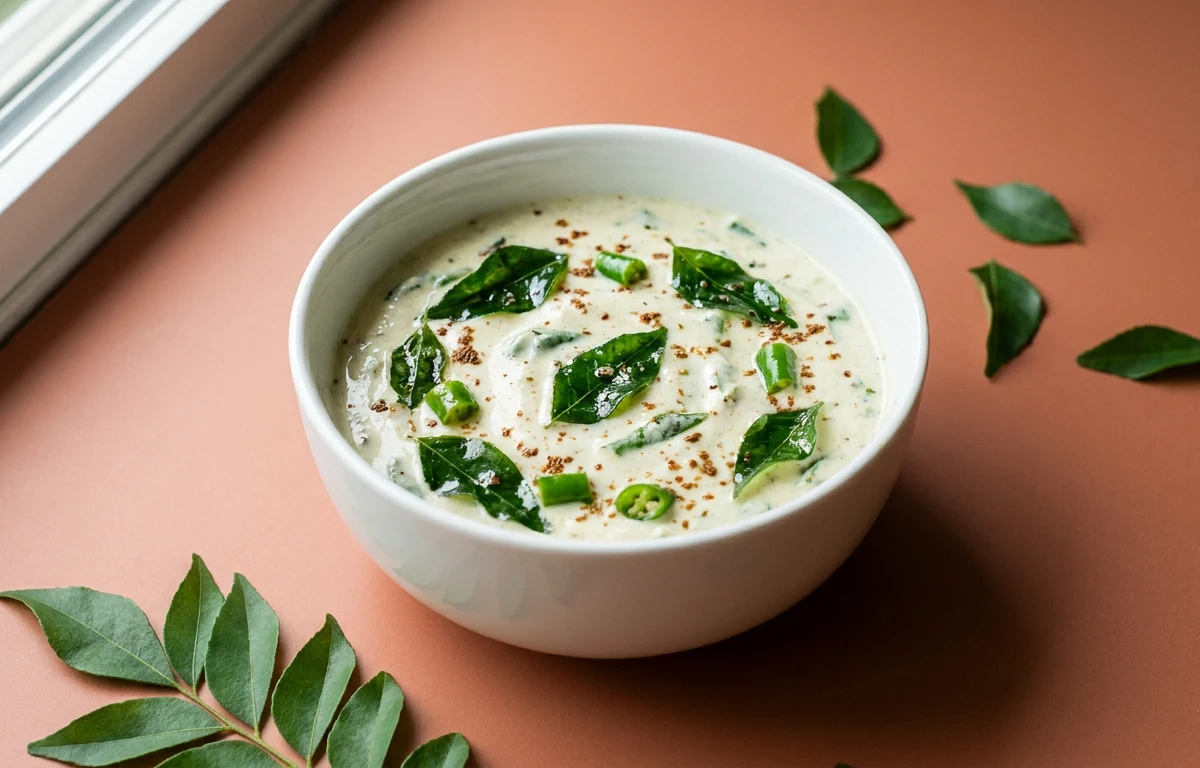
Spoon the coconut thuvaiyal into a serving bowl. It should be thick enough to mound slightly, not runny.
- serve
Serve with rice, idli, or dosa.
What to keep in mind.
7 tips from the recipe — small details that make a real difference to the final dish.
- 1Roast the chana dal and urad dal only to light golden; if they darken too much, the thuvaiyal turns bitter.
- 2Break the dried red chilies before roasting so they toast evenly and grind smoothly into the coconut.
- 3Let the roasted dal-chili mixture cool briefly before grinding, or the coconut can release extra oil and turn pasty.
- 4Add water by teaspoons, not splashes; this thuvaiyal should stay thick enough to sit in a mound.
- 5Grind to a slightly coarse texture rather than completely smooth for the classic Tamil-style thuvaiyal bite.
- 6If serving with hot rice, mix the thuvaiyal with a little sesame oil or ghee to help it coat the grains evenly.
- 7Because it uses fresh coconut, refrigerate leftovers promptly and use within a day or two for the best taste.
Adapt it for your goals.
Tempered
Finish with a quick tempering of mustard seeds, curry leaves, and a little urad dal for extra aroma and a more chutney-style finish.
garlicGarlic
Roast 1-2 garlic cloves with the chilies and grind them in for a sharper, earthier version that pairs especially well with dosa.
mildMild
Reduce the dried red chilies for a gentler heat level while keeping the same coconut-lentil texture and tamarind tang.
shallotShallot
Saute a few small shallots before grinding for a sweeter, more rounded thuvaiyal that works nicely with curd rice too.
Why this is on our healthy list.
Good Fats from Coconut
Fresh coconut contributes satisfying fats that make this thuvaiyal filling and rich without needing much oil.
Plant Protein from Lentils
Chana dal and urad dal add plant protein and make the condiment more substantial than a plain coconut chutney.
Spice and Tamarind Balance
Dried red chili and tamarind bring strong flavor, which helps build depth with a very short ingredient list.
Frequently asked questions
Too much water is the usual reason. Add water very gradually while grinding; this dish should be thick and slightly coarse, not pourable.