Dal Paratha
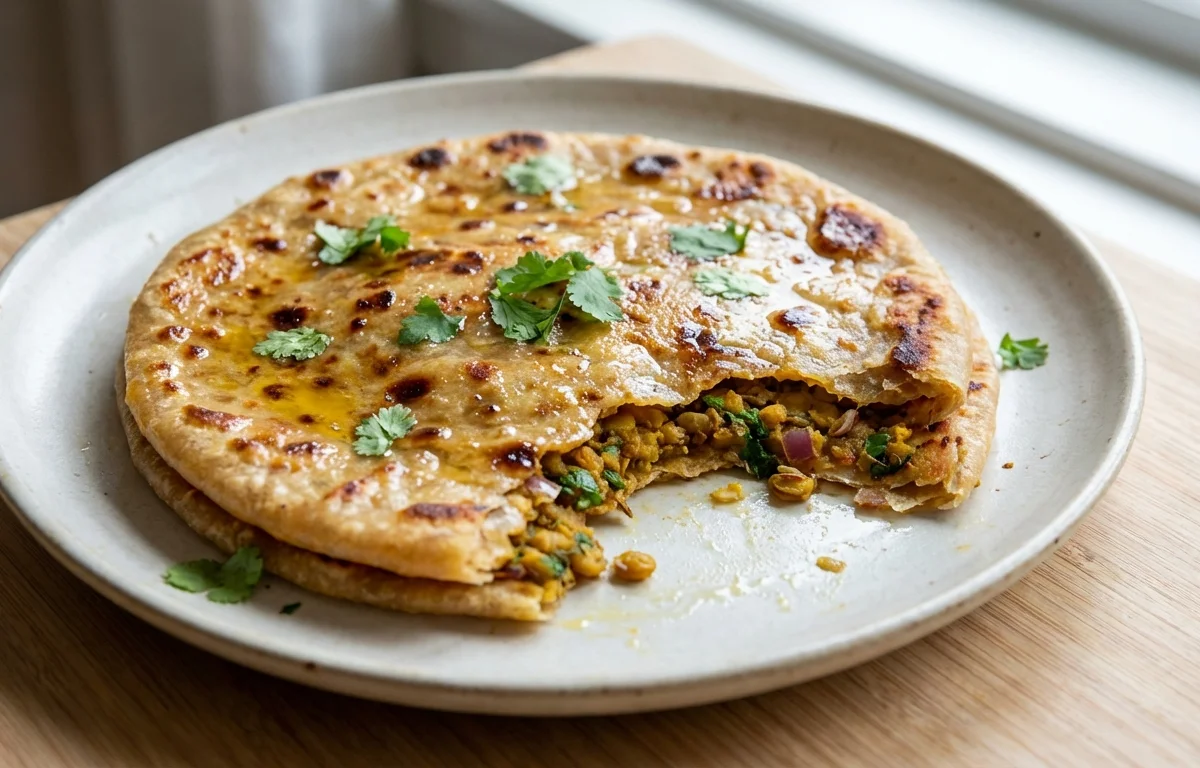
Dal Paratha is a hearty North Indian flatbread stuffed with a mildly spiced lentil filling. Crisp golden spots on the outside and a soft, savory center make it perfect with yogurt, pickle, or a simple cup of chai.
For 8 servings
- boil · ~20 min
Cook the dal until soft but not mushy.
1.Add soaked chana dal and 2 cups water to a pot.2.Bring to a boil over medium heat.3.Cook until the dal is tender and the grains hold their shape, about 18-20 minutes.4.Drain any extra water well and let the dal cool slightly.TIPKeep the dal fairly dry, or the stuffing will make the parathas hard to roll. - knead · ~15 min
Knead the dough.
Mix whole wheat flour, 0.25 tsp salt, 1 tsp oil, and 0.75 cup water as needed to make a soft dough. Knead for 5-6 minutes until smooth, then cover and rest for 15 minutes.
TIPA soft dough seals better around the filling and cooks up more tender. - saute · ~5 min
Make the dal filling.
1.Heat 1 tsp oil in a pan over medium heat.2.Add cumin seeds, green chili, and ginger; cook until fragrant, about 30 seconds.3.Add the cooked dal, remaining 0.25 tsp salt, red chili powder, garam masala, and coriander powder.4.Cook and mash lightly until the mixture turns dry and holds together, 3-4 minutes.5.Turn off the heat and mix in coriander leaves. Cool completely. - assemble · ~10 min
Stuff and shape the parathas.
1.Divide the dough into 8 equal balls.2.Divide the dal filling into 8 equal portions.3.Roll one dough ball into a small disc, place one portion of filling in the center, and gather the edges to seal.4.Flatten gently and roll into a medium paratha, using a light hand to keep the stuffing inside.TIPIf the filling feels warm, let it cool fully before stuffing to avoid tearing the dough. - fry · ~16 min
Cook the parathas on a hot tawa.
1.Heat a tawa or skillet over medium heat.2.Place one rolled paratha on the hot surface and cook until light bubbles appear.3.Flip, spread a little ghee on both sides, and cook until golden brown spots appear, about 1-2 minutes per side.4.Repeat with the remaining parathas. - serve
Serve the dal parathas hot.
What to keep in mind.
7 tips from the recipe — small details that make a real difference to the final dish.
- 1Drain the cooked chana dal very well; even a little extra moisture can make the stuffing leak while rolling.
- 2Mash the filling only lightly so some dal texture remains and the paratha gets a hearty bite instead of a paste-like center.
- 3Cool the stuffing completely before filling, or the warm steam will soften the dough and cause tears.
- 4Dust with flour sparingly while rolling; too much dry flour can make the parathas tough and dusty on the tawa.
- 5Keep the tawa at medium heat so the dough cooks through before the ghee browns the outside.
- 6Stack cooked parathas in a cloth-lined container to keep them soft while you finish the batch.
- 7You can make the dal filling a day ahead and refrigerate it; cold filling is often easier to portion and seal.
Adapt it for your goals.
Vegan
Replace ghee with oil for roasting to keep the parathas fully plant-based while still getting a crisp exterior.
jainJain
Skip ginger and green chili, and use a mild pinch of black pepper or extra coriander powder for a Jain-friendly version.
low oilLow-oil
Dry-roast the parathas on the tawa and brush with just a few drops of oil at the end for a lighter finish.
spicierSpicier
Add extra green chili and a bit more red chili powder if you want a sharper, more robust North Indian-style heat.
Why this is on our healthy list.
Good Plant Protein Mix
Chana dal paired with whole wheat flour makes this paratha more satisfying and protein-rich than plain flatbread.
Fiber From Dal and Wheat
The lentils and whole wheat flour add fiber, which helps make this stuffed paratha filling and hearty.
Digestive Spice Support
Cumin, ginger, and coriander are traditional spices that add flavor while making the lentil filling feel more balanced.
Frequently asked questions
The filling is usually too wet or too warm. Cook the dal filling until dry, cool it fully, and roll with a gentle hand.



.webp)