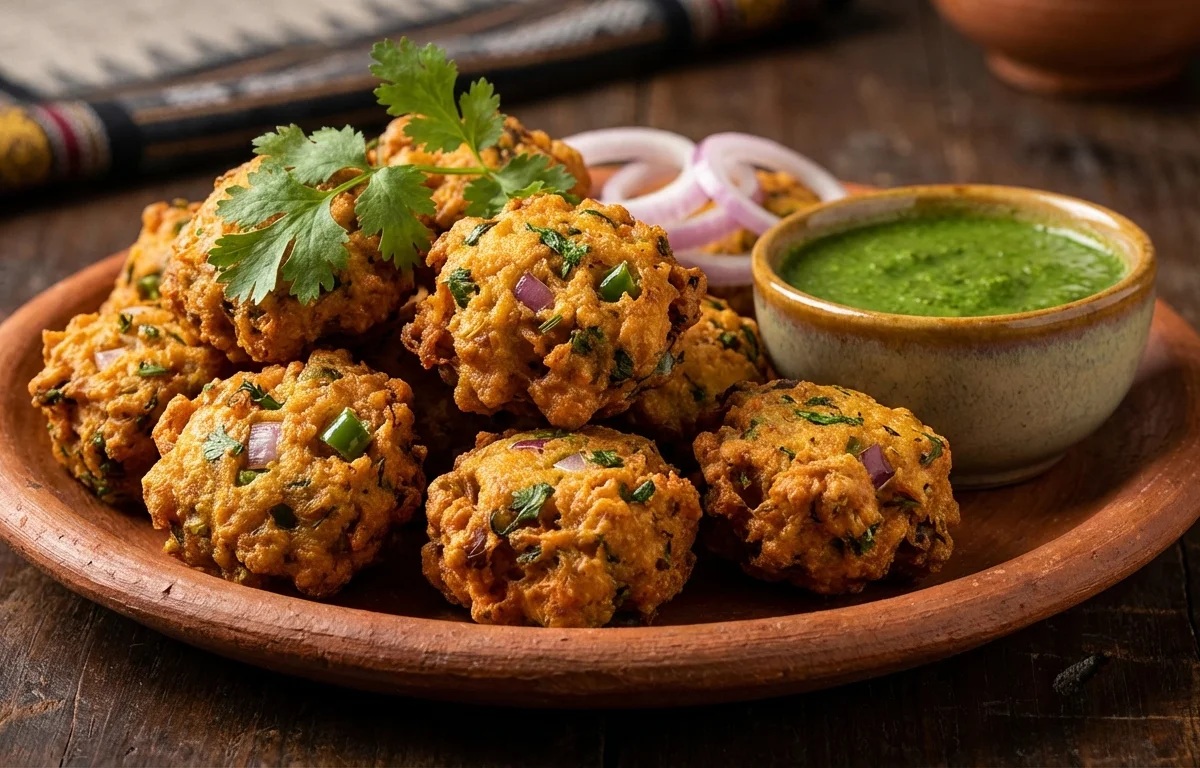
Dala Pokodi
Crispy, golden lentil fritters from Odisha that are crunchy on the outside and soft inside. These bite-sized treats are made by deep-frying a spiced urad dal batter, making them perfect as a tea-time snack or a crunchy topping for Odia-style curries.
For 4 servings
- prep
Soak the urad dal.
Wash the urad dal thoroughly and soak it in enough water for 4 hours. The dal should absorb water and become plump.
TIPWell-soaked dal grinds smoother and yields lighter pokodis. - prep
Drain and grind the dal.
1.Drain the soaked dal completely in a colander.2.Transfer drained dal to a mixer grinder.3.Add 2 tablespoons of water and grind to a coarse, thick paste.4.Add up to 2 more tablespoons water only if needed to keep the blades moving.TIPKeep the batter thick and coarse — too much water makes the pokodis dense and they'll absorb more oil. - mix
Mix the batter with spices.
1.Scrape the dal paste into a large mixing bowl.2.Add chopped green chili, chopped ginger, chopped curry leaves, and chopped coriander leaves.3.Add cumin seeds, fennel seeds, salt, black pepper, and asafoetida.4.Mix everything vigorously with your hand for 2 minutes to incorporate air into the batter.TIPBeating air into the batter makes the pokodis lighter and fluffier inside. - fry
Heat the oil.
Pour the oil into a kadai and heat over medium flame. To test, drop a tiny bit of batter into the oil — it should sizzle and rise slowly, not brown instantly.
TIPMedium heat is crucial — high heat browns the outside before the inside cooks. - fry · ~5 min
Shape and deep-fry the pokodis.
1.Wet your fingers lightly with water.2.Take a small portion of batter and shape it into a rough round or oval fritter about 1 inch across.3.Gently slide 5-6 pokodis into the hot oil at a time.4.Fry for 4-5 minutes, turning occasionally, until deep golden brown and crisp on all sides.5.Remove with a slotted spoon and drain on paper towels.TIPDon't overcrowd the kadai — the oil temperature drops and pokodis turn greasy. - serve
Serve the pokodis hot.
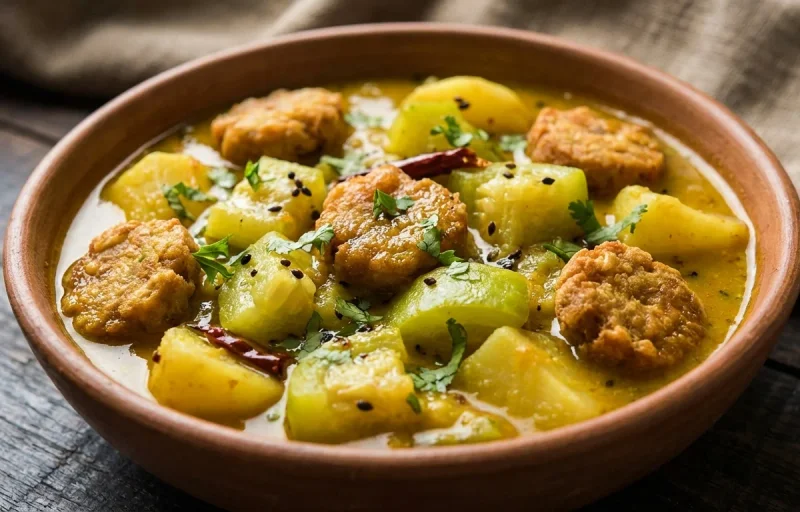
Serve immediately while crisp, with coconut chutney or a cup of hot chai on the side. Or use them as a crunchy topping in dalama or any Odia-style curry.
What to keep in mind.
7 tips from the recipe — small details that make a real difference to the final dish.
- 1Soak the urad dal for a full 4 hours so it grinds into a light, airy batter.
- 2Grind the dal to a coarse paste, not a fine puree, for a crunchy texture.
- 3Whisk the batter by hand for 2 minutes to incorporate air, making the fritters fluffy inside.
- 4Test oil temperature with a batter drop — it should sizzle and rise slowly, not brown instantly.
- 5Wet your fingers lightly when shaping the pokodis to prevent the batter from sticking.
- 6Fry only 5-6 pokodis at a time to keep the oil temperature steady and avoid greasiness.
- 7Serve immediately after frying for maximum crunch; reheat in an oven or air fryer if needed.
Adapt it for your goals.
Spicier
Add 1-2 finely chopped dried red chilies or a pinch of red chili powder to the batter for extra heat, perfect for those who love a fiery kick with their chai.
Low OilLow-Oil
Instead of deep-frying, shape the pokodis into small patties and pan-fry them in 1-2 tablespoons of oil over medium heat, flipping once, for a lighter snack.
Herb InfusedHerb-Infused
Mix in 1 tablespoon of finely chopped mint leaves or 1 teaspoon of dried fenugreek leaves (kasuri methi) for a refreshing herbal twist, adding complexity to the flavor.
CheesyCheesy
Fold in 2 tablespoons of grated paneer or mild cheese into the batter before frying for a richer, slightly gooey interior that kids love.
Why this is on our healthy list.
High in Plant Protein
Urad dal is a rich source of plant-based protein, making these fritters a satisfying snack that supports muscle repair and keeps you full longer.
Rich in Dietary Fiber
The lentil batter provides dietary fiber, aiding digestion and promoting gut health, especially when served with fiber-rich chutneys.
Digestive Aids from Spices
Asafoetida (hing), cumin, and fennel seeds are traditionally used to aid digestion, helping reduce bloating and gas after eating fried foods.
Iron Boost
Urad dal is naturally iron-rich, and the addition of black pepper enhances iron absorption, supporting healthy blood and energy levels.
Frequently asked questions
Yes, but the skin will add a slightly nutty flavor and a speckled appearance; soak it for 1-2 hours longer to soften.