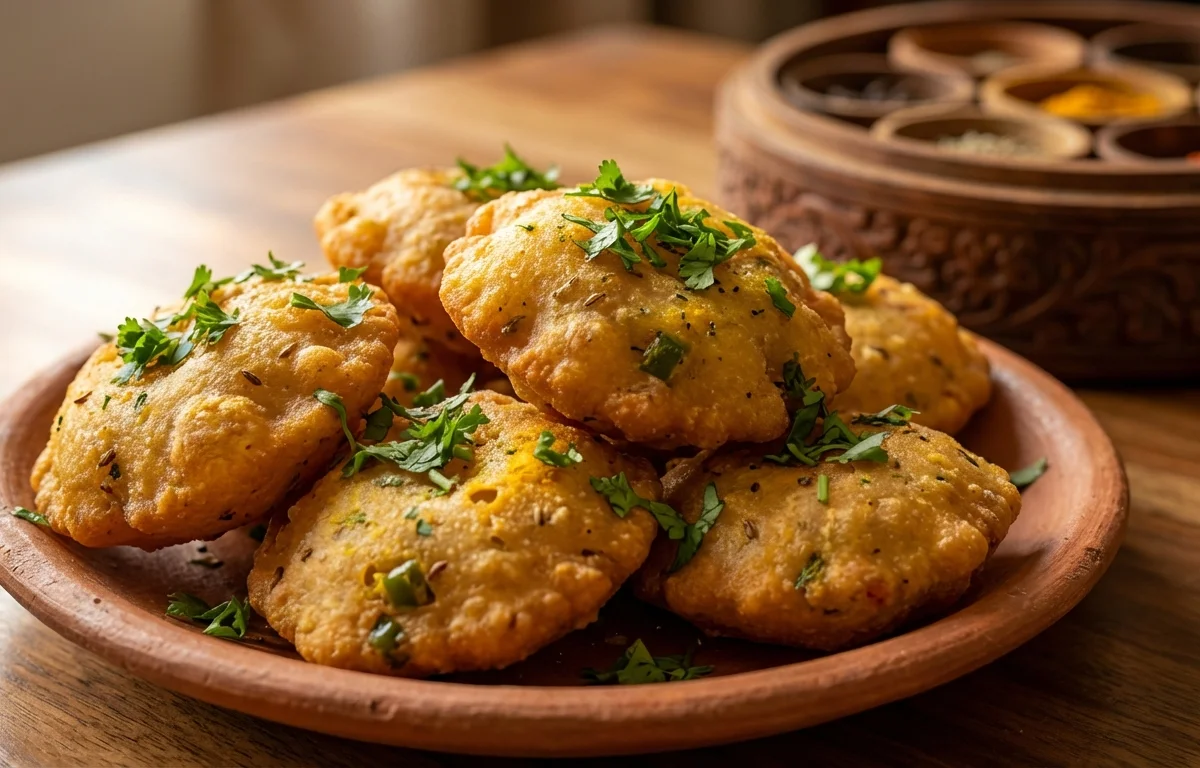
Dhuska
Crisp on the outside and soft in the middle, dhuska is a popular Jharkhand snack made with soaked rice and lentils. These golden fried breads are hearty, comforting, and especially good with aloo sabzi or chutney.
For 8 servings
- prep · ~360 min
Soak the rice and lentils.
Wash the rice, chana dal, and urad dal well. Soak them together in enough water for 6 hours, then drain completely.
- mix · ~10 min
Grind the batter.
1.Add the drained rice, chana dal, and urad dal to a grinder.2.Add ginger, green chili, cumin seeds, salt, and turmeric powder.3.Pour in a little water as needed and grind to a smooth, thick batter.4.Transfer the batter to a bowl and mix well.TIPKeep the batter thick like pakora batter so the dhuska puffs and holds shape in hot oil. - rest · ~10 min
Rest the batter.
Let the batter sit for 10 minutes so it settles and thickens slightly before frying.
- fry · ~20 min
Fry the dhuska.
1.Heat oil for frying in a deep kadai over medium heat.2.Drop a small ladleful of batter into the hot oil without spreading it too thin.3.Fry until puffed and golden on one side, then turn and cook the other side.4.Lift out and drain briefly before frying the remaining batter the same way.TIPUse medium heat throughout. Oil that is too hot browns the outside before the center cooks. - serve
Serve hot.
What to keep in mind.
8 tips from the recipe — small details that make a real difference to the final dish.
- 1Drain the soaked rice and dals very well before grinding, or the batter will turn runny and spread in the oil.
- 2Grind with minimal water; a thick pakora-like batter is what gives dhuska its puffed center and crisp edges.
- 3Resting the batter for 10 minutes helps the rice absorb moisture and makes shaping easier while frying.
- 4Test-fry one small spoonful first; if it sinks and stays flat, thicken the batter before frying the full batch.
- 5Keep the oil at medium heat so the inside cooks through before the crust turns too dark.
- 6Do not flatten the batter in the kadai; dropping it slightly thick helps the classic soft middle form.
- 7Serve dhuska immediately after frying for the best contrast of crisp exterior and fluffy interior.
- 8Leftover dhuska can be reheated on a tawa or in an oven to revive the outer crispness better than microwaving.
Adapt it for your goals.
Low-oil
Make smaller dhuska and shallow-fry them on a tawa with a little oil for a lighter version, though they will be less puffed than deep-fried.
mildMild
Reduce or skip the green chilies for a gentler flavor that works well when serving with spicy aloo sabzi or a fiery chutney.
garlickyGarlicky
Add a little garlic while grinding for a deeper savory note, especially good if serving dhuska with potato curry.
onion spicedOnion-spiced
Mix finely chopped onion and a little coriander into the batter after grinding for extra texture and a more street-style snack feel.
Why this is on our healthy list.
Rice and Lentil Balance
Using both rice and dals makes dhuska more satisfying than a plain rice fritter, with added protein and staying power from chana dal and urad dal.
Plant-Based Protein
The chana dal and urad dal contribute plant protein, making this fried snack more hearty and nourishing than many flour-only snacks.
Digestive Spice Support
Ginger, cumin, and green chili bring strong flavor while also adding traditional digestive spices to the batter.
Frequently asked questions
The batter is usually too thin or the oil is not at the right medium heat. Grind with very little water and avoid flattening the batter after dropping it into the oil.