
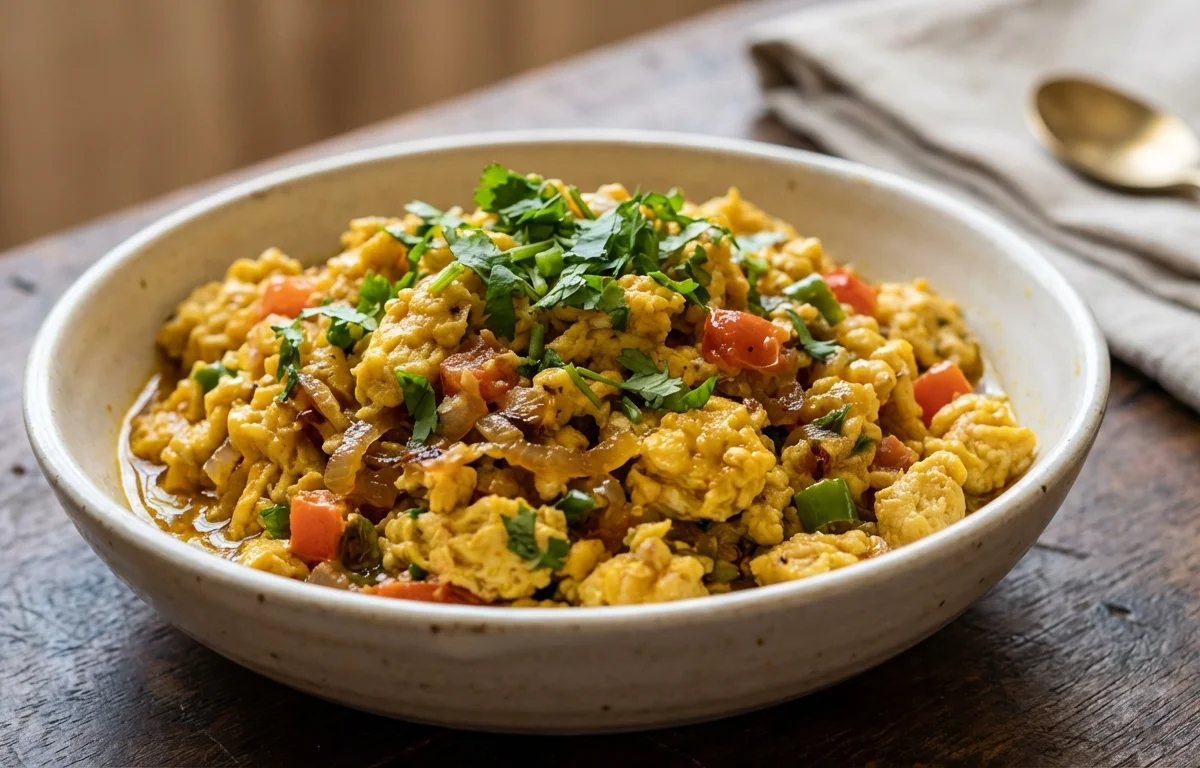
Dim Bhaji
A homestyle Bengali egg dish where boiled eggs are lightly fried and tossed in a quick onion-tomato masala. It is simple, comforting, and fits beautifully into an everyday meal with rice or roti.
For 4 servings
- boil · ~10 min
Boil and peel the eggs.
Boil the eggs until hard cooked, then cool, peel, and keep them ready. If not already boiled, this takes about 10 minutes.
TIPMake a few light slits on the eggs before frying so they pick up the masala better. - prep · ~5 min
Prepare the vegetables and spices.
Slice the onion, chop the tomato, slit the green chilies, grate the ginger, and cube the potato so everything is ready before cooking starts.
- fry · ~3 min
Lightly fry the eggs.
1.Heat 1 tbsp mustard oil in a pan over medium heat.2.Add the boiled eggs and sprinkle a little turmeric powder over them.3.Turn the eggs for 2 to 3 minutes until lightly blistered in spots.4.Remove the eggs to a plate.TIPKeep the heat moderate so the eggs color gently without the surface turning rubbery. - saute · ~8 min
Cook the potatoes and aromatic base.
1.Add the remaining mustard oil to the pan.2.Add cumin seeds and let them sizzle for a few seconds.3.Add the potato cubes and cook for 4 to 5 minutes until lightly golden.4.Add onion and cook until soft and lightly golden.5.Add ginger and green chilies and cook for 30 seconds. - saute · ~6 min
Cook the masala.
1.Add tomato, red chili powder, coriander powder, the remaining turmeric powder, and salt.2.Mix well and cook for 4 to 5 minutes until the tomato softens.3.Splash in the water and cook until the masala turns thick and coats the potatoes.TIPMash a few tomato pieces into the pan with the spoon to get a smoother masala. - simmer · ~4 min
Finish the dim bhaji.
Add the fried eggs back to the pan and toss gently with the masala. Cover and cook for 3 to 4 minutes so the eggs and potatoes absorb the flavors.
- garnish
Finish with coriander leaves.
- serve
Serve hot with rice or roti.
What to keep in mind.
7 tips from the recipe — small details that make a real difference to the final dish.
- 1Pat the boiled eggs dry before frying so the mustard oil does not splutter.
- 2Make 2-3 shallow slits in each egg; the masala clings better and seasons the egg white.
- 3Cut the potatoes small and even so they soften in the short cooking time without overcooking the onions.
- 4Let the onions turn lightly golden before adding ginger; that sweetness balances the mustard oil and chili.
- 5Cook the tomato masala until the oil starts separating slightly, or the bhaji can taste raw and watery.
- 6Toss the eggs gently at the end to avoid breaking them; a covered 3-4 minute finish is enough.
- 7This dish tastes even better after a short rest, as the potatoes and eggs absorb the onion-tomato masala.
Adapt it for your goals.
Gravy-style
Add a bit more water and simmer longer for a looser jhol-like version that pairs especially well with steamed rice.
no potatoNo-potato
Skip the potatoes for a quicker, lighter dim bhaji with a more concentrated egg-and-masala flavor.
extra spicyExtra-spicy
Increase green chilies and red chili powder for a hotter version that suits those who like a sharper kick.
jain style adaptedJain-style-adapted
Replace onion and ginger with a tomato-cumin base plus a pinch of hing for an allium-free home-style variation.
Why this is on our healthy list.
Protein from Eggs
Eggs make this dish filling and provide high-quality protein along with important nutrients found in the yolk.
Vegetable-Based Masala
Onion, tomato, ginger, green chili, and coriander leaves add plant compounds and freshness beyond just heat and color.
Balanced Comfort Meal
With eggs for protein and potatoes for energy, this dish fits well into a satisfying everyday meal with rice or roti.
Frequently asked questions
A brief fry gives the eggs light color, improves texture, and helps the slitted surface catch the spices better.




-curry.webp)
.webp)