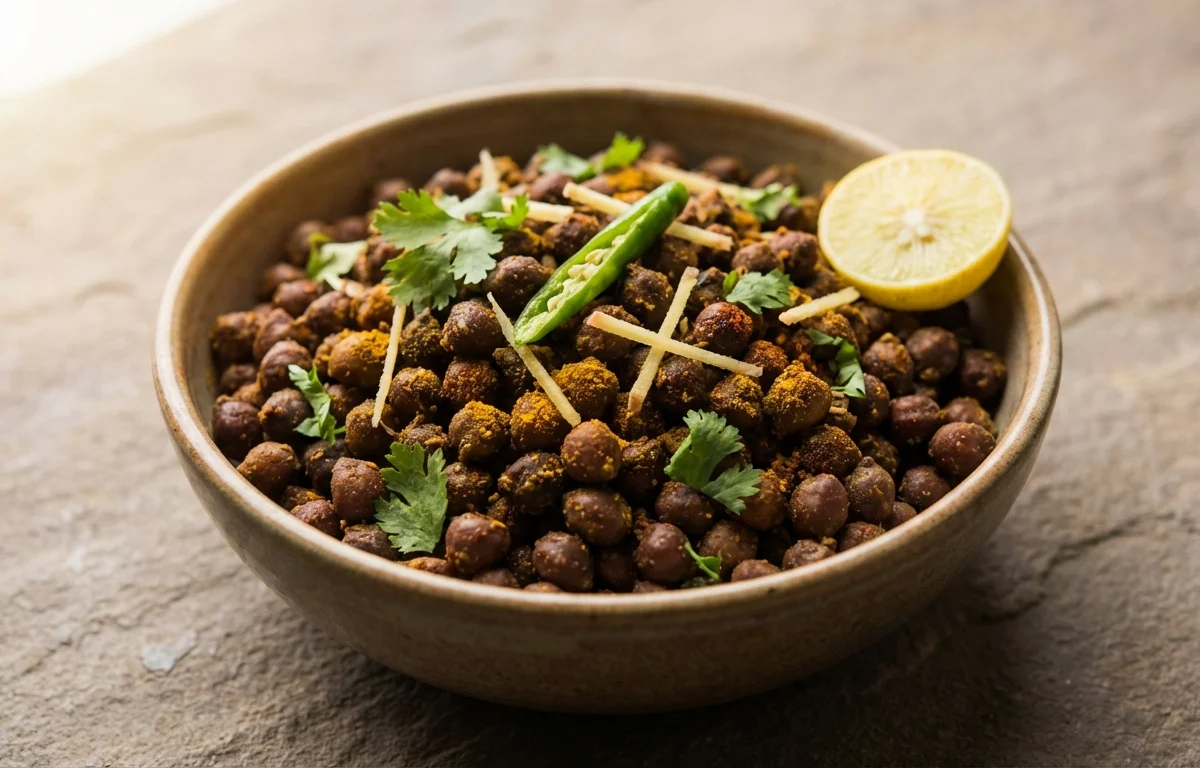
Dry Black Chickpeas
Earthy black chickpeas cooked until tender, then tossed with onion, tomato, and simple Indian spices for a hearty dry-style dish. It is satisfying, protein-rich, and works beautifully with roti, rice, or as part of a simple meal.
For 4 servings
- prep · ~480 min
Soak the black chickpeas.
Rinse the black chickpeas well and soak them in plenty of water overnight or for at least 8 hours. Drain before cooking.
- pressure cook · ~30 min
Pressure cook the chickpeas until tender.
1.Add the soaked black chickpeas to a pressure cooker with water and salt.2.Cook on medium heat for 18 to 20 minutes after the first whistle, until the chickpeas are soft but not mushy.3.Let the pressure release naturally.4.Drain any excess water and keep the cooked chickpeas aside.TIPIf the chickpeas are old, they may need a little longer cooking time. - saute · ~7 min
Cook the onion and spices.
1.Heat oil in a pan over medium heat.2.Add cumin seeds and let them sizzle for a few seconds.3.Add onion and cook until lightly golden, 5 to 6 minutes.4.Add ginger, garlic, and green chili, then cook for 1 minute until fragrant. - saute · ~5 min
Make the masala base.
1.Add tomato and cook until soft and pulpy, 3 to 4 minutes.2.Add turmeric powder, red chili powder, coriander powder, and garam masala.3.Mix well and cook for 1 minute so the spices lose their raw taste.TIPKeep the heat medium-low after adding the powdered spices so they do not burn. - mix · ~5 min
Coat the chickpeas in the masala.
Add the cooked black chickpeas to the pan and mix well so every chickpea is coated in the masala. Cook for 4 to 5 minutes, stirring now and then, until the dish looks dry and well combined.
- garnish
Finish with lemon juice and coriander leaves.
Turn off the heat and mix in the lemon juice and coriander leaves for a fresh finish.
- serve
Serve the dry black chickpeas warm.
What to keep in mind.
7 tips from the recipe — small details that make a real difference to the final dish.
- 1If your kala chana is old, add a few extra minutes in the pressure cooker; it should mash easily when pressed but still hold shape.
- 2Drain the cooked chickpeas well before adding to the masala so the final dish stays truly dry, not saucy.
- 3Cook the onion to light golden, not deep brown, or the simple masala can turn slightly bitter.
- 4After adding the powdered spices, lower the heat and stir continuously for about a minute to avoid scorching.
- 5Finish the lemon juice only after switching off the heat so its brightness stays fresh and noticeable.
- 6This dish tastes even better after 20 to 30 minutes of resting, when the chickpeas absorb the masala fully.
- 7Leftovers keep well in the fridge for about 3 days and reheat best in a skillet, not the microwave, to preserve the dry texture.
Adapt it for your goals.
No-onion-no-garlic
Skip onion and garlic, and use extra ginger, tomato, and a pinch more cumin for a satvik-style version with a clean, simple flavor.
spicierSpicier
Add an extra green chili or a little more red chili powder if you want the dry kala chana to taste bolder with roti or paratha.
low oilLow-oil
Use less oil and add a splash of the chickpea cooking water while sautéing the masala to keep it from sticking.
chaat styleChaat-style
Serve the finished chickpeas with chopped onion, extra lemon, coriander, and a pinch of chaat masala for a snack-like version.
Why this is on our healthy list.
Rich in Plant Protein
Black chickpeas make this dish filling and satisfying, especially for vegetarian meals built around legumes.
Good Source of Fiber
Kala chana provides fiber that supports fullness and pairs well with the dish's hearty dry texture.
Spice-Boosted Digestive Support
Ginger, cumin, garlic, and coriander are traditional spices often used to add flavor while making legume dishes feel easier to digest.
Naturally Dairy-Free
This recipe gets its flavor from tomatoes, spices, lemon, and herbs rather than cream or butter.
Frequently asked questions
Yes. Simmer the soaked black chickpeas in a pot until tender; it will take much longer than pressure cooking, especially if the chickpeas are older.