Enduri Pitha
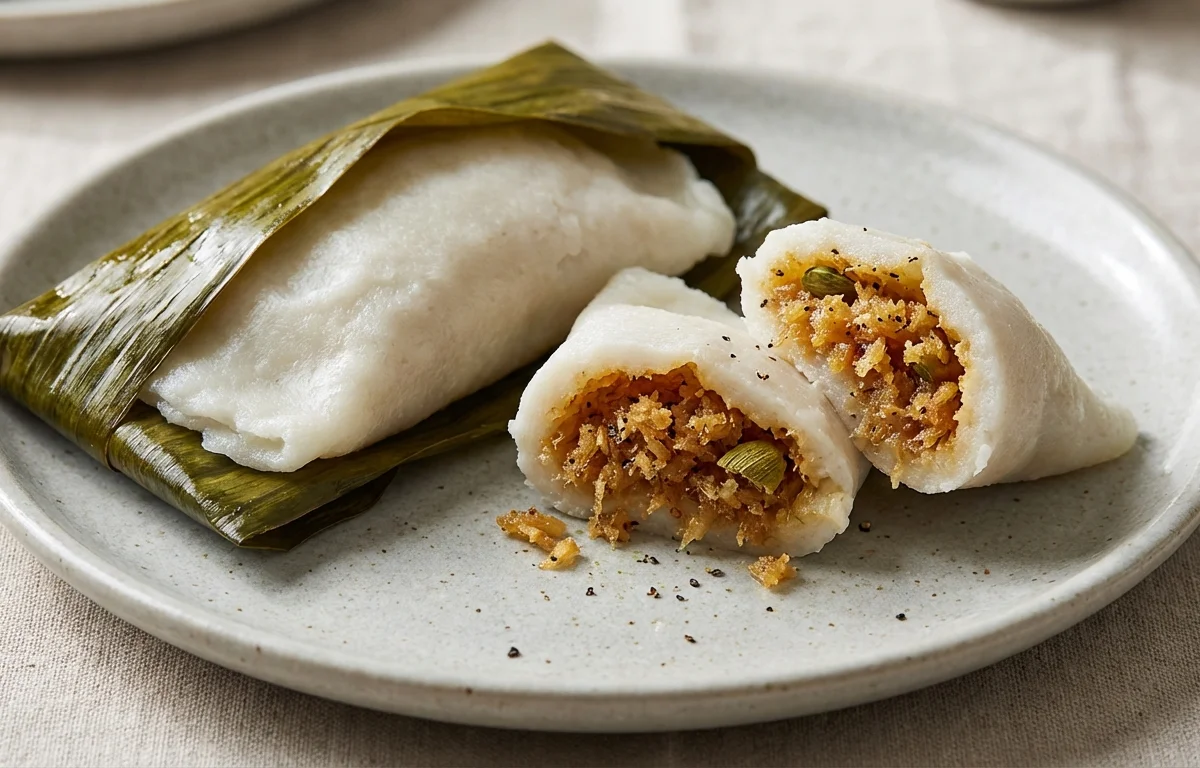
Fragrant steamed rice cakes from Odisha, wrapped in turmeric leaves for a delicate earthy aroma. The soft rice batter and sweet coconut filling make them especially comforting during festive mornings.
For 8 servings
- prep · ~240 min
Soak the rice and urad dal.
Wash the rice and urad dal separately until the water runs mostly clear. Soak both in enough water for 4 hours, then drain well.
TIPA proper soak helps the batter grind smooth and steam into a soft pitha. - mix · ~8 min
Grind the batter.
1.Add the drained rice and urad dal to a grinder.2.Pour in the water little by little and grind to a smooth, thick batter.3.Add salt and mix well.4.Keep the batter thick enough to spread on the leaves without running. - saute · ~6 min
Make the coconut filling.
1.Place the grated coconut and jaggery in a pan over low heat.2.Cook, stirring often, until the jaggery melts and coats the coconut (4 to 5 minutes).3.Add the crushed black pepper and mix well.4.Take it off the heat and let the filling cool slightly.TIPCook just until the mixture comes together. Overcooking makes the filling chewy. - prep · ~4 min
Prepare the turmeric leaves.
1.Trim the thick stem if needed.2.Wipe both sides of each leaf clean.3.Lightly grease the inside of each leaf with ghee.4.If a leaf feels stiff, warm it briefly over low heat to make folding easier. - assemble · ~10 min
Fill and fold the pitha.
1.Place one turmeric leaf flat with the shiny side facing up.2.Spread a small layer of batter over one half of the leaf.3.Place a spoonful of coconut filling in the center.4.Cover the filling with a little more batter.5.Fold the leaf in half to enclose the batter and filling.TIPDo not overfill the leaf or the batter may spill out while steaming. - steam · ~18 min
Steam the enduri pitha.
Arrange the folded leaf packets in a steamer in a single layer. Steam for 15 to 18 minutes until the rice batter is set and the turmeric leaves smell fragrant.
- rest · ~5 min
Rest the pitha briefly.
Let the steamed packets sit for 5 minutes so they firm up slightly and are easier to open.
- serve
Open the leaves and serve warm.
What to keep in mind.
7 tips from the recipe — small details that make a real difference to the final dish.
- 1Grind the rice and urad dal to a smooth but thick batter; a loose batter will seep out of the folded turmeric leaves.
- 2Warm stiff turmeric leaves for a few seconds over low heat so they bend without cracking during folding.
- 3Cook the coconut-jaggery filling only until it clumps lightly; if it dries too much, the center turns chewy after steaming.
- 4Keep the filling slightly away from the edges so the batter can seal properly inside the leaf packet.
- 5Steam in a single layer with a little space between packets so the leaves perfume each pitha evenly.
- 6Let the steamed pitha rest before opening; the rice layer sets more neatly and releases from the leaf better.
- 7If making ahead, refrigerate the steamed packets in their leaves and re-steam briefly before serving to refresh the aroma.
Adapt it for your goals.
Vegan
Replace the ghee with coconut oil or a neutral oil for greasing the leaves, keeping the pitha fully plant-based.
less sweetLess-sweet
Reduce the jaggery slightly so the natural sweetness of fresh coconut and the leaf aroma come through more clearly.
cardamom infusedCardamom-infused
Add a pinch of cardamom to the coconut filling for a sweeter festive note alongside the black pepper.
no leafNo-leaf
If turmeric leaves are unavailable, steam in small greased bowls or on banana leaf pieces; the texture stays similar though the signature aroma changes.
Why this is on our healthy list.
Naturally Steamed Preparation
Because enduri pitha is steamed rather than fried, it cooks gently with very little added fat.
Balanced Grain and Dal Base
The rice and urad dal combination gives the pitha both energy from grain and some plant protein from lentils.
Fresh Coconut Goodness
Fresh grated coconut adds richness, texture, and fiber, making the sweet filling more satisfying.
Frequently asked questions
The batter should look set, not wet or glossy, and the turmeric leaves will smell distinctly fragrant. You can open one packet to check that the rice layer is cooked through.