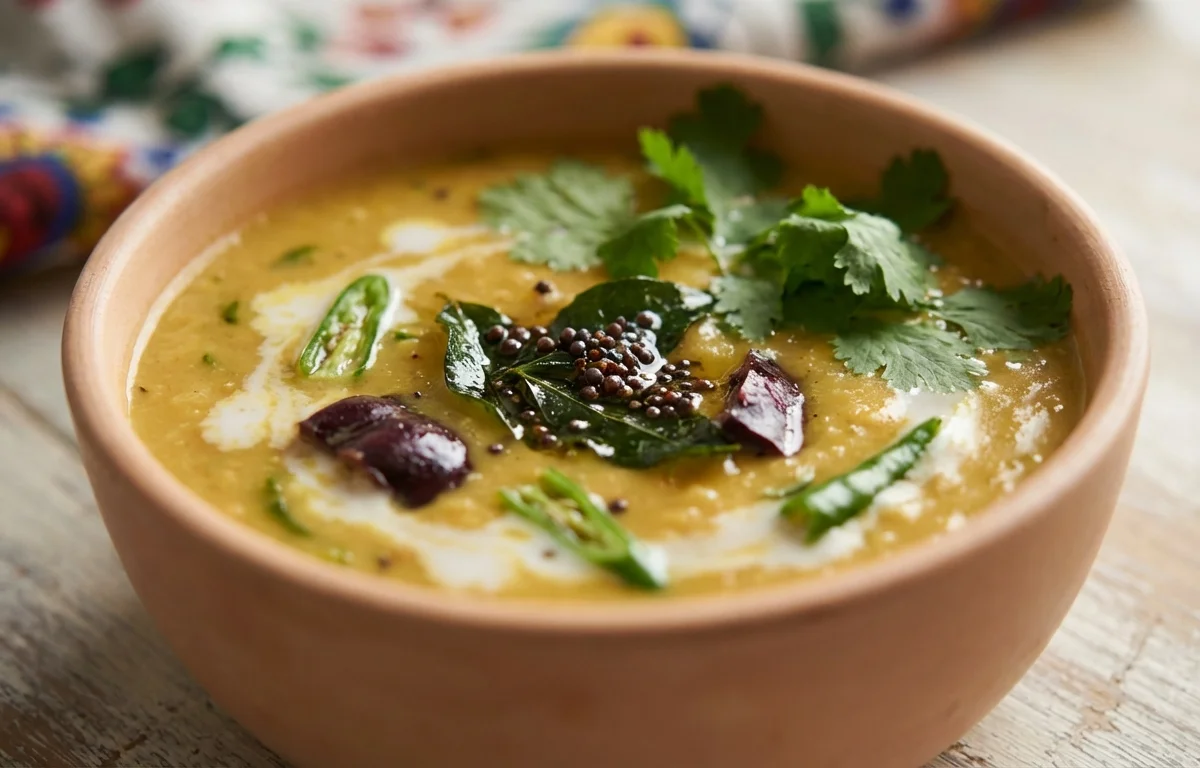
Goan Dal
A comforting Goan-style dal with toor dal simmered until soft, then finished with onion, tomato, coconut, and warm spices. It has a gentle tang and mild heat that works beautifully with plain rice.
For 4 servings
- prep · ~20 min
Rinse and soak the dal.
Wash the toor dal well and soak it in fresh water for 20 minutes. Drain before cooking.
- pressure cook · ~20 min
Cook the dal until soft.
1.Add soaked toor dal, water, turmeric powder, and salt to a pressure cooker.2.Cook on medium heat for 3 to 4 whistles until the dal is very soft.3.Let the pressure release naturally, then open and mash the dal lightly.TIPA lightly mashed dal gives the finished dish a smoother, creamier texture. - saute · ~8 min
Cook the masala base.
1.Heat oil in a pan over medium heat.2.Add mustard seeds and cumin seeds; let them crackle.3.Add curry leaves, onion, ginger, garlic, and green chili.4.Cook until the onion turns soft and light golden.5.Add tomato, red chili powder, and grated coconut; cook until the tomato softens.TIPKeep the heat medium so the coconut toasts lightly without burning. - simmer · ~8 min
Simmer the dal with the masala.
Add the cooked dal and tamarind paste to the pan. Mix well and simmer for 6 to 8 minutes, adding a splash of water if the dal looks too thick.
- garnish
Finish with cilantro.
- serve
Serve hot with plain rice.
What to keep in mind.
6 tips from the recipe — small details that make a real difference to the final dish.
- 1Mash the pressure-cooked toor dal only lightly so the finished Goan dal stays creamy but still has some body.
- 2Let the mustard and cumin fully crackle before adding onions; this blooms their flavor into the oil.
- 3Cook the grated coconut just until lightly toasted, not brown, or it can make the dal taste bitter.
- 4Add tamarind after the dal is fully cooked, since acidic ingredients can slow the softening of lentils.
- 5If the dal thickens after resting, loosen it with hot water while reheating so it stays silky, not pasty.
- 6This dal tastes even better after 30 minutes of rest, when the coconut, tamarind, and tempering meld together.
Adapt it for your goals.
Vegan
This recipe is already vegan; just serve it with plain rice or a vegan flatbread for a fully plant-based meal.
jainJain
Skip onion and garlic, increase ginger slightly, and use a pinch more cumin for a simpler but still aromatic dal.
low oilLow-oil
Reduce the oil and sauté the onion-tomato mixture with a splash of water; the dal will be lighter but still flavorful.
spicierSpicier
Add an extra green chili or a little more red chili powder if you want the dal hotter while keeping the same base flavors.
Why this is on our healthy list.
Plant Protein From Toor Dal
Toor dal provides satisfying plant-based protein, making this dish filling and especially useful as a vegetarian main.
Fiber-Rich Lentil Base
The split pigeon peas add fiber that supports fullness and pairs well with rice for a balanced everyday meal.
Antioxidant-Rich Aromatics
Tomato, turmeric, ginger, garlic, and cilantro bring a range of protective plant compounds along with strong savory flavor.
Healthy Fats From Coconut
A small amount of fresh coconut adds richness and texture, helping the dal feel more satisfying without heavy dairy.
Frequently asked questions
Yes, but it may take a little longer to pressure cook. Soaking helps the dal cook more evenly and mash more smoothly.