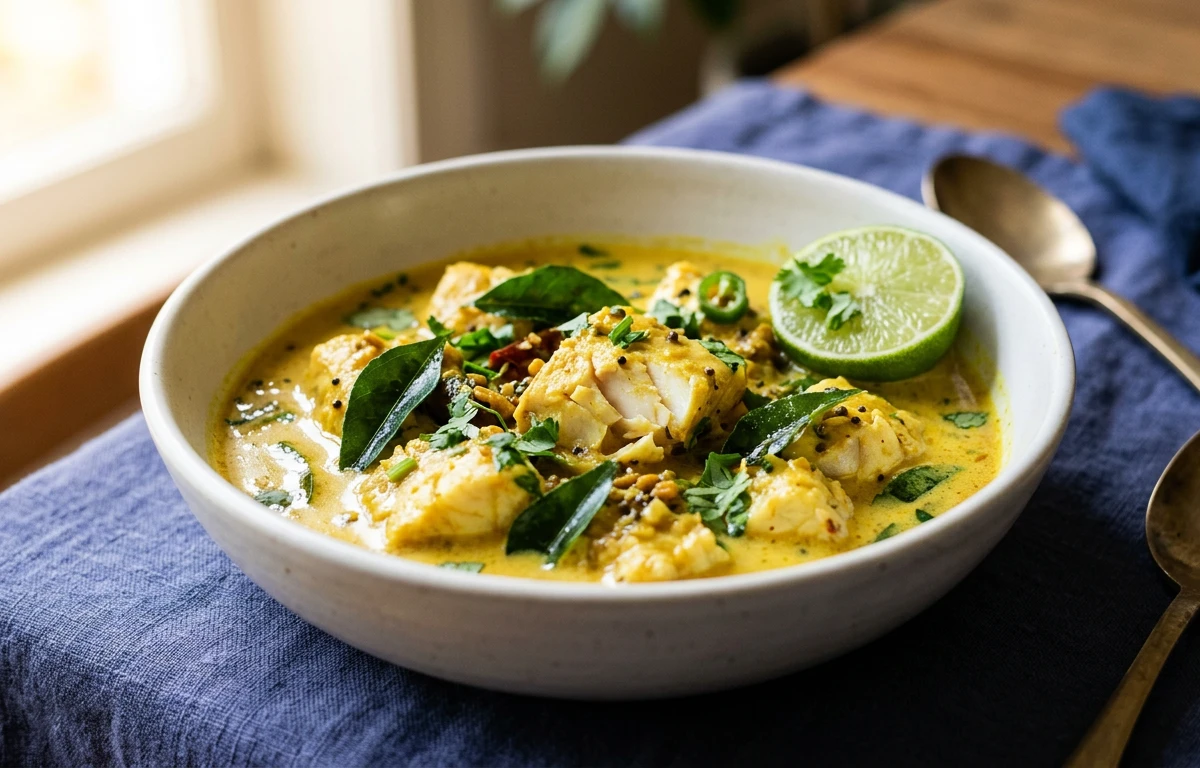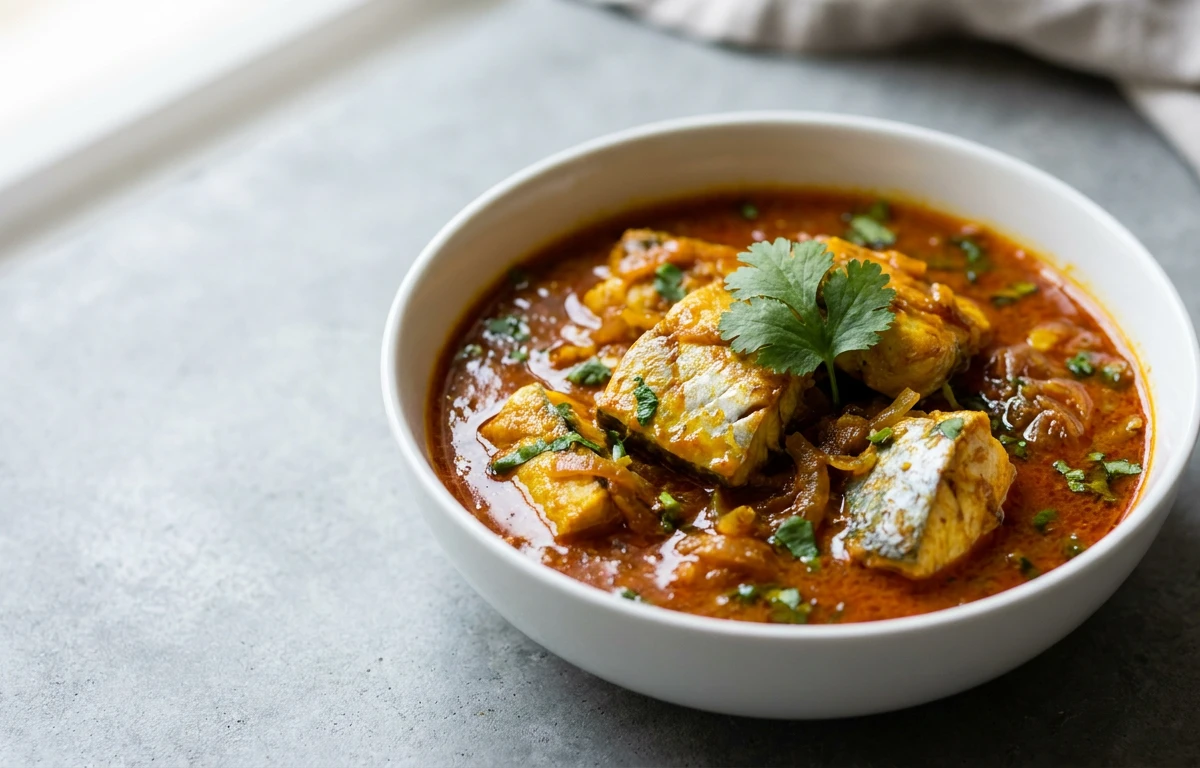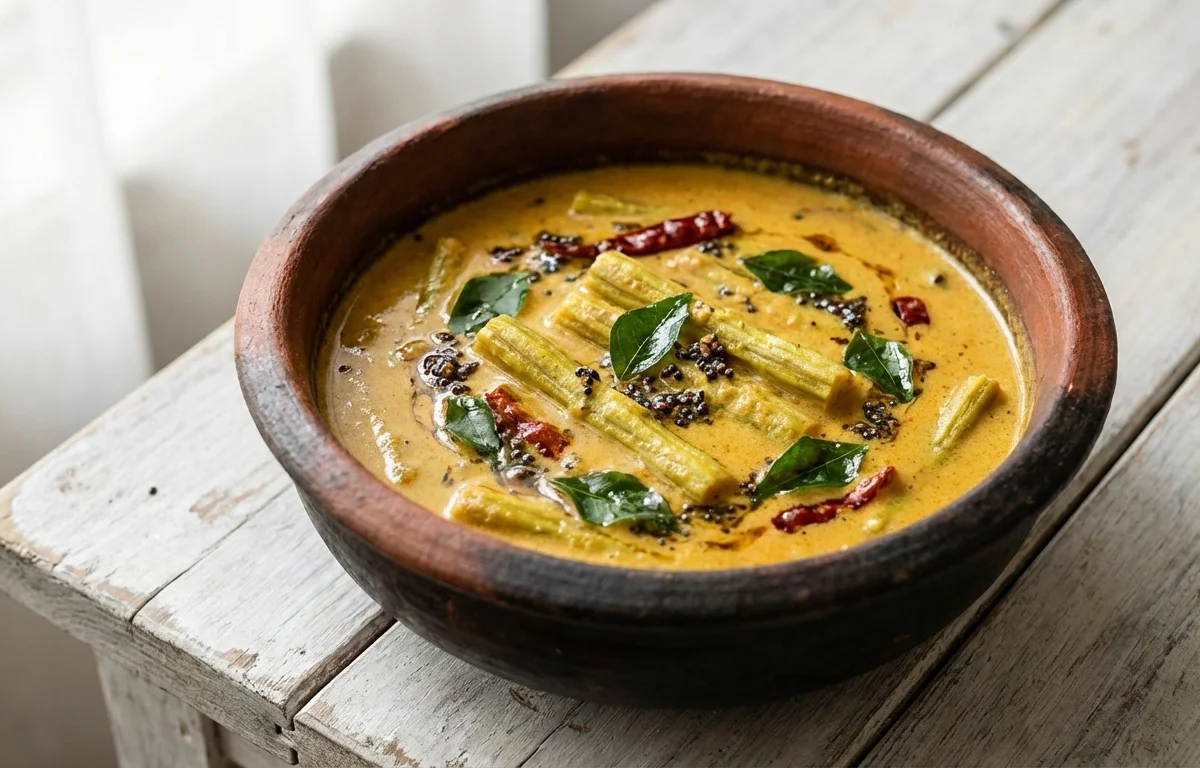
Goan Uddamethi Curry
A homestyle Goan curry made with black gram and fenugreek seeds, simmered in a lightly spiced coconut gravy. It has a gentle bitterness, earthy depth, and a comforting taste that pairs beautifully with rice.
For 4 servings
- prep · ~480 min
Soak the dal and fenugreek seeds.
Rinse the urad dal well. Soak it with fenugreek seeds in plenty of water overnight or for at least 8 hours.
TIPA good soak helps the dal cook evenly and softens the slight bitterness of the fenugreek. - pressure cook · ~20 min
Pressure cook the dal until tender.
Drain the soaked dal and fenugreek seeds. Add them to a pressure cooker with 2 cups water and 0.25 tsp salt, then cook until soft but not mushy, about 4 to 5 whistles.
- saute · ~10 min
Cook the masala ingredients.
1.Heat 1 tbsp oil in a pan over medium heat.2.Add onion and cook until lightly golden, 4 to 5 minutes.3.Add garlic, ginger, dried red chili, coriander seeds, cumin seeds, and turmeric powder.4.Add tomato and cook until soft and pulpy, 3 to 4 minutes.TIPDo not darken the spices too much or the curry can turn overly bitter. - mix · ~5 min
Grind the coconut masala.
Cool the cooked masala slightly, then grind it with the grated coconut, tamarind paste, and 1 cup water to a smooth paste.
- simmer · ~12 min
Simmer the curry together.
Heat the remaining 1 tbsp oil in a pot. Add the ground coconut masala and cook for 2 minutes, then stir in the cooked dal with its liquid. Add the remaining 0.25 tsp salt and simmer gently for 8 to 10 minutes until the curry is blended and medium-thick.
TIPAdd a splash of water if the curry thickens too much as it simmers. - serve
Serve hot with rice.
What to keep in mind.
7 tips from the recipe — small details that make a real difference to the final dish.
- 1Keep the fenugreek to the stated amount; even a little extra can make the curry noticeably more bitter.
- 2Pressure-cook the urad dal until the grains are soft yet still hold shape, since mushy dal can make the curry heavy.
- 3Let the sautéed onion-tomato mixture cool slightly before grinding so the coconut blends smoother and doesn’t turn oily.
- 4Grind the coconut masala very smooth for the characteristic Goan texture; a coarse paste tastes raw and separates more easily.
- 5Simmer the ground masala gently after adding the dal, not on high heat, or the coconut gravy may split.
- 6This curry thickens as it sits because of the urad and coconut, so loosen leftovers with a little hot water before reheating.
- 7It tastes even better after 30 minutes of resting, when the tamarind, fenugreek, and coconut mellow into each other.
Adapt it for your goals.
No-onion
Skip the onion for a simpler, more traditional-style coconut gravy; the curry will taste cleaner and slightly more pronounced in methi flavor.
spicierSpicier
Add 1 or 2 extra dried red chilies while sautéing for a hotter version that stands up especially well to plain steamed rice.
thinner curryThinner-curry
Add extra hot water while simmering if you want a looser, pourable consistency for serving over rice or ukde rice.
jaggery balancedJaggery-balanced
A tiny pinch of jaggery can soften the bitterness of fenugreek if you prefer a gentler, more rounded sweet-sour finish.
Why this is on our healthy list.
Plant Protein From Urad
Whole black gram adds satisfying plant protein and makes the curry more filling than a gravy-only dish.
Fiber-Rich Lentil Base
Urad dal and fenugreek seeds contribute fiber, which supports fullness and gives the curry a hearty texture.
Beneficial Spices and Aromatics
Garlic, ginger, cumin, coriander, and turmeric bring antioxidant-rich flavor elements commonly used in home-style Indian cooking.
Balanced With Coconut and Tamarind
Fresh coconut provides richness, while tamarind adds tangy brightness that keeps the curry satisfying without relying on cream.
Frequently asked questions
Yes. Simmer the soaked urad dal and fenugreek on the stovetop until tender, adding more water as needed; it will simply take longer than pressure cooking.