
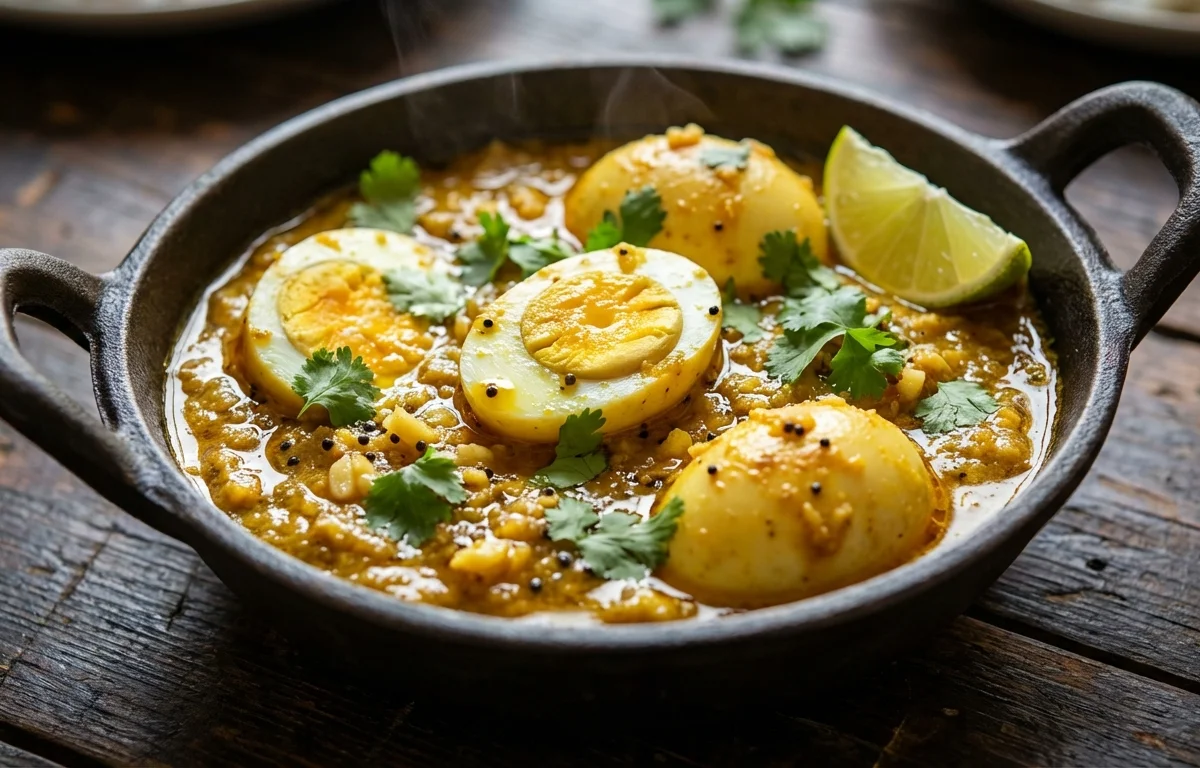
Hihjo Koni
A classic Sindhi curry featuring tender lotus stem and potatoes simmered in a tangy, tomato-based gravy. The distinct, pungent aroma of asafoetida (hing) is the star of this simple yet deeply flavorful dish, traditionally served with hot phulkas or steamed rice.
For 4 servings
Prepare and Boil Vegetables
1.Thoroughly clean the lotus stem slices, ensuring no mud remains inside the holes. Peel and cube the potatoes.2.Place the lotus stem and potatoes in a pressure cooker with 1 cup of water and a pinch of salt. Cook for 1-2 whistles, or until just tender but still holding their shape.3.Alternatively, boil them in a pot of water for 10-12 minutes until fork-tender. Drain the water and set the vegetables aside.Create the Tempering (Tadka)
1.Heat vegetable oil in a kadai or heavy-bottomed pan over medium heat.2.Once the oil is hot, add the hing and let it sizzle for about 10-15 seconds until it becomes fragrant. This step is crucial for the dish's authentic flavor.3.Add the slit green chillies and sauté for another 30 seconds.Cook the Tomato Gravy
1.Pour in the fresh tomato puree. Cook for 6-8 minutes, stirring occasionally, until the puree thickens, darkens in color, and you see oil separating from the sides.2.Add the turmeric powder, red chili powder, coriander powder, and salt. Stir well and cook the spices for 1 minute until aromatic.Combine and Simmer
1.Add the boiled lotus stem and potatoes to the pan. Gently toss to coat them evenly with the tomato masala.2.Pour in 1.5 cups of water and stir to combine. Bring the curry to a gentle boil.3.Reduce the heat to low, cover the pan, and let it simmer for 7-10 minutes. This allows the vegetables to absorb the flavors of the gravy.Finish and Serve
1.Turn off the heat. Stir in the amchur powder for a final touch of tanginess.2.Garnish generously with freshly chopped coriander leaves.3.Let the curry rest for 5 minutes before serving. Serve Hihjo Koni hot with phulka, roti, or steamed rice.
What to keep in mind.
5 tips from the recipe — small details that make a real difference to the final dish.
- 1For the best flavor, use fresh, tender lotus stems. Avoid ones that are bruised or have dark spots.
- 2The potency of hing varies by brand. If using a very strong variety, you may want to start with a pinch and add more if needed.
- 3Do not overcook the lotus stem and potatoes in the initial boiling step, as they will continue to cook in the gravy and can become mushy.
- 4If you don't have amchur powder, you can add 1-2 teaspoons of lemon juice at the end for a similar tangy flavor.
- 5For a richer gravy, you can add 1 teaspoon of ginger-garlic paste along with the green chillies.
Adapt it for your goals.
Add Vegetables
Incorporate 1/2 cup of green peas or diced carrots along with the potatoes for added nutrition and texture. Add them during the boiling step.
Creamier GravyCreamier Gravy
For a richer, less traditional version, stir in 1-2 tablespoons of fresh cream or cashew paste at the end of cooking.
Different Souring AgentDifferent Souring Agent
Instead of amchur, you can use 1 teaspoon of tamarind paste diluted in water for a different kind of tanginess.
Why this is on our healthy list.
Rich in Dietary Fiber
Lotus stem is an excellent source of dietary fiber, which aids digestion, promotes gut health, and helps in maintaining stable blood sugar levels.
Good Source of Potassium
Both potatoes and tomatoes are rich in potassium, an essential mineral that helps regulate blood pressure and maintain proper fluid balance in the body.
Aids Digestion
Asafoetida (hing) is a traditional carminative spice known for its properties that help reduce bloating, gas, and indigestion, making the dish easier to digest.
Boosts Immunity
The presence of Vitamin C from tomatoes, lotus stem, and coriander leaves helps in strengthening the immune system and protecting the body against infections.
Frequently asked questions
A single serving of Hihjo Koni (approximately 1 cup or 260g) contains around 180-210 calories, making it a relatively light and healthy main dish. The exact count can vary based on the amount of oil used.


