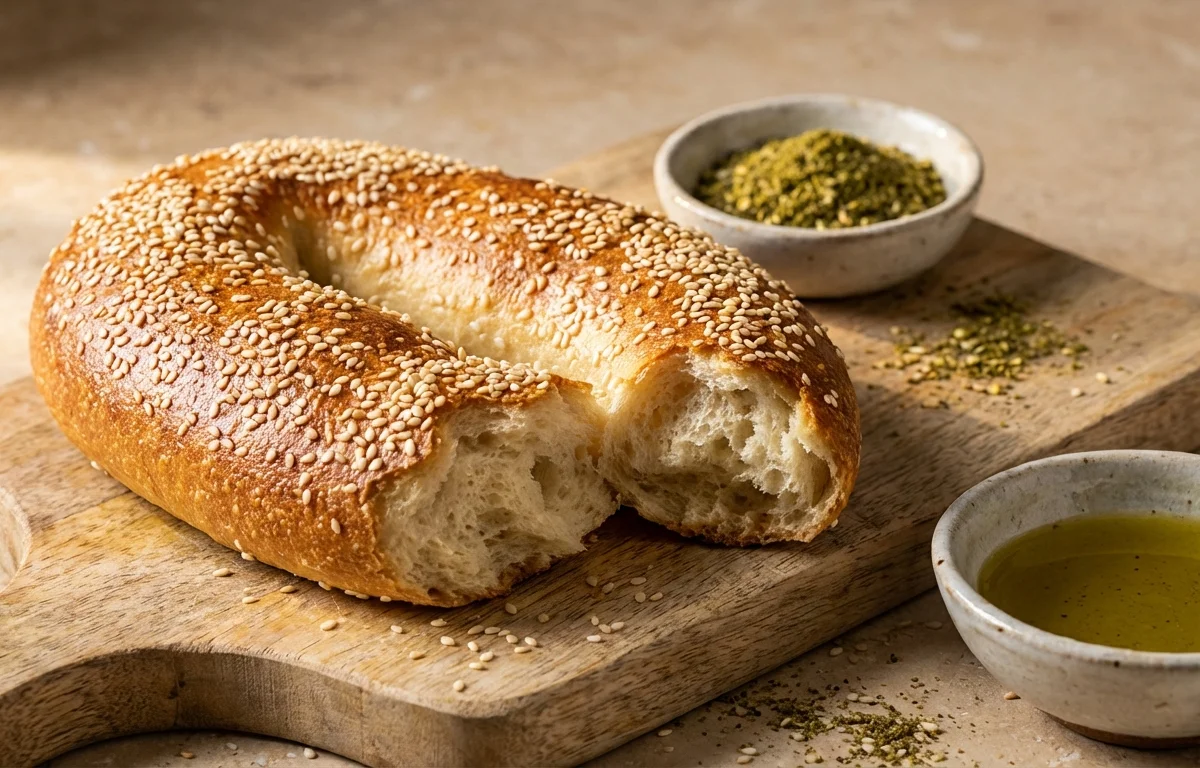
Jerusalem Bagel
An elongated, oval-shaped sesame bread with a crisp golden crust and a soft, airy interior. Unlike its boiled-then-baked American cousin, this Middle Eastern street food staple is baked straight in a hot oven, emerging slightly sweet and chewy — perfect for tearing and dipping into olive oil and za'atar or wrapping around falafel.
For 4 servings
- mix · ~10 min
Activate the yeast and make the dough.
1.In a small bowl, whisk the lukewarm water, sugar, and instant yeast. Let stand until frothy, about 5 minutes.2.In a large mixing bowl, whisk the flour and salt together.3.Pour the yeast mixture and olive oil into the flour. Mix with a wooden spoon until a shaggy dough forms.4.Turn the dough onto a lightly floured surface and knead for 8-10 minutes until smooth and elastic.TIPThe dough should feel slightly tacky but not sticky — add flour a tablespoon at a time if it clings to your hands. - rest · ~60 min
Let the dough rise until doubled.
1.Lightly oil a clean large bowl with a little olive oil.2.Place the dough in the bowl, turning once to coat the surface with oil.3.Cover with a clean kitchen towel and let it rest in a warm, draft-free place for 1 hour, or until puffy and doubled in size.TIPIf your kitchen is cold, place the covered bowl in a turned-off oven with just the light on — the gentle warmth speeds up the rise. - prep · ~5 min
Shape the bagels into the traditional elongated ovals.
1.Preheat the oven to 200°C (400°F) and line a baking sheet with parchment paper.2.Punch down the risen dough gently and transfer to a lightly floured surface.3.Divide the dough into 4 equal pieces. Roll each piece into a ball, then use your palms to roll into a thick rope about 25 cm (10 inches) long.4.Taper the ends slightly — the classic shape is thicker in the middle and narrower at the ends.5.Place shaped dough onto the prepared baking sheet, leaving space for expansion.TIPAvoid using a rolling pin — using just your hands and a little pressure against the work surface creates the characteristic rustic, irregular shape. - prep · ~2 min
Glaze with honey wash and coat generously with sesame seeds.
1.Mix the honey with 2 tablespoons of warm water in a small bowl to create a thin glaze.2.Brush the top and sides of each shaped dough piece generously with the honey wash.3.Spread the sesame seeds on a large flat plate. Roll each glazed dough piece in the sesame seeds, pressing gently so they adhere completely.TIPUse raw, untoasted sesame seeds — they toast during baking and develop a deep nutty flavor without burning. - bake · ~18 min
Bake until deeply golden and hollow-sounding.
1.Arrange the sesame-coated dough pieces back on the baking sheet.2.Bake in the preheated oven for 15-18 minutes, rotating the sheet halfway through.3.The bagels are done when the crust is a deep golden brown and they sound hollow when tapped on the bottom.4.Transfer to a wire rack to cool for at least 10 minutes before tearing into them.TIPPlace a small oven-safe dish of water on the bottom rack during baking — the steam keeps the interior soft and airy while the crust crisps up.
What to keep in mind.
6 tips from the recipe — small details that make a real difference to the final dish.
- 1For the best texture, use bread flour instead of all-purpose flour for extra chew.
- 2If the dough feels too sticky during kneading, oil your hands instead of adding extra flour.
- 3Let the shaped bagels rest 10 minutes before glazing for a more relaxed, even shape.
- 4To store, wrap cooled bagels in a clean cloth for 2 days or freeze for up to 3 months.
- 5For a shiny crust, add a second honey glaze halfway through baking.
- 6Tap the bottom of a baked bagel — a hollow sound means it's fully baked through.
Adapt it for your goals.
Whole wheat
Replace half the all-purpose flour with whole wheat flour for a nuttier, more wholesome flavor and extra fiber. Add an extra tablespoon of water to compensate for the whole wheat's absorbency.
za'atar sesameZa'atar sesame
Mix 2 tablespoons of za'atar with the sesame seeds before coating for a tangy, herby twist that's even more authentically Middle Eastern.
sweet cinnamon sugarSweet cinnamon sugar
Skip the salt, add 1 teaspoon of cinnamon to the flour, and roll the glazed dough in a mix of sesame seeds and brown sugar for a dessert-like bagel.
Why this is on our healthy list.
Rich in Healthy Fats
Sesame seeds provide unsaturated fats and antioxidants like sesamin, which support heart health.
Good Source of Energy
The flour-based dough offers complex carbohydrates for sustained energy, ideal for a busy day.
Mineral Boost from Sesame
Sesame seeds are naturally rich in calcium, magnesium, and zinc, contributing to bone strength and immune function.
Frequently asked questions
Over-kneading or adding too much flour during shaping can deflate the dough. Aim for a soft, slightly tacky dough and gentle handling.