
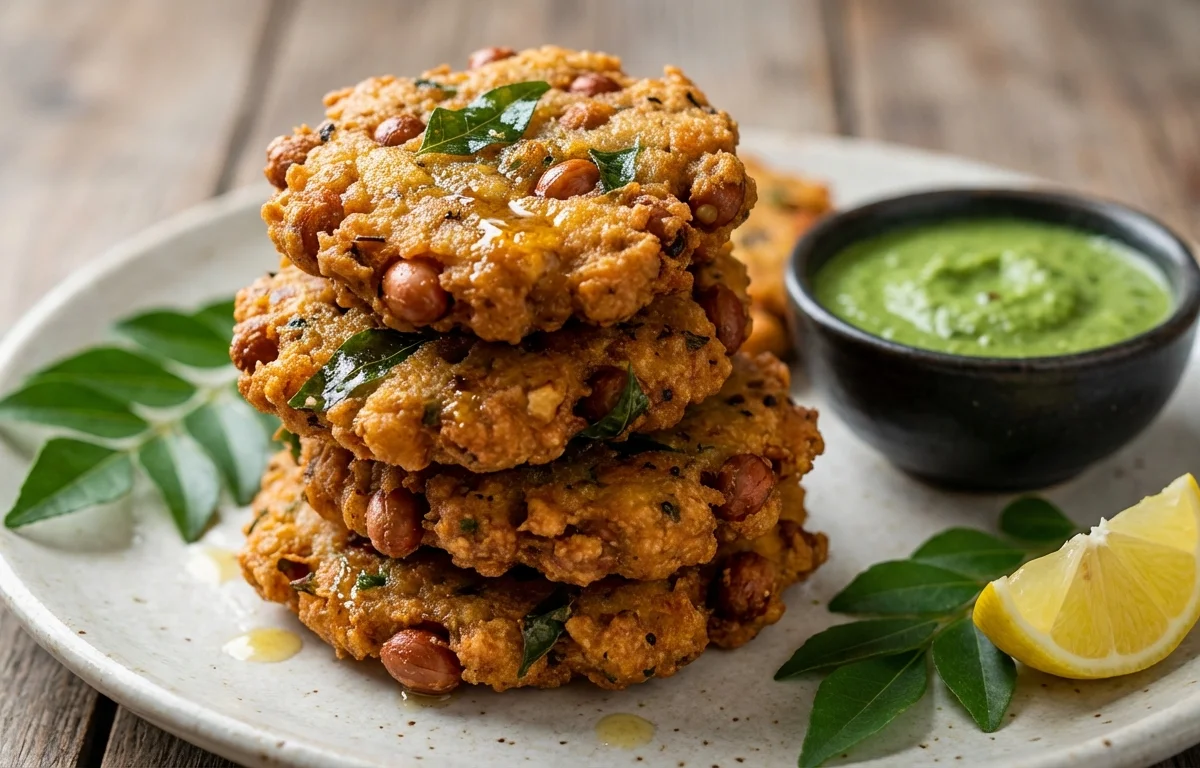
Kadale Baje
Golden, crispy chickpea flour fritters with a hint of fresh ginger and curry leaves. A beloved Mangalorean tea-time snack that pairs perfectly with coconut chutney or a hot cup of chai.
For 4 servings
- prep
Chop the vegetables and aromatics.
1.Finely chop 1 medium onion and 1 green chili.2.Grate a 1-inch piece of ginger.3.Finely chop about 8 curry leaves.4.Set everything aside in a large mixing bowl. - mix · ~5 min
Make the Kadale Baje batter.
1.Add 1.5 cups besan and 0.25 cup rice flour to the bowl with the chopped vegetables.2.Add 0.5 tsp cumin seeds, a pinch of red chili powder, a pinch of asafoetida, and 0.5 tsp salt.3.Gradually add about 0.5 cup water, whisking continuously to form a thick, dropping-consistency batter.4.Beat the batter well for 1-2 minutes to aerate it — this will make the baje crispier.TIPThe batter should be thick enough to coat the back of a spoon but drop off slowly. If it's too thin, the fritters will absorb too much oil. - fry · ~5 min
Heat the oil for deep frying.
Pour 2 cups of oil into a kadai and heat over medium flame. To check if the oil is ready, drop a tiny bit of batter into the oil — it should sizzle and rise to the surface immediately without browning too fast.
- fry · ~10 min
Fry the Kadale Baje in batches.
1.Drop small, uneven portions of batter into the hot oil using your fingers or a spoon. The irregular shapes create crispy edges.2.Don't overcrowd the pan — fry about 6-8 pieces at a time.3.Fry on medium heat until golden brown and crisp on all sides, turning occasionally — about 3-4 minutes per batch.4.Remove with a slotted spoon and drain on paper towels.TIPKeep the heat at medium. High heat will brown the outside quickly while leaving the inside raw and doughy. - serve
Serve the Kadale Baje hot.
Serve immediately while hot and crisp, with coconut chutney on the side or a steaming cup of chai.
What to keep in mind.
7 tips from the recipe — small details that make a real difference to the final dish.
- 1For extra crispiness, beat the batter vigorously for 1-2 minutes to incorporate air.
- 2Drop batter in uneven dollops to create craggy edges that fry up extra crispy.
- 3Test oil temperature by dropping a tiny bit of batter — it should sizzle and float without browning too fast.
- 4Keep the heat at medium throughout; high heat browns the outside but leaves the center doughy.
- 5Do not overcrowd the pan; fry only 6-8 pieces at a time for even cooking.
- 6Serve immediately after frying — Kadale Baje lose their crunch as they cool.
- 7These fritters can be made ahead and reheated in a hot oven (350°F for 5 minutes) to restore crispness.
Adapt it for your goals.
Low-oil
Instead of deep-frying, shape small patties and cook in a lightly oiled pan or appe pan (paniyaram pan) for a crispy-on-the-outside, soft-inside version that uses far less oil.
high proteinHigh-protein
Add 2 tablespoons of finely chopped tofu or paneer crumbles to the batter for extra protein without altering the classic flavor profile.
jainJain
Omit onions and garlic, and replace with finely chopped cabbage or bottle gourd (lauki) for a Jain-friendly version that still offers texture and mild sweetness.
veganVegan
This recipe is naturally vegan as written — simply ensure your asafoetida is gluten-free and your oil is plant-based, and serve with vegan coconut chutney.
Why this is on our healthy list.
Rich in Plant Protein
Besan (chickpea flour) is a excellent source of plant-based protein, supporting muscle repair and keeping you fuller longer.
Good Source of Dietary Fiber
Chickpea flour provides soluble fiber that aids digestion and helps maintain steady blood sugar levels.
Contains Anti-Inflammatory Spices
Ginger, cumin, and asafoetida are known for their anti-inflammatory and digestive properties, adding warmth and health benefits.
Gluten-Free and Naturally Vegan
This snack is made entirely without gluten or animal products, making it suitable for many dietary preferences.
Frequently asked questions
The most common cause is batter that is too thin or oil that is not hot enough. Ensure the batter is thick enough to drop slowly from a spoon, and test the oil so it sizzles immediately when a dab of batter is added.



.webp)
.webp)