
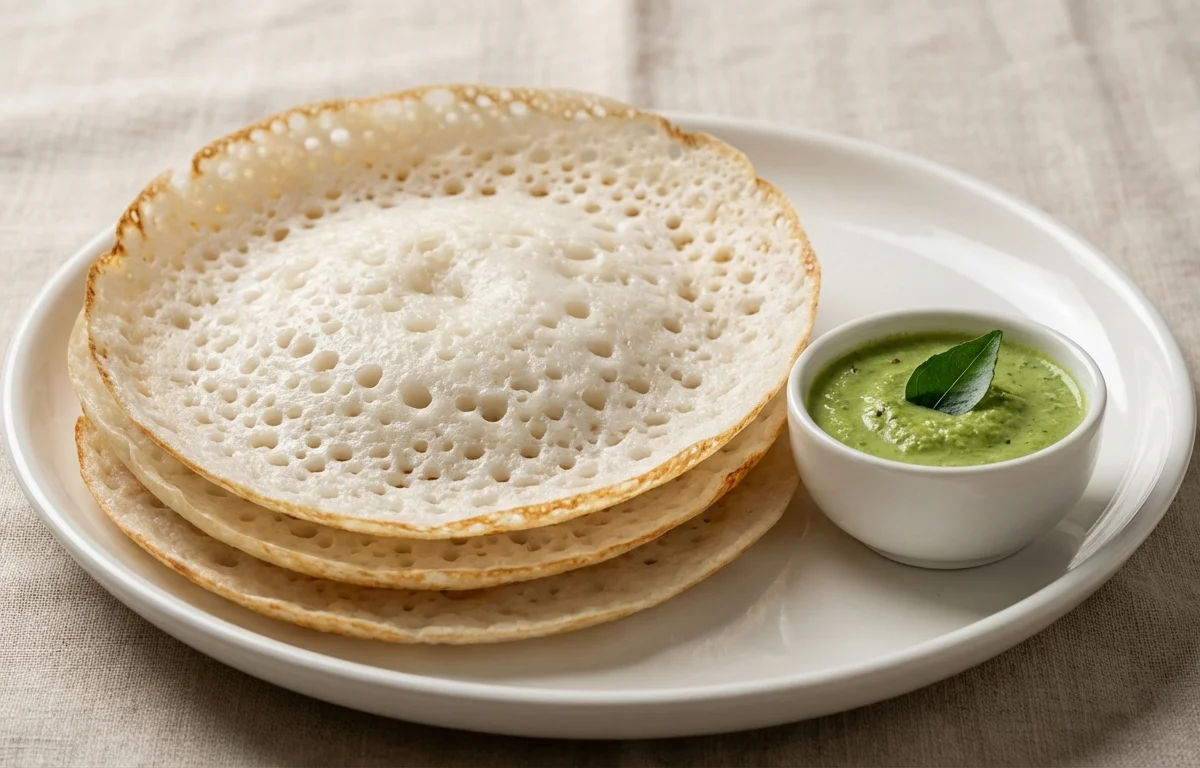
Kallappam
Soft, lacy-centred rice and coconut pancakes with a delicate tang from toddy or yeast fermentation. A beloved Kerala breakfast that gets its name from the traditional iron griddle on which it's cooked, resulting in a unique texture that's crisp at the edges and spongy in the middle.
For 4 servings
- prep
Soak the rice.
Wash the rice thoroughly and soak in plenty of water for at least 4 hours. Drain after soaking.
- prep
Activate the yeast.
Dissolve the yeast and 1 teaspoon of sugar in 3 tablespoons of lukewarm water. Set aside for 10 minutes until it turns frothy.
TIPThe froth tells you the yeast is alive and active. If it doesn't froth, the yeast is dead and you need fresh yeast. - mix
Grind the batter.
1.Add the drained rice, grated coconut, cooked rice, and the frothy yeast mixture to a wet grinder or blender.2.Pour in water gradually and grind to a smooth, thick batter — similar to idli batter but slightly thinner.3.Add the remaining 1 teaspoon sugar and salt. Blend once more briefly to mix.TIPDon't add all the water at once. Pour it in stages to control consistency. - rest
Ferment the batter overnight.
Pour the batter into a large bowl, leaving room to rise. Cover and let it ferment in a warm place for 8 hours or overnight. The batter should double in volume and look airy.
TIPIn cooler weather, place the bowl inside a switched-off oven with the light on for gentle warmth. - prep
Stir the fermented batter.
Gently stir the fermented batter without deflating it too much. The consistency should be thick but easily pourable. Add a tablespoon of water only if it seems too thick.
- fry
Cook the kallappam.
1.Heat a kallu or cast iron griddle over medium heat. Once hot, lower the heat and lightly grease with a few drops of oil.2.Pour a ladleful of batter in the center — do not spread it. The batter should naturally settle into a thick disc about 6 inches wide.3.Cover immediately with a lid and let it cook on low heat for 2-3 minutes.TIPKeep the heat on the lower side. High heat will burn the bottom before the center cooks through. - steam
Steam and finish cooking.
Once the top looks set with tiny holes and the edges start to release from the pan, remove the lid. Drizzle a few drops of oil on top and around the edges. Flip and cook the other side for 30 seconds, or simply remove it if you prefer one-sided cooking.
TIPTraditional kallappams are cooked only on one side, giving you a lacy, porous top and a golden-brown bottom. - serve
Serve hot.
Remove from the griddle and serve immediately. Repeat with the remaining batter, greasing lightly between each appam.
What to keep in mind.
6 tips from the recipe — small details that make a real difference to the final dish.
- 1Use a well-seasoned cast iron or kallu pan for the best lacy texture.
- 2Do not spread the batter; pour it centrally and let it flow naturally.
- 3Cook on low heat so the center sets softly without burning the base.
- 4If the batter is too thick after fermentation, add just 1–2 tbsp water.
- 5For a more pronounced tang, let the batter ferment an extra 2–3 hours in warm weather.
- 6Serve immediately; kallappam loses its soft lacy texture as it cools.
Adapt it for your goals.
Why this is on our healthy list.
Naturally Gluten-Free
Made entirely from rice and coconut, this pancake is safe for those with gluten sensitivity or celiac disease.
Fermented for Gut Health
The overnight fermentation process introduces beneficial probiotics that support digestion and nutrient absorption.
Light on Oil
Unlike fried foods, kallappam uses minimal oil for greasing, making it a wholesome low-fat breakfast option.
Frequently asked questions
No—cooked rice adds softness and helps the batter ferment properly. Omitting it yields dense, heavy appams.



.webp)
.webp)