Karela Bhujia
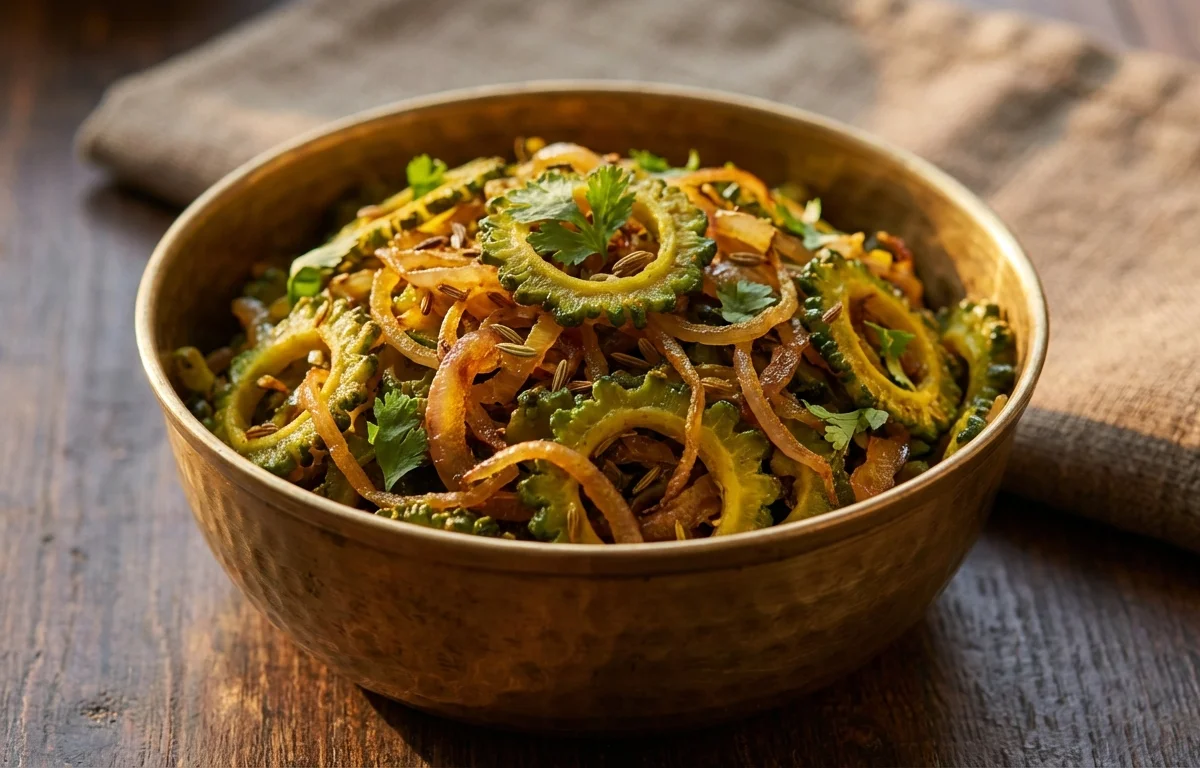
Thinly sliced bitter gourd cooked low and slow with onions and everyday spices until tender and lightly crisp at the edges. This homestyle North Indian bhujia balances karela's bitterness with caramelized onions and a touch of tang.
For 4 servings
- prep · ~15 min
Slice the karela and rest it with salt.
1.Slice the karela into thin rounds.2.Mix with 0.25 tsp salt in a bowl.3.Set aside for 15 minutes to draw out some bitterness.TIPThin slices cook evenly and give the bhujia its lightly crisp texture. - prep · ~5 min
Squeeze the karela and prepare the onions.
1.Squeeze the rested karela gently to remove released moisture.2.Keep the sliced onions and slit green chilies ready.3.Measure the remaining spices so they can go in quickly. - saute · ~2 min
Heat the oil and crackle the whole spices.
Heat mustard oil in a wide pan over medium heat until it reaches a smoking point, then lower the heat slightly. Add cumin seeds and fennel seeds and let them sizzle for a few seconds.
TIPA wide pan helps the karela cook dry instead of steaming. - saute · ~7 min
Cook the onions and green chilies.
Add the onions and green chilies. Cook until the onions soften and turn light golden, stirring often.
- saute · ~3 min
Add the karela and ground spices.
1.Add the squeezed karela to the pan and mix well with the onions.2.Add turmeric powder, red chili powder, coriander powder, dry mango powder, and 1 pinch salt.3.Stir well so the spices coat the karela evenly. - saute · ~15 min
Cook the bhujia until tender and lightly crisp.
Cook on low to medium heat for 12 to 15 minutes, stirring every few minutes, until the karela is tender and the edges are lightly crisp. Keep the pan uncovered so excess moisture can evaporate.
TIPDo not cover the pan for long, or the bhujia will turn soft instead of lightly crisp. - serve
Serve the karela bhujia warm.
What to keep in mind.
7 tips from the recipe — small details that make a real difference to the final dish.
- 1After salting, squeeze the karela well but don't rinse it, or you will wash away flavor along with bitterness.
- 2Use a wide, heavy pan so the sliced karela fries and dries instead of steaming into a soggy bhujia.
- 3Let the mustard oil reach smoking point first, then lower the heat to mellow its raw sharpness before adding cumin.
- 4Cook the onions to light golden, not dark brown, so they sweeten the karela without making the dish taste burnt.
- 5Stir every few minutes rather than constantly; brief undisturbed contact with the pan helps the karela edges crisp.
- 6If your karela is very mature, remove the hard seeds completely, as they stay chewy even after slow cooking.
- 7This bhujia keeps well for lunchboxes; cool fully before storing so trapped steam does not soften the crisp edges.
Adapt it for your goals.
Low-oil
Use 1 tbsp mustard oil and a good nonstick pan; the bhujia will be a little less crisp but still flavorful for lighter everyday cooking.
potato karelaPotato-karela
Add thinly sliced potato with the karela for a more filling, milder version that softens the bitter edge and pairs well with roti.
jaggery touchJaggery-touch
Add a tiny pinch of jaggery near the end if you prefer a gentler bitter profile without losing the classic sweet-bitter contrast.
extra spicyExtra-spicy
Increase green chilies and red chili powder for a sharper, hotter bhujia that stands up especially well to plain dal and rice.
Why this is on our healthy list.
Vegetable-Rich Side Dish
Made primarily with bitter gourd and onions, this bhujia adds a substantial vegetable component to a simple Indian meal.
Digestive Spice Support
Cumin, fennel, coriander, and amchur bring traditional digestive spices that add flavor without heavy sauces.
Moderate Oil, Big Flavor
The recipe uses a small amount of mustard oil and relies on slow cooking and spices for depth rather than rich gravies.
Frequently asked questions
Slice it thin, salt it, rest it for 15 minutes, and squeeze out the released moisture well. Cooking it with lightly caramelized onions and a pinch of amchur also balances the bitterness.
.webp)