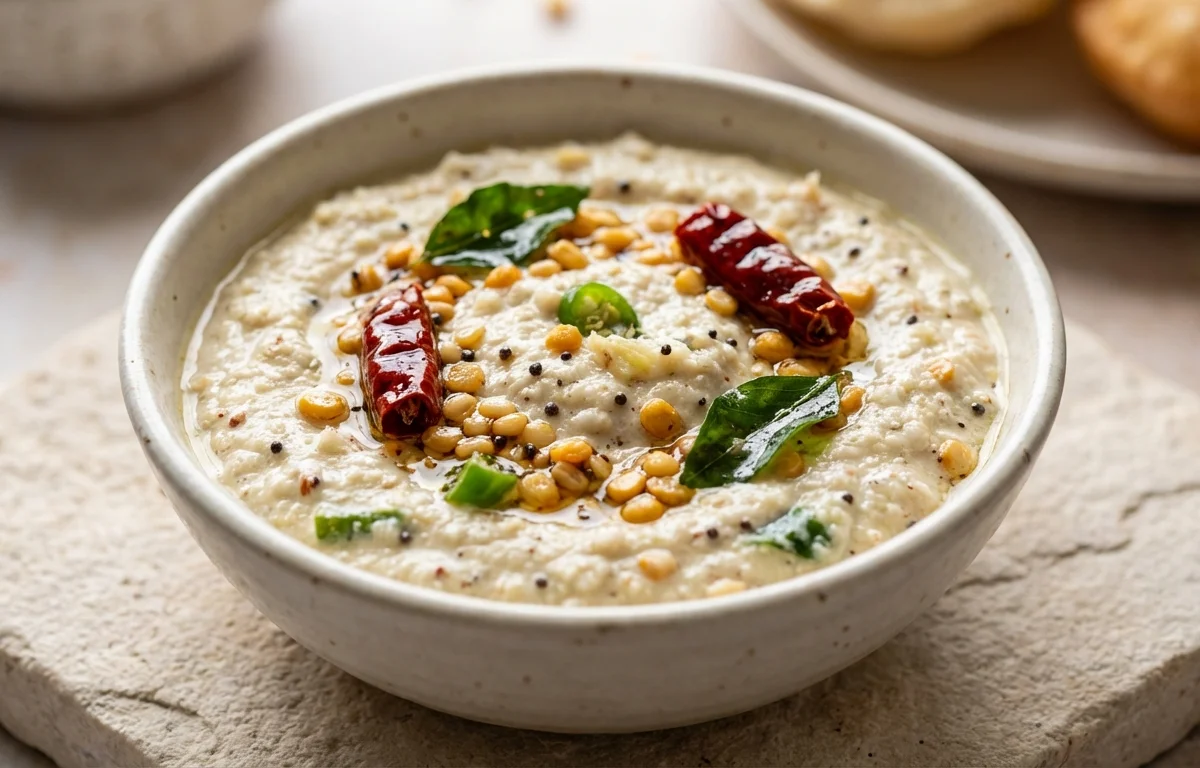
Kayi Chutney
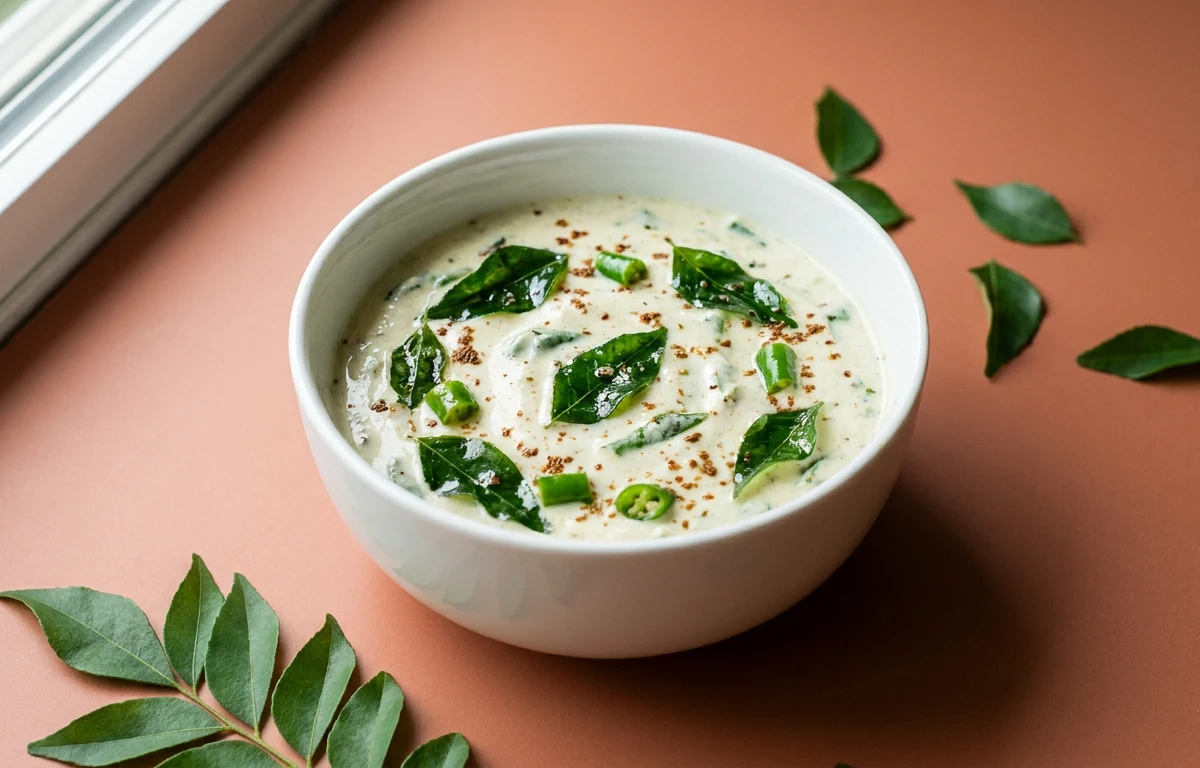
Fresh coconut chutney from Karnataka with green chili, roasted gram, and a quick tempering. It is creamy, lightly spicy, and perfect with idli, dosa, pongal, or upma.
For 8 servings
- prep
Get the chutney ingredients ready.
1.Grate the coconut if needed.2.Roughly chop the ginger.3.Trim the green chilies for easier grinding. - mix · ~2 min
Grind the chutney.
1.Add coconut, roasted gram, green chili, ginger, tamarind paste, salt, and water to a mixer jar.2.Grind to a smooth or slightly coarse chutney, adding a little more water only if needed.3.Transfer the chutney to a small bowl.TIPKeep the chutney slightly thick at first because the tempering and resting will loosen it a bit. - temper · ~2 min
Make the tempering.
1.Heat oil in a small pan over medium heat.2.Add mustard seeds and let them splutter.3.Add urad dal and cook until light golden.4.Add dried red chili and curry leaves and fry for a few seconds until fragrant.TIPDo not let the urad dal get too dark or the tempering will taste bitter. - assemble
Pour the tempering over the chutney.
Pour the hot tempering over the ground chutney and mix well so the flavors spread through the bowl.
- serve
Serve the kayi chutney.
What to keep in mind.
7 tips from the recipe — small details that make a real difference to the final dish.
- 1Start with less water while grinding; kayi chutney should be spoonable, not runny.
- 2If using mature coconut, grind a little longer so the texture turns creamy, not grainy.
- 3Taste after grinding and adjust tamarind before tempering, since the hot tadka rounds out sharpness.
- 4Let the mustard seeds fully splutter before adding urad dal so the tempering tastes nutty, not raw.
- 5Fry the urad dal only to light golden; dark brown dal can make this chutney bitter.
- 6Pour the tempering over the chutney while still sizzling for the best curry leaf aroma.
- 7This chutney is best fresh, but if refrigerating, keep it covered and use within a day.
Adapt it for your goals.
Garlic
Add a small clove of garlic while grinding for a sharper, more robust chutney that pairs especially well with dosa.
milderMilder
Reduce the green chilies to one for a softer heat, useful when serving with already spicy breakfast dishes.
onion free temperingOnion-free-tempering
Keep the classic coconut base but increase curry leaves slightly for extra aroma without changing the traditional simplicity.
corianderCoriander
Blend in a small handful of coriander leaves for a fresher green note and a lighter tasting chutney.
Why this is on our healthy list.
Healthy Fats from Coconut
Fresh coconut provides satisfying fats that make the chutney filling and rich without needing much oil.
Plant-Based Protein Boost
Roasted gram and urad dal add some plant protein and make the chutney more balanced than plain coconut alone.
Digestive Spice Support
Ginger, curry leaves, and chilies bring traditional aromatic ingredients often used to add warmth and aid digestion.
Frequently asked questions
Yes. Thaw it first and squeeze out any excess water so the chutney does not turn thin.