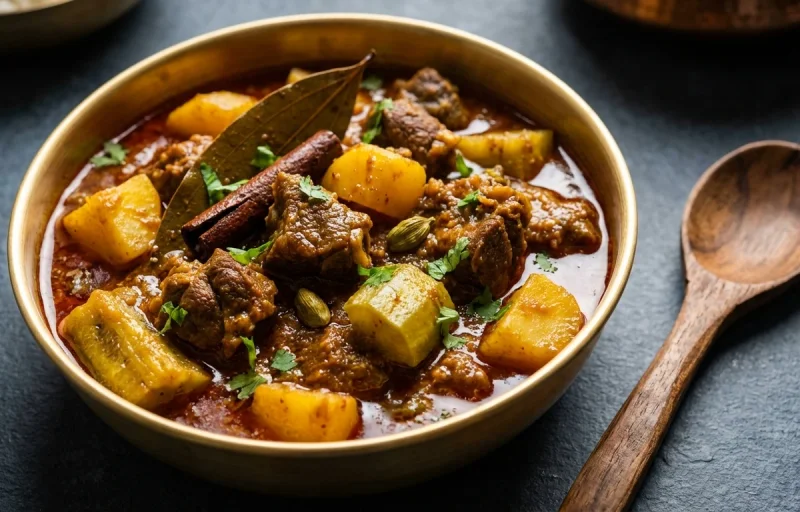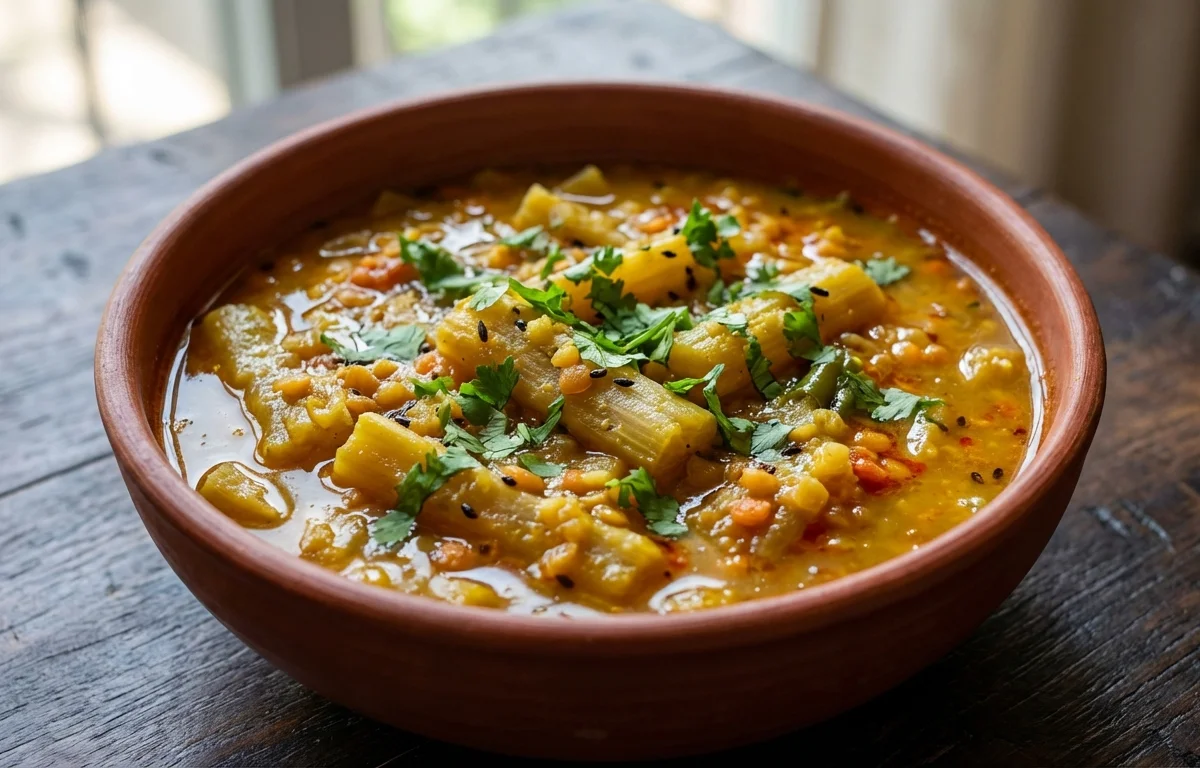
Kol Posolar Khar
A delicate, earthy Assamese curry made with tender banana stem and raw papaya, cooked in a traditional alkaline khar filter-water. Light and slightly silky, this dish cleanses the palate and pairs beautifully with steamed rice.
For 4 servings
- prep · ~10 min
Prepare the banana stem.
1.Peel the outer layers of the banana stem until you reach the tender white inner core.2.Slice the core into thin rounds, removing any fibrous threads as you go.3.Finely chop the rounds and immediately soak in water to prevent discoloration.TIPRub a little mustard oil on your palms while chopping to prevent the sticky sap from staining your hands. - prep · ~5 min
Peel and cube the raw papaya.
1.Peel the raw papaya and cut it in half lengthwise.2.Scoop out any soft, undeveloped seeds with a spoon.3.Cut the papaya into small, even-sized cubes about 1-inch thick. - boil · ~15 min
Boil the vegetables with khar.
1.Drain the chopped banana stem and add it to a pan along with the cubed raw papaya.2.Pour in 3 cups of water and bring to a rolling boil over medium-high heat.3.Add 2 tablespoons of khar water and let everything boil until the vegetables are tender but not mushy, about 12-15 minutes.4.Drain off most of the remaining water, reserving a little moisture in the pan.TIPDon't overcook — the banana stem should stay slightly firm. Mushy khar loses its delicate character. - temper · ~2 min
Make the tempering.
1.Heat mustard oil in a small pan or kadhai until it reaches its smoking point and the raw smell disappears.2.Add the bay leaf and let it sizzle for 10 seconds.3.Add the grated ginger and sauté until fragrant, about 30 seconds.4.Add the slit green chilies and toss for just a few seconds.TIPMustard oil must be heated to smoking point to mellow its pungency. The aroma changes from sharp to nutty when it's ready. - mix · ~3 min
Combine the tempering with the boiled vegetables.
1.Pour the entire tempering over the boiled banana stem and papaya.2.Add a pinch of salt and a pinch of sugar.3.Stir gently to coat everything without breaking up the vegetables.4.Let it simmer together on low heat for 2-3 minutes so the flavors meld. - serve · ~5 min
Rest briefly and serve hot.
Let the khar rest off the heat for 5 minutes. The flavors settle and the light alkaline note becomes more rounded. Serve warm with steamed rice.
TIPKol Posolar Khar is traditionally served at the start of an Assamese meal. Its mild, clean taste prepares the palate for richer dishes to follow.
What to keep in mind.
6 tips from the recipe — small details that make a real difference to the final dish.
- 1Soak the chopped banana stem in water immediately after cutting to prevent browning and remove excess sap.
- 2Rub a little mustard oil on your palms before handling banana stem to avoid sticky stains.
- 3Heat mustard oil until it reaches smoking point and the pungent smell mellows into a nutty aroma.
- 4Boil the vegetables until just tender—banana stem should retain a slight crunch for the best texture.
- 5Let the finished dish rest for 5 minutes off heat so the khar’s alkaline flavor mellows and melds.
- 6Serve this khar at the start of the meal as a palate cleanser before richer curries.
Adapt it for your goals.
Low-oil
Skip the mustard oil tempering and simply stir in a teaspoon of raw mustard oil after boiling—retains authentic flavor with much less fat.
protein addedProtein-added
Add 100g of skinned and deboned freshwater fish (like rohu or tilapia) during boiling for a hearty one-dish meal without compromising the khar character.
jainJain
Replace banana stem with bottle gourd (lauki) and omit ginger—similar texture and mildness keeps this khar acceptable for Jain dietary restrictions.
Why this is on our healthy list.
Rich in Dietary Fiber
Banana stem is packed with soluble fiber that supports healthy digestion and helps regulate blood sugar levels naturally.
Good Source of Potassium
Both banana stem and raw papaya provide potassium, an essential mineral for maintaining healthy blood pressure and muscle function.
Low in Calories
This dish is primarily vegetables and water, making it a light, low-calorie option that fits well into weight-conscious diets.
Digestive Aid from Khar
Traditional alkaline khar water is known in Assamese cuisine to gently aid digestion and alkalize the stomach after heavy meals.
Frequently asked questions
Baking soda is too strong and will make the vegetables mushy and bitter. If unavailable, use a very diluted solution of food-grade potassium carbonate for a closer match.