
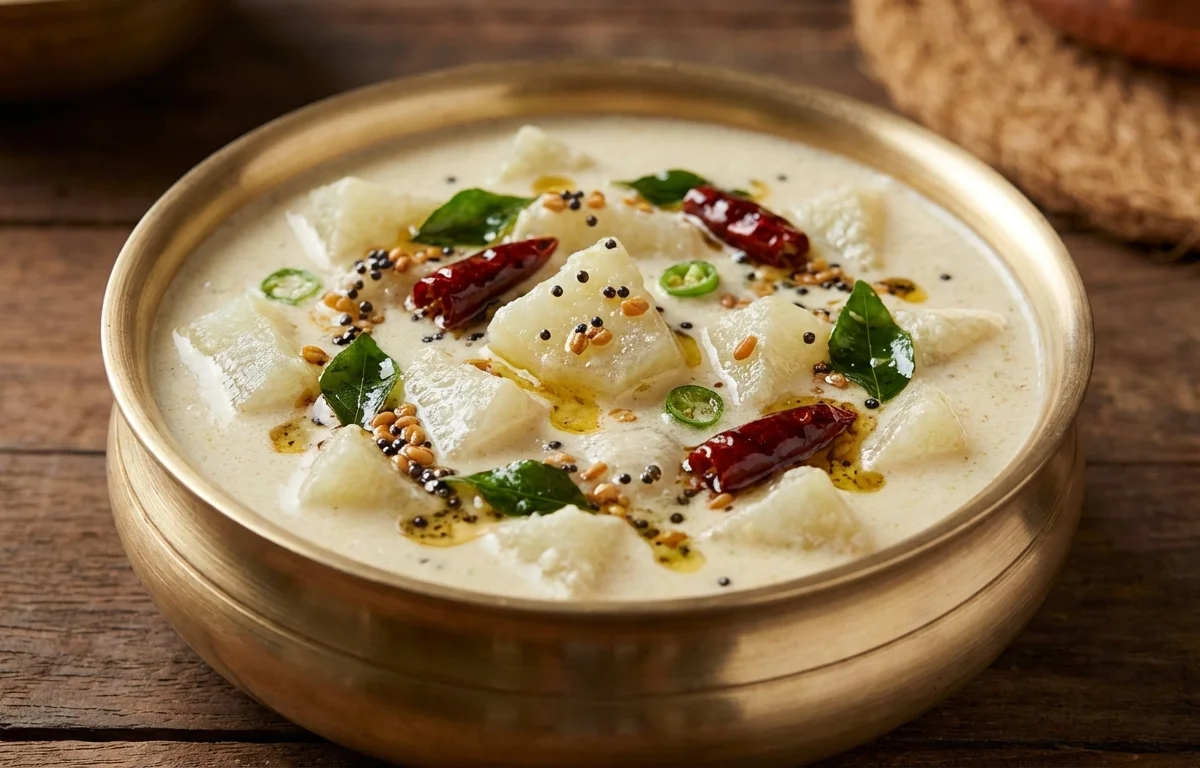
Kumbalanga Kalan
A comforting Kerala curry made with ash gourd in a tangy yogurt and coconut gravy. It has a gentle heat, a lovely hint of pepper, and the classic coconut oil tempering that makes each spoonful deeply satisfying.
For 4 servings
- prep · ~10 min
Prep the ash gourd and yogurt.
1.Peel the ash gourd, remove the seeds, and cut it into medium cubes.2.Whisk the yogurt until smooth and keep it aside.3.Measure the grated coconut, cumin seeds, black pepper, and green chili. - mix · ~3 min
Grind the coconut paste.
Grind the grated coconut, cumin seeds, and black pepper with a little water to a smooth, thick paste.
TIPKeep the paste fairly thick so the kalan stays rich and not watery. - boil · ~10 min
Cook the ash gourd.
1.Add the ash gourd, green chili, turmeric powder, salt, and water to a pot.2.Bring to a boil over medium heat.3.Cook until the ash gourd turns tender but still holds its shape.TIPDo not overcook the ash gourd or it will break down too much in the gravy. - simmer · ~4 min
Add the coconut paste and thicken the curry.
Stir the ground coconut paste into the cooked ash gourd and simmer gently for 3 to 4 minutes, stirring now and then, until the gravy thickens slightly.
- simmer · ~3 min
Stir in the yogurt gently.
Lower the heat completely and add the whisked yogurt. Stir continuously and heat gently without letting the curry boil, just until it turns creamy and well blended.
TIPA hard boil can make the yogurt split, so keep the heat low at this stage. - temper · ~1 min
Make the tempering.
1.Heat coconut oil in a small pan over medium heat.2.Add mustard seeds and let them splutter.3.Add fenugreek seeds, dried red chili, and curry leaves.4.Fry for a few seconds until fragrant.TIPFenugreek turns bitter quickly, so add it only after the mustard seeds crackle. - assemble · ~1 min
Pour the tempering over the kalan.
Pour the hot tempering over the curry and mix lightly so the flavors spread without breaking the ash gourd pieces.
- serve
Serve warm with Kerala rice.
What to keep in mind.
7 tips from the recipe — small details that make a real difference to the final dish.
- 1Choose slightly sour yogurt; that gentle tang is what gives kalan its characteristic finish.
- 2Cut the ash gourd into even medium cubes so it cooks through without collapsing in the gravy.
- 3Grind the coconut paste thick and smooth; a thin paste will make the curry loose and flat.
- 4After adding yogurt, keep the heat very low and stir constantly to prevent curdling.
- 5Do not let the curry boil once the yogurt goes in; warm it only until creamy and unified.
- 6Add fenugreek only after the mustard splutters, because it darkens fast and can turn bitter.
- 7Kalan often tastes even better after a short rest, once the pepper, cumin, and tempering settle into the gravy.
Adapt it for your goals.
More-peppery
Increase the crushed black pepper slightly for a warmer, more traditional sharpness without making the curry chili-hot.
veganVegan
Replace yogurt with a mildly tangy plant-based curd to keep the creamy sour profile while making the dish dairy-free.
thicker onam styleThicker-onam-style
Simmer a little longer after adding the coconut paste for a thicker, richer kalan that sits well on a festive sadya plate.
Why this is on our healthy list.
Hydrating Vegetable Base
Ash gourd is a light, water-rich vegetable that makes the curry feel comforting without being overly heavy.
Good Fats from Coconut
Fresh coconut and coconut oil add richness and satiety, while also carrying the spice aromas beautifully.
Digestive Spice Support
Cumin, black pepper, fenugreek, and curry leaves bring traditional digestive spices into the dish along with flavor.
Frequently asked questions
This usually happens if the heat is too high or the curry boils after the yogurt is added. Lower the heat fully and stir gently while warming.


