
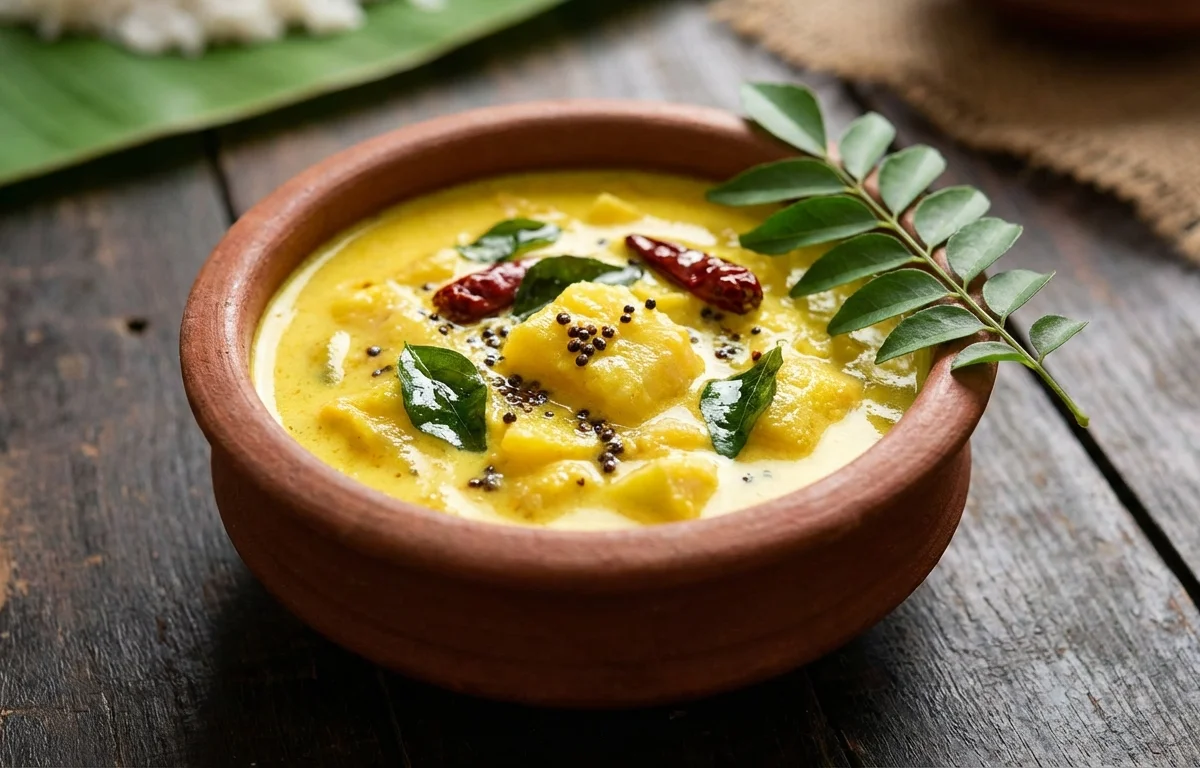
Manga Curry
A gently spiced Kerala-style raw mango curry with a creamy coconut base and a light tempering of mustard seeds and curry leaves. Tangy, comforting, and perfect with steamed rice for a balanced everyday meal.
For 4 servings
- prep · ~7 min
Prepare the mango and coconut paste.
1.Peel the raw mangoes and cut them into medium pieces, discarding the hard seed if needed.2.Add grated coconut, cumin seeds, red chili powder, and yogurt to a blender.3.Blend to a smooth paste with a few spoonfuls of water from the measured water if needed. - boil · ~10 min
Cook the mango pieces.
1.Add the mango pieces to a pan with green chili, turmeric powder, salt, and the water.2.Bring to a boil over medium heat.3.Cook until the mango turns tender but still holds its shape.TIPUse firm sour mangoes so the pieces stay intact and give the curry its bright tang. - simmer · ~4 min
Add the coconut mixture and simmer gently.
1.Lower the heat and stir the coconut paste into the cooked mango.2.Mix well until the curry looks smooth and lightly creamy.3.Simmer gently for 3 to 4 minutes without letting it boil hard.TIPKeep the heat low after adding yogurt so the curry stays smooth and does not split. - temper · ~2 min
Make the tempering.
1.Heat coconut oil in a small pan over medium heat.2.Add mustard seeds and let them splutter.3.Add fenugreek seeds, dried red chili, and curry leaves.4.Cook for a few seconds until fragrant.TIPDo not darken the fenugreek seeds too much or the curry can turn slightly bitter. - assemble · ~2 min
Pour the tempering over the curry.
Pour the hot tempering over the simmered manga curry and mix lightly. Let it sit for 2 minutes so the flavors settle together.
- serve
Serve warm with rice.
What to keep in mind.
7 tips from the recipe — small details that make a real difference to the final dish.
- 1Choose sour, firm raw mangoes so the curry gets bright tang without the pieces turning mushy.
- 2Blend the coconut-yogurt paste very smooth; a grainy paste makes the curry feel coarse instead of creamy.
- 3After adding the yogurt-coconut paste, keep the heat low and do not let the curry boil hard or it may split.
- 4Temper the fenugreek only for a few seconds after the mustard pops; overbrowned fenugreek will taste bitter.
- 5Let the finished curry rest for 2 to 5 minutes after tempering so the curry leaf and coconut oil aroma settles in.
- 6If the mango is extremely sour, add a spoonful more yogurt to round out the sharpness without losing the Kerala-style flavor.
- 7This curry tastes even better after a short rest, but refrigerate leftovers promptly and reheat very gently.
Adapt it for your goals.
Vegan
Replace the yogurt with a little thick coconut milk or a small piece of soaked tamarind for tang, keeping the curry fully plant-based.
jaggery balancedJaggery-balanced
Add a small pinch of jaggery if your mangoes are very sharp; it softens the edges without making the curry sweet.
spicierSpicier
Increase the green chilies or add one extra dried red chili in the tempering for a hotter, more robust finish.
shallot temperedShallot-tempered
Add a few sliced shallots to the tempering for a slightly sweeter, more savory Kerala-style variation.
Why this is on our healthy list.
Fruit-Based Tang and Fiber
Raw mango adds tart fruit character along with fiber and plant compounds that make the curry feel light yet satisfying.
Good Fats from Coconut
Fresh coconut and coconut oil provide richness, helping the spices and curry leaves carry their flavor through the dish.
Digestive Spice Support
Cumin, fenugreek, ginger-free though spice-forward tempering ingredients are traditionally valued for adding warmth and aiding digestibility in a creamy curry.
Fermented Dairy Element
Yogurt contributes protein and a gentle tang that balances the mango while adding a cultured dairy component.
Frequently asked questions
Raw mango is best here because it gives the curry its signature sourness and holds its shape better. Ripe mango will make the dish sweeter and softer.



.webp)
.webp)