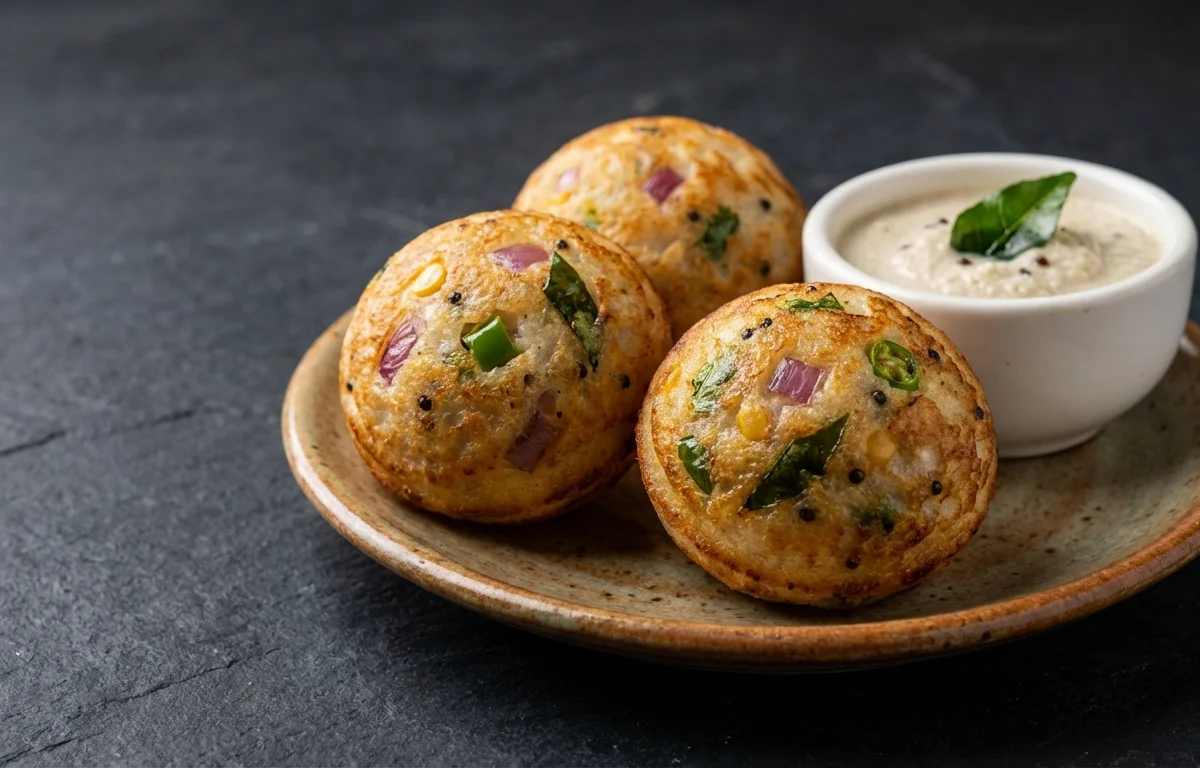
Masala Paddu
Crispy golden orbs with a soft, fluffy interior filled with finely chopped onions, green chilies, ginger, and fresh coriander. These bite-sized South Indian delights are made from a fermented rice and urad dal batter, cooked in a special appam pan until perfectly crisp on the outside and tender within. A popular breakfast or snack that pairs beautifully with coconut chutney.
For 4 servings
- prep
Soak the rice and dal.
Rinse the rice and urad dal separately. Soak the rice and poha together in water for 4 hours. Soak the urad dal in a separate bowl for 4 hours.
TIPUse enough water to cover the ingredients by at least 2 inches — they will swell as they soak. - mix · ~20 min
Grind the batter.
Drain the urad dal and transfer to a grinder. Grind using about 0.5 cup water, adding it in small splashes, until the batter is smooth and fluffy. Transfer to a large bowl. Drain the rice-poha mixture, add to the grinder, and grind using about 0.25 cup water to a slightly grainy paste — not as smooth as the urad dal. Combine both batters in the bowl and mix well by hand.
TIPThe batter should be thick yet pourable — like pancake batter. Too thin and the paddus won't hold shape. - rest
Ferment the batter overnight.
Cover the bowl and let the batter ferment in a warm place for 8 hours or overnight. It should rise and develop a pleasant sour aroma.
TIPIn cold weather, place the bowl inside an oven with just the light on — the gentle warmth helps fermentation. - temper · ~5 min
Make the masala tempering.
1.Heat 1 tsp oil in a small pan over medium heat.2.Add mustard seeds and let them splutter (about 30 seconds).3.Add cumin seeds and let them crackle (about 15 seconds).4.Add a pinch of asafoetida and chopped curry leaves — sauté for 10 seconds until fragrant.5.Add finely chopped onion, green chilies, and ginger. Sauté until the onion turns translucent (about 3 to 4 minutes).6.Turn off heat and let the tempering cool completely.TIPMake sure the tempering cools before adding to the batter — hot tempering can kill the fermentation and make the pads dense. - mix · ~1 min
Prepare the final paddu batter.
Add the cooled masala tempering, salt, and chopped coriander leaves to the fermented batter. Gently fold everything together without over-mixing — you want the batter to stay airy.
- fry · ~20 min
Cook the paddus in an appam pan.
1.Heat the appam pan over medium heat. Drop 2 to 3 drops of oil into each mould.2.Spoon batter into each mould, filling to just below the rim.3.Cover and cook for 2 to 3 minutes until the bottoms turn golden-brown and crisp.4.Use a wooden skewer or spoon to flip each paddu carefully.5.Drizzle a few more drops of oil around the edges. Cook uncovered for another 2 to 3 minutes until the second side is equally golden and crisp.6.Remove from the pan. Repeat with the remaining batter.TIPKeep the heat at medium — too high and the outsides burn before the centres cook, too low and they turn greasy instead of crisp. - serve
Serve the masala paddus hot.
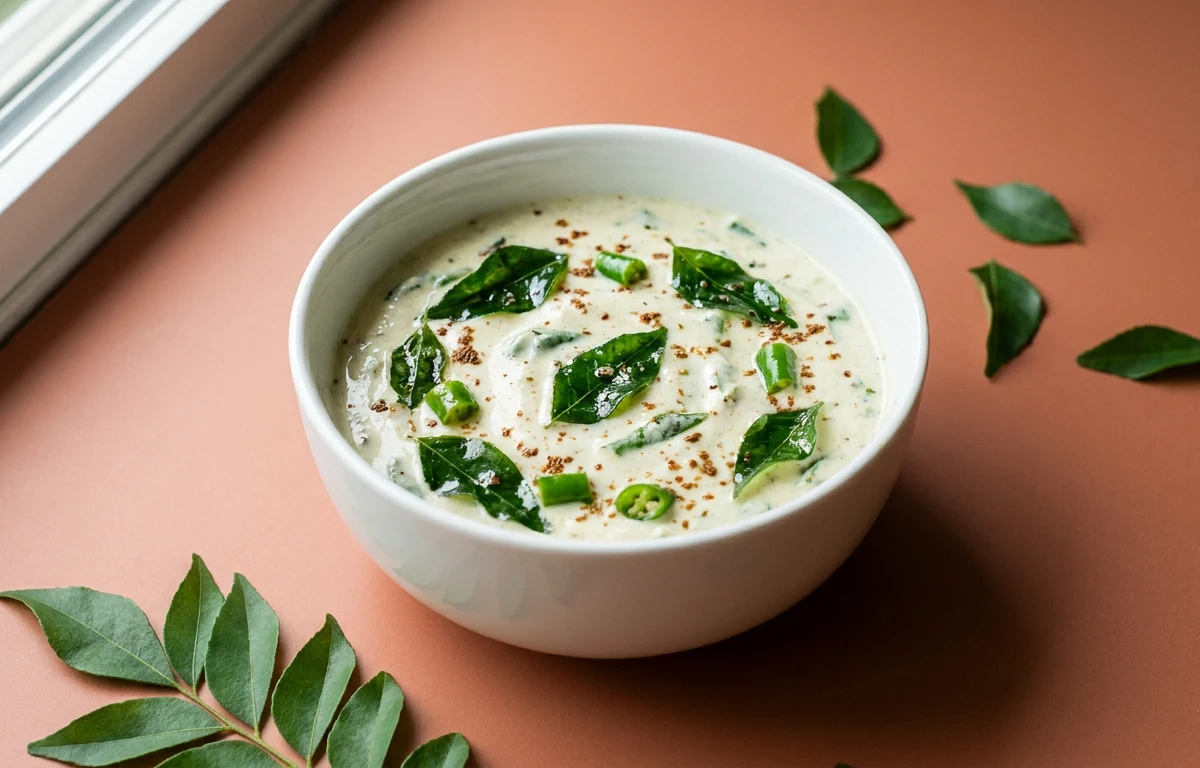
Arrange the hot paddus on a plate and serve immediately with coconut chutney, tomato-onion chutney, or sambar.
TIPPaddus lose their crispness as they cool — serve straight from the pan for the best texture.
What to keep in mind.
6 tips from the recipe — small details that make a real difference to the final dish.
- 1To check if the batter is ready for fermentation, drop a spoonful into a bowl of water; if it floats, it's perfectly fermented.
- 2For extra crispy paddus, let the fermented batter rest at room temperature for 15 minutes after adding the tempering.
- 3Use a wooden skewer or a small spoon to flip paddus — metal tongs can tear the delicate crust.
- 4If your appam pan is new, season it by heating oil in each mould for 2 minutes before the first use.
- 5Make-ahead tip: Ferment the batter overnight, then store it in the fridge for up to 2 days; bring to room temp before cooking.
- 6Leftover cooked paddus can be stored in an airtight container for a day and re-crisped in a dry skillet over medium heat.
Adapt it for your goals.
Vegan
This recipe is already vegan — no changes needed. For extra richness, add a tablespoon of grated coconut to the tempering.
High ProteinHigh-Protein
Add 2 tablespoons of soaked and ground chana dal or moong dal to the urad dal while grinding. This boosts protein and adds a subtle nuttiness.
Low OilLow-Oil
Instead of deep-frying in the moulds, brush each cavity with just a few drops of oil using a silicone brush, and cook without flipping by using a lid to steam the top.
JainJain
Omit the onion and garlic, and skip the asafoetida if it contains wheat or starch. Replace onion with finely chopped grated bottle gourd or raw banana, and use a pinch of asafoetida that is Jain-friendly.
Keto FriendlyKeto-Friendly
This is a carb-rich dish; for a keto version, substitute the rice and urad dal batter with a mixture of almond flour, coconut flour, and psyllium husk, and add a pinch of baking soda. Not traditional, but low-carb.
Why this is on our healthy list.
Rich in Fermented Goodness
The natural fermentation of rice and urad dal creates beneficial probiotics and enhances the bioavailability of B vitamins and minerals.
High in Plant Protein
Urad dal is a legume packed with plant-based protein, making these paddus a satisfying and muscle-friendly snack.
Gut-Healthy Fiber
Onions, curry leaves, and coriander add dietary fiber that aids digestion and promotes a healthy gut microbiome.
Low in Saturated Fat
Cooked with minimal oil and no butter or cream, these paddus are a heart-friendly choice compared to fried snacks.
Frequently asked questions
Either the place was too cold (ideal temperature is 28-32°C), or your urad dal was old/poor quality. Use fresh dal and keep the batter in a warm spot like the oven with the light on.