Matschgand
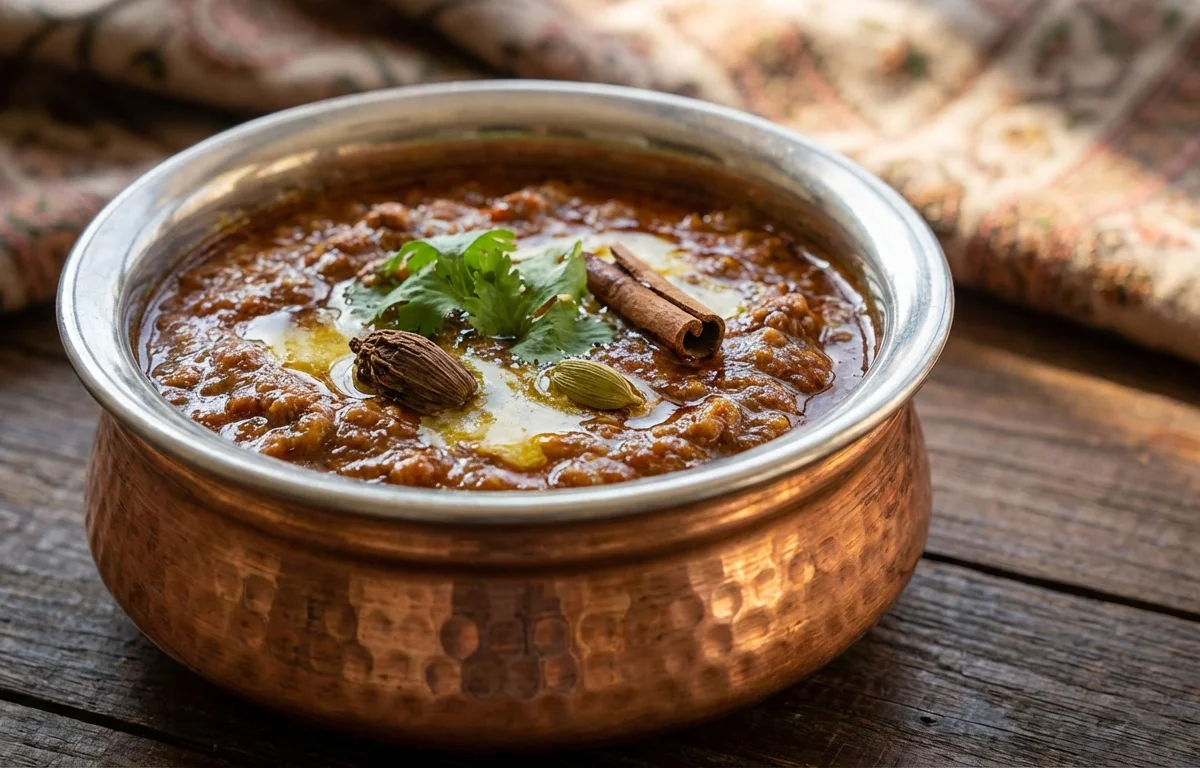
A classic Kashmiri delicacy featuring succulent minced mutton meatballs simmered in a fiery, aromatic red gravy. Flavored with fennel and ginger, this dish is a true taste of the valley, best enjoyed with steamed rice.
For 4 servings
Prepare the Meatballs
1.In a large bowl, combine the finely minced mutton, 3 tsp (1 tbsp) of fennel powder, 1 tsp of dry ginger powder, and 1 tsp of salt.2.Using your hands, knead the mixture vigorously for 5-7 minutes. The goal is to break down the meat fibers and create a smooth, sticky, and paste-like dough. This is crucial for tender meatballs that hold their shape.3.Moisten your palms with a little water and divide the mixture into 12-16 equal portions. Roll each portion into a smooth, compact ball, about 1.5 inches in diameter. Set aside.Temper the Spices (Tadka)
1.Heat the mustard oil in a heavy-bottomed pot or kadai over high heat until it reaches its smoking point. You'll see faint white smoke. Immediately turn off the heat and let it cool for about a minute. This process removes the oil's pungency.2.Turn the heat back on to medium-low. Add the asafoetida, cloves, and crushed black cardamoms. Sauté for 30 seconds until they become fragrant.3.In a small bowl, mix the Kashmiri red chilli powder, turmeric powder, the remaining 1.5 tsp of dry ginger powder, and the remaining 2 tsp of fennel powder with 1/4 cup of water to form a smooth paste.4.Add this spice paste to the pot. Cook for 2-3 minutes, stirring continuously, until the oil begins to separate from the masala.Build the Gravy
1.Reduce the heat to its lowest setting. Slowly pour in the whisked curd while stirring constantly and vigorously. This prevents the curd from splitting.2.Continue to cook and stir for 3-4 minutes until the curd is fully incorporated and the gravy thickens slightly.3.Add 3 cups of water and the remaining 1.5 tsp of salt. Stir well and bring the gravy to a rolling boil over high heat.Cook the Meatballs
1.Once the gravy is boiling rapidly, gently slide the prepared meatballs into the pot one by one. Ensure there is enough space between them.2.CRITICAL: Do not stir the pot for the first 10 minutes. Let the meatballs cook undisturbed on high heat. This allows them to firm up and prevents them from breaking.3.After 10 minutes, gently shake the pot or use a spoon to carefully move the meatballs. Reduce the heat to medium-low, cover the pot with a lid, and let it simmer for 25-30 minutes.4.The meatballs will be cooked through, and the gravy will have thickened, deepened in color, and a layer of red oil (tari) will float on top.Rest and Serve
1.Turn off the heat and let the Matschgand rest, covered, for at least 10 minutes. This allows the flavors to meld and deepen.2.Serve hot, ladling the meatballs and generous amounts of gravy over steamed white rice.
What to keep in mind.
4 tips from the recipe — small details that make a real difference to the final dish.
- 1For the most authentic flavor, use mustard oil and heat it properly until it's lightly smoking before use.
- 2Mincing the mutton until it's a very fine paste is the key to tender meatballs that don't break apart.
- 3Ensure the curd is at room temperature and whisked well before adding it to the pot on low heat to prevent splitting.
- 4Resist the urge to stir the meatballs immediately after adding them to the gravy. Let them cook for a few minutes to set.
Adapt it for your goals.
Protein Swap
For a lighter version, you can make this recipe with finely minced chicken or turkey. Adjust cooking time as poultry cooks faster than mutton.
Aromatic AdditionAromatic Addition
For a richer aroma, add a few strands of saffron soaked in warm milk to the gravy during the last 10 minutes of simmering.
Authentic FlavorAuthentic Flavor
If you can find them, add a few pieces of dried cockscomb flower (Mawal) to the gravy for a more authentic deep red color.
Why this is on our healthy list.
Rich in Protein
Mutton is a high-quality protein source, essential for building and repairing tissues, muscle growth, and overall body function.
Excellent Source of Iron
This dish provides a significant amount of heme iron from red meat, which is easily absorbed by the body and helps in preventing iron-deficiency anemia.
Aids Digestion
The spices used, such as fennel powder (saunf) and dry ginger powder (saunth), are traditionally known for their digestive properties, helping to soothe the stomach and improve digestion.
Frequently asked questions
The key is in the preparation. Ensure your mutton is minced very finely (ask your butcher to run it through the mincer twice). Then, knead the mince mixture vigorously for 5-7 minutes to form a sticky paste. Finally, do not stir them for the first 10 minutes after adding them to the boiling gravy, as this allows them to firm up.